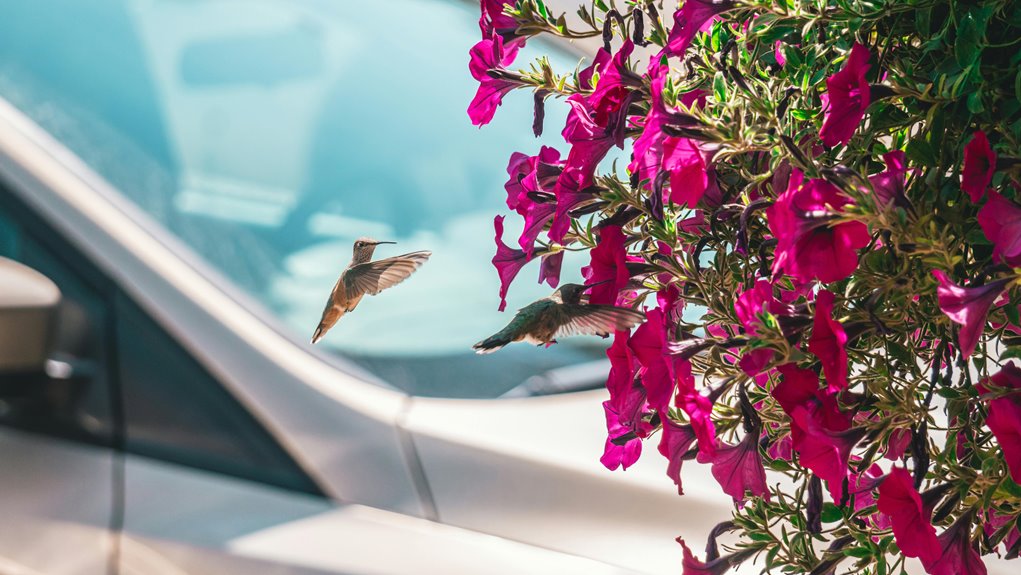
I’ve found that planting nectar-rich flowers is the simplest way to keep hummingbirds visiting all season.
Cardinal Flower, Trumpet Vine, Delphinium, Fuchsia, Columbine, Bee Balm, and Russian Sage all deliver the tubular blooms and consistent nectar hummingbirds crave.
Most require full sun with minimal maintenance once established. Cardinal Flower tolerates wet soil, while Russian Sage actually saves water.
Plant them in borders or hanging baskets for easy viewing. Each flower peaks at different times, ensuring steady visits from spring through fall—and there’s plenty more to uncover about timing and placement.
Cardinal Flower: The Red Bloom Hummingbirds Can’t Resist
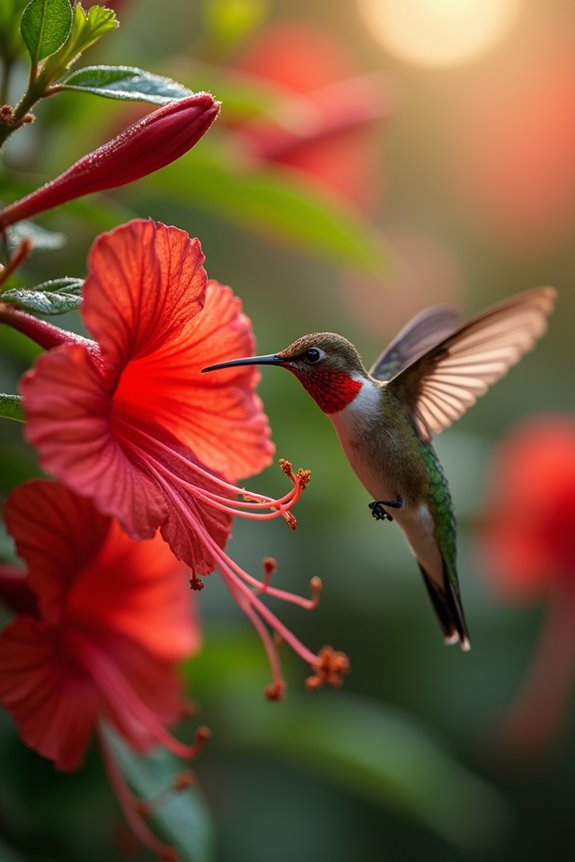
- Blooms progressively from bottom to top over several weeks
- Tolerates wet soil unlike pickier perennials
- Prefers full sun to partial shade with moist conditions
- Performs best in boggy or wetland areas
You’re planting flowers that function as a reliable rest stop, keeping hummingbirds returning throughout the season.
Trumpet Vine: A Fast-Growing Climber for Hummingbirds
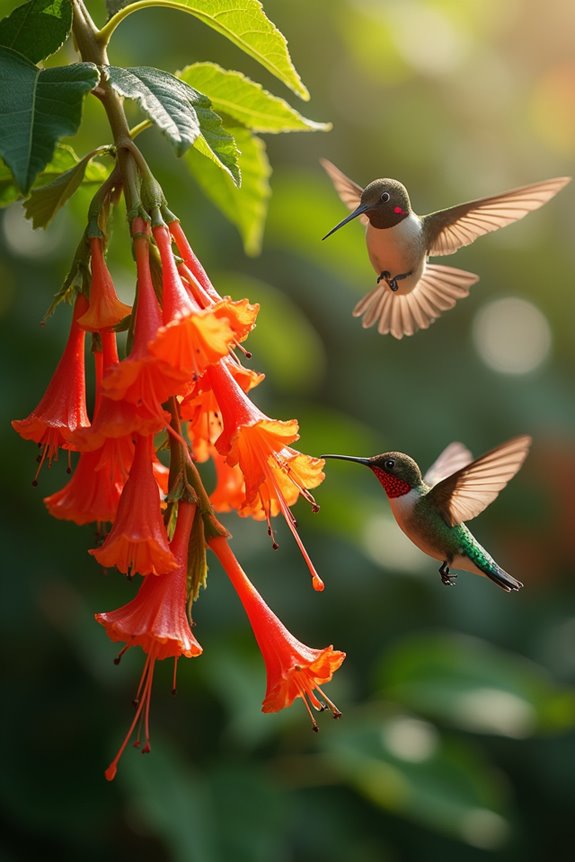
This vigorous growth means you’ll need sturdy support—think heavy-duty trellis or arbor. Plant it in full sun for best results, though it tolerates partial shade. The tubular flowers provide reliable nectar throughout blooming season, attracting hummingbirds to your garden. Just note: trumpet vine spreads aggressively in some regions, so choose noninvasive cultivars and place it strategically. Hardy in zones 4–9, it’s practically maintenance-free once established.
Delphinium: Tall Spikes Hummingbirds Visit All Summer Long
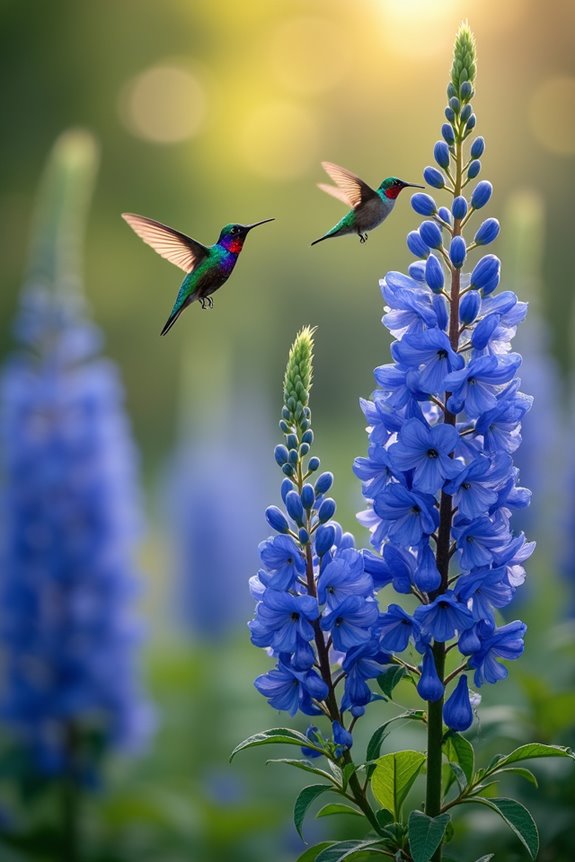
Want a flower that’ll draw hummingbirds to your garden without much fuss? Delphinium delivers. These perennial tall spikes grow 2 to 6 feet high, showcasing purple and blue blooms that hummingbirds can’t resist.
Here’s what makes them work:
- Nectar-rich blossoms arranged along towering stems provide continuous food sources throughout the bloom season
- Full sun requirement keeps flowers colorful and nectar production strong
- Hardy in zones 3–7, meaning they’ll return year after year with proper winter mulch
- Deadheading extends flowering, encouraging more visits from hungry hummingbirds
Position delphinium as dramatic back-border accents in well-drained soil. Space them properly and mulch during cold winters to protect those tall stalks. Hummingbirds will visit all summer long.
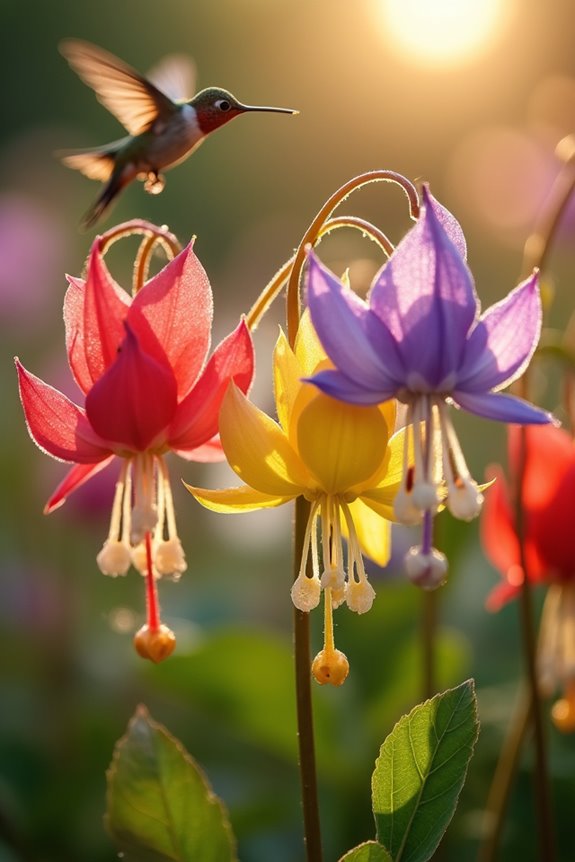
Fuchsia: Tubular Flowers Loaded With Abundant Nectar
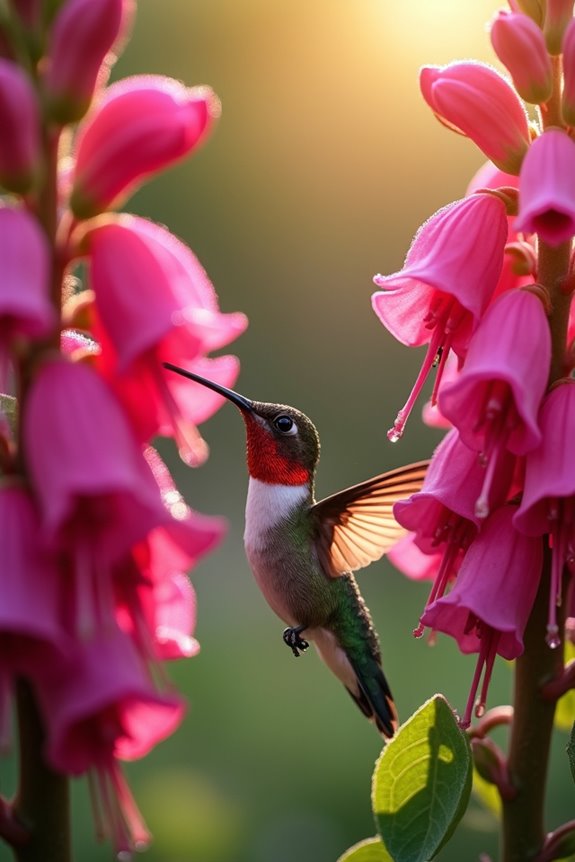
If you’ve ever watched a hummingbird hover in place, you’ve probably noticed how those tubular flowers seem made just for their needle-like beaks—and fuchsia’s got them in spades. I’ve found that fuchsia plants deliver abundant nectar that keeps hummingbirds coming back consistently throughout the season.
Growing Fuchsia in Your Garden
These ornamental garden favorites do well in full shade to morning sun with afternoon shade. I display mine in hanging baskets at eye level, which gives me front-row seats to the action. Most varieties work as annuals in typical gardens, producing flowers reliably for weeks.
The cascading form makes nectar access effortless for visiting hummingbirds. Plant them in cooler, protected spots, and you’ll watch these tiny visitors return regularly to fuel their high-energy needs.
Columbine: Delicate Blooms in Multiple Colors and Contrasts
I’ve found that columbine’s real appeal lies in its striking color combinations—think red spurs paired with yellow centers, or bi-color petals that naturally catch a hummingbird’s eye. What makes it practical for my garden is that it doesn’t just look good once; it’ll self-seed year after year, meaning I get those early spring blooms without replanting, plus it serves up nectar when hummingbirds are hungry after winter. The hardy perennial thrives in zones 3 through 9 with minimal fussing, handling everything from full sun to partial shade and standard well-drained soil.
Color Varieties and Contrasts
Why do columbines stand out so beautifully alongside those bold red trumpet flowers everyone plants for hummingbirds?
I’ve found that columbine’s delicate, multi-colored blossoms create the perfect visual companion to more aggressive hues. These perennial flowers offer softer color contrasts that actually draw hummingbirds in different ways than their tubular neighbors.
Here’s what makes columbine’s palette work:
- Bicolor petals — inner and outer layers showcase contrasting shades, creating visual depth hummingbirds notice
- Pastel options — soft pinks, purples, and yellows blend naturally with bold reds without competing
- Early-season timing — nectar-rich blooms appear when few alternatives exist, making them necessary
- Garden harmony — mixed colors prevent monotony, helping your pollinator space feel cohesive
You’re building a hummingbird feeding station that looks intentional rather than chaotic. That balance matters.
Early-Season Nectar Source
Beyond creating visual appeal in your garden, columbine solves a real problem: feeding hummingbirds when they need it most. When hummingbirds return from migration, they’re hungry and exhausted. Columbine blooms early, providing that essential early-season nectar before other flowers wake up.
Here’s what makes columbine reliable: it self-seeds readily, meaning you’ll get successive blooms across seasons without replanting. The distinctive flower spurs are perfectly designed for hummingbird beaks, making feeding efficient and natural.
Why this matters: Hummingbirds need consistent food sources. Columbine bridges that gap in spring when pollinators are most vulnerable. Plant columbine in full sun to partial shade in USDA zones 3–9, and you’re creating a sustainable nectar source that returns year after year.
Self-Seeding Propagation Benefits
Once columbine’s flowers fade and drop their petals, the plant doesn’t need you to replant it next spring—it’ll handle that job itself. This self-seeding perennial means you’re building a hummingbird garden that maintains itself over time.
Here’s why self-propagation matters for your nectar sources:
- Reduces replanting effort – New seedlings emerge naturally, filling garden gaps without your intervention
- Creates naturalized patches – Columbine spreads organically, establishing pollinator-friendly zones across your borders
- Ensures consistent nectar availability – More plants mean reliable food sources for returning hummingbirds each season
- Saves money long-term – Skip buying replacement plants; let nature handle propagation
Since columbine’s hardy through USDA zones 3–9, it’ll reliably self-seed year after year, giving you a low-maintenance hummingbird haven.
Bee Balm: Red Clusters That Feed Hummingbirds Summer Through Fall
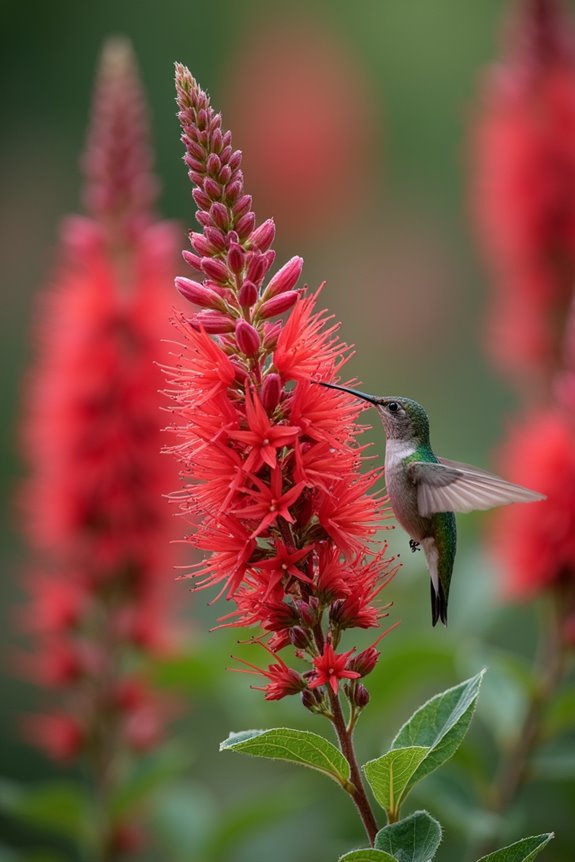
How’d you like a plant that practically guarantees hummingbird visits from mid-summer straight through fall? Bee balm—or Monarda—does exactly that. I’ve found these nectar-rich flowers work hard to keep hummingbirds coming back.
| Feature | Details |
|---|---|
| Height | Up to 4 feet |
| Bloom Color | Red to scarlet-pink |
| USDA Zones | 3–9 |
| Light Needs | Full sun to light shade |
| Soil | Moist preferred |
What makes bee balm special:
- Both nectar and pollen fuel hummingbirds
- Mildew-resistant varieties maintain blooms longer
- Perennial means year-after-year visits
- Does well in sunny spots with decent moisture
The scarlet beebalm (Monarda didyma) and wild bergamot varieties create clustered blooms that hummingbirds can’t resist. Plant them strategically, and you’re building a reliable feeding station.
Russian Sage: Lavender Blooms That Attract Hummingbirds (and Save Water)
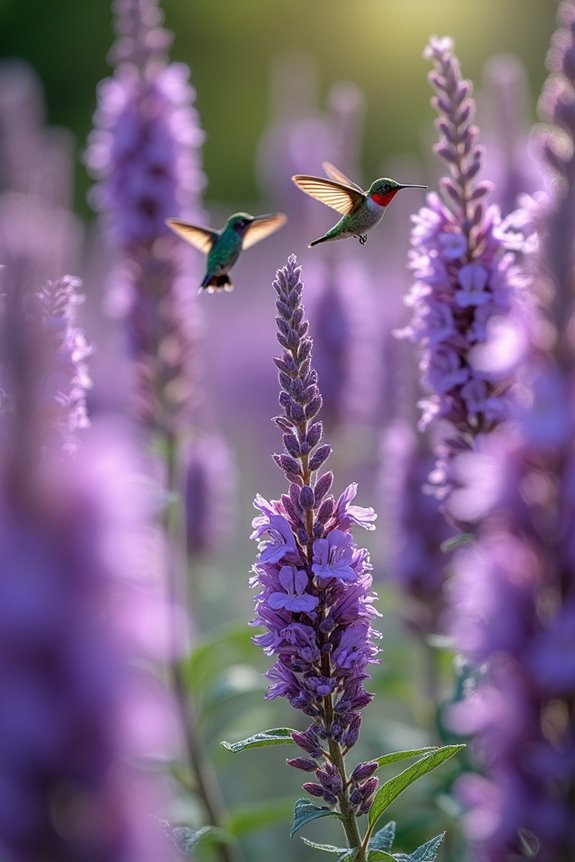
While bee balm requires moisture and attention, Russian sage (Salvia Yangii) takes the opposite approach—it’s a drought-tolerant plant that actually prefers you leave it mostly alone. Once established, this lavender-blooming plant needs minimal water, making it suitable for gardeners seeking low-maintenance nectar sources.
Russian sage thrives on neglect—a drought-tolerant, low-maintenance nectar source perfect for busy gardeners.
What makes Russian Sage effective:
- Abundant lavender flowers cover the entire plant from mid-summer through fall
- Full sun performance maximizes blooms and structural garden interest
- Minimal irrigation needs once roots establish in well-drained soil
- Reliable hummingbird visits thanks to consistent nectar availability
Plant Russian Sage in sunny borders where it creates textured lavender borders while attracting hummingbirds without demanding constant care. Occasional pruning keeps it shaped and flowering strong throughout the season.