I’ve spotted some surprises checking Planters labels repeatedly. Many varieties pack hidden sodium and added sugars—maltodextrin and corn syrup boost calories without nutrition. Gelatin appears in dry roasted options, often unlisted on photos. Peanuts naturally develop mold during growth; Planters doesn’t consistently disclose safety details. Since Hormel’s 2021 acquisition, sustainability reporting largely vanished—just incremental packaging tweaks emerged. Whole Foods 365 offers clearer ingredient transparency by comparison. Each factor matters more than you’d expect.
Gelatin in Planters Peanuts: What You Should Know
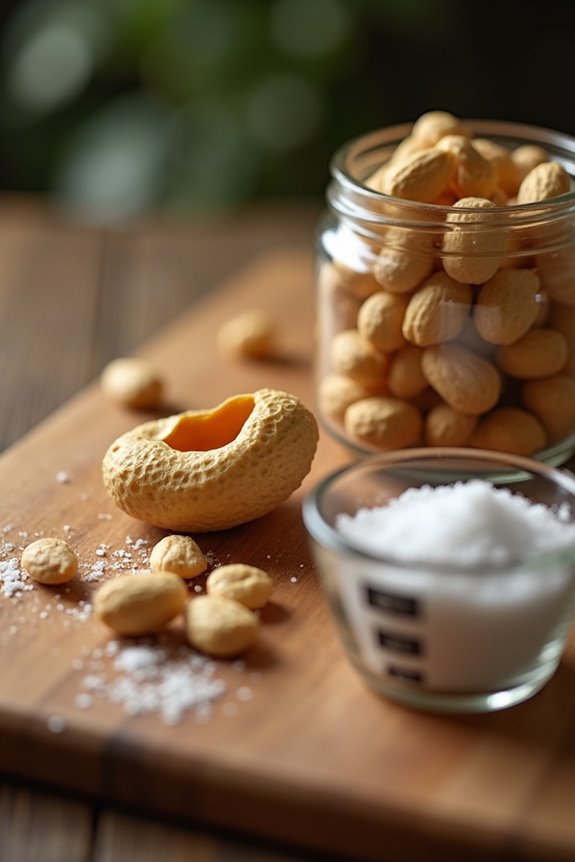
Gelatin serves two purposes:
- Improves texture consistency
- Enhances shelf stability
The presence of gelatin isn’t always obvious on product photos or websites, creating transparency concerns among consumers. However, one option exists: Planters’ Lightly Salted variety contains only peanuts and sea salt—no gelatin added.
Checking the ingredients label remains your best option. Look for “gelatin” specifically listed to make informed choices matching your dietary preferences and values.
Sodium and Sugar Levels Mask Whole Nut Nutrition
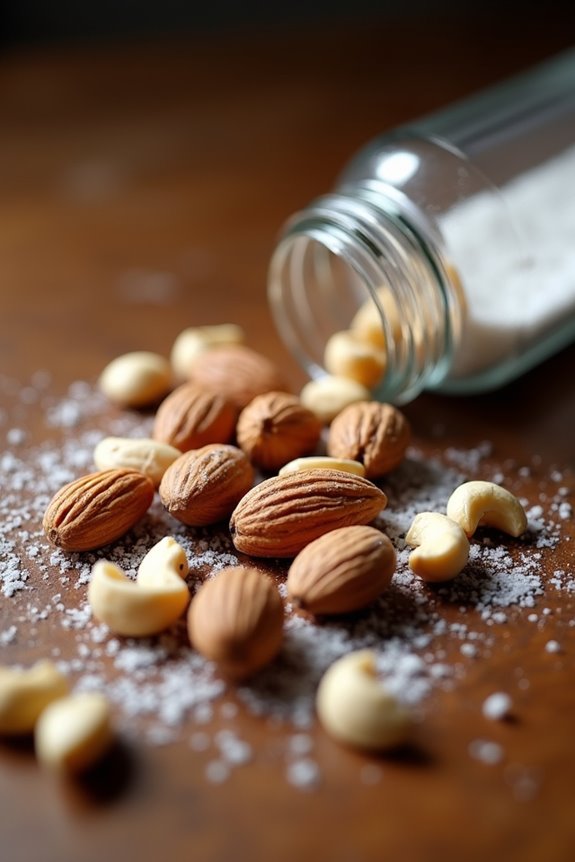
Many Planters roasted peanuts contain surprising amounts of sodium and added sugars that mask the whole nut nutrition you’re actually paying for. When I look at products like Salted Caramel Peanuts, the sweetness overwhelms that natural, nutty flavor—which tells me the salt and sugar levels are working overtime.
What’s Really Happening
These additions contribute extra calories beyond peanuts’ healthy fats and protein. Ingredients like maltodextrin and corn syrup stack up quickly. For people watching their sodium intake, these versions can undermine cardiovascular benefits that make peanuts worthwhile in the first place.
Extra sodium and added sugars undermine peanuts’ cardiovascular benefits while maltodextrin and corn syrup pile on unnecessary calories.
Consider lightly salted or no-salt-added options instead. You’ll preserve peanuts’ basic nutrient profile without the masking additives.
Mold Risk in Peanuts and Why Transparency Matters
Mold Risk in Peanuts and Labeling Clarity
Peanuts develop mold naturally during growth and storage. Planters does not consistently disclose this risk on their labels. When examining product labeling, you must search for information manufacturers should provide upfront.
What You Need to Know
Peanut contamination occurs in facilities that process multiple allergens. Cross-contamination risks increase when companies handle gluten or tree nuts in nearby areas. This allergen risk applies whether you have sensitivities or are feeding your family.
Ingredient lists vary between product photos and websites, making mold safety verification difficult. You cannot evaluate risks that remain unclear.
Your Move
Read past marketing claims. Contact manufacturers directly about their mold testing protocols and facility practices. Request the transparency you deserve.
How Hormel’s Ownership Affects Planters’ Sustainability Practices
What happens to a brand’s environmental commitments when a meat-focused company takes the wheel? Since Hormel acquired Planters in 2021, the sustainability conversation shifted noticeably. Here’s what changed:
- Packaging reductions: Planters introduced 8% less plastic in peanut-shaped packaging (2022) and post-consumer recycled content in some cashews (2023)
- Dimmed transparency: Post-acquisition reporting on fairtrade sourcing and farmer programs became sparse
- Supply-chain silence: Detailed environmental disclosures largely disappeared from their communications
The reality is Hormel’s ownership hasn’t sparked comprehensive sustainability improvements. We’re seeing incremental packaging tweaks rather than systemic change. Without consistent fairtrade sourcing commitments or transparent supply-chain practices, Planters’ environmental impact remains unclear—and that matters when you’re choosing what to buy.
Planters vs. Whole Foods 365: Value Comparison
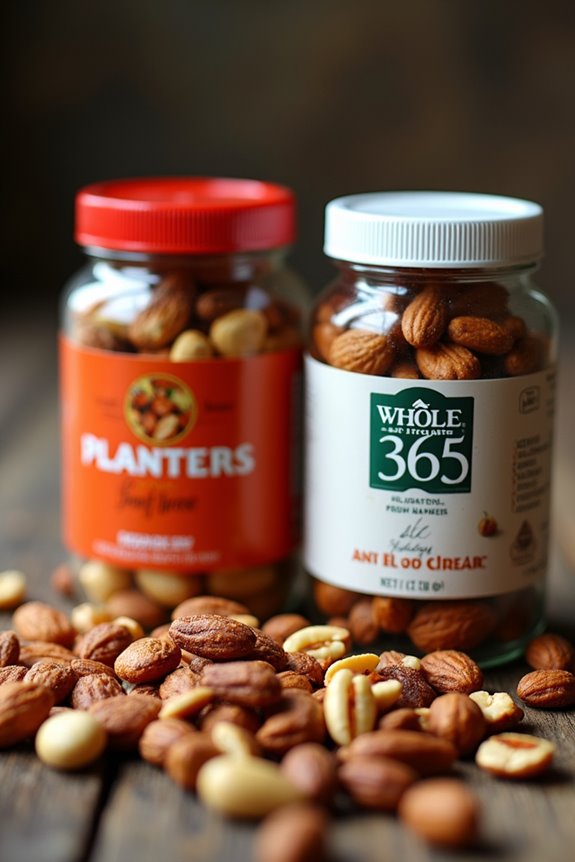
When you’re standing in the snack aisle comparing two bags of peanuts, the choice between Planters and Whole Foods 365 comes down to more than just price—it’s about what you’re actually getting for your money.
Price and Promotions
Planters frequently appears on sale at discount retailers like Grocery Outlet, making them budget-friendly. Whole Foods 365 pricing depends on store promotions, often costing more.
What’s Inside Matters
Planters dry roasted varieties contain gelatin, sugar, and corn syrup, while 365 offerings provide clearer labeling on ingredients. This transparency matters when you’re checking for gluten cross-contamination concerns.
Sustainability Trade-offs
Planters reduced plastic packaging by 8% in 2022, but sustainability reporting has stalled post-Hormel acquisition. You’ll find better ingredients documentation with 365.
The real value? Choose based on your priorities: savings or ingredient clarity.