Plain Planters cashews aren’t certified gluten-free, though the nuts themselves contain no gluten ingredients. The real issue? Shared manufacturing equipment means cross-contamination is possible. Planters hasn’t pursued third-party certification like competitors such as Nuts.com or Blue Diamond have. If you’ve got celiac disease or gluten sensitivity, you’ll want to check each package’s label for allergen warnings and consider contacting Planters directly about their processing lines. The specifics of their production setup matter more than you’d think.
Do Planters Cashews Contain Gluten?

If you’re managing celiac disease or severe sensitivity, you’ll want Planters products explicitly labeled gluten-free, or consider brands with certified gluten-free certification instead.
Cross-Contamination: Why Planters Isn’t Certified
Because Planters produces multiple product types on the same manufacturing equipment, cross-contamination becomes a real concern—even when individual cashew products don’t contain gluten ingredients.
| Risk Factor | Impact |
|---|---|
| Shared machinery | Gluten residue transfers |
| Multiple product lines | Cross-contact likely |
| No certified gluten-free claim | No third-party verification |
| Limited testing | Sample coverage gaps |
| Label absence | Consumer uncertainty |
Why certification matters: A certified gluten-free label requires independent testing and facility audits. Planters hasn’t pursued this, leaving you without official assurance. The company acknowledges cross-contact possibility, which is honest but unhelpful if you need true safety.
Your move: Check labels directly and contact Planters if you’re sensitive. Independent tests like Nima Sensor show promise, but they’re snapshots—not guarantees across entire production batches.
Reading the Planters Label: What’s Missing
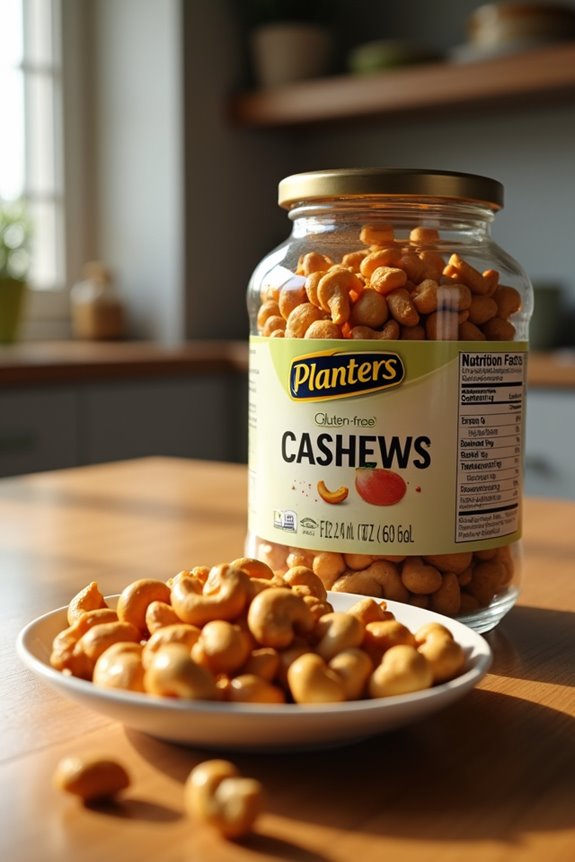
What’s actually written on a Planters cashew package tells only part of the story. You won’t find a bold “gluten-free” certification on most varieties, even plain salted ones. Here’s what I’ve noticed: Hormel states some products contain no gluten ingredients, but they stop short of making universal claims.
The real issue: gluten-free labeling requires specific language. Without it, you’re left guessing. The label mentions cross-contamination risks—that shared equipment processing trail mixes with gluten—but doesn’t spell out safety margins.
You’ll need to:
- Check ingredient lists carefully
- Look for allergen statements
- Contact Planters directly if unsure
The label’s silence about gluten-free status means you are responsible for verification.
Planters vs. Certified Alternatives: Why Certification Matters

| Factor | Planters | Certified Brands |
|---|---|---|
| Label Claim | Inconsistent | Clear GF mark |
| Testing | Limited disclosure | Third-party verified |
| Cross-contamination Risk | Possible | Minimized |
| Peace of Mind | Lower | Higher |
When you choose certified alternatives, you’re getting a promise backed by independent testing. Planters’ parent company confirms some products contain no gluten ingredients, yet certification remains absent. That gap matters if you’re managing celiac disease or sensitivity seriously. You need that assurance without guessing.
The Certification Gap: What Planters’ Lack of Labeling Means for You

So here’s the real problem: you’re standing in the grocery aisle, holding a jar of Planters cashews, and there’s no gluten-free label on the packaging.
That absence matters. Without certified gluten-free labeling, you lack verification of safety. Planters doesn’t guarantee their nuts are safe across all products, which means cross-contamination during manufacturing is a legitimate concern—shared equipment can introduce gluten traces you won’t detect.
The label becomes your only reliable verification tool. Since Kraft/Hormel doesn’t provide universal claims, you can’t assume one product matches another. One batch might test clean; the next won’t.
For stricter dietary needs, this gap directs you toward certified alternatives. They’ve undergone third-party verification and maintain dedicated processing lines. It’s the assurance Planters simply doesn’t provide.
What Gluten Tests Show About Planters Cashews
Think of it like washing dishes: one contaminated plate can affect your whole sink. One test result doesn’t cover your entire purchase history.
Certified Gluten-Free Alternatives to Planters Cashews

If you’re strict about gluten, I’d rather point you toward brands that carry actual gluten-free certification—like GFCO or GFFP labels—instead of guessing whether Planters’ shared equipment poses a risk for you. I’ll compare a few solid options across Blue Diamond’s certified cashew selections, Nuts.com’s dedicated gluten-free inventory, and how these brands stack up against Planters in terms of testing transparency and real-world reliability. You’ll find that certified options give you the confidence Planters’ inconsistent labeling just doesn’t provide.
Blue Diamond Certified Options
Their roasted and salted varieties deliver the same satisfying crunch without the worry. The certification means they’ve tested batch samples regularly and documented their safety measures. For those managing celiac disease or gluten sensitivity, this transparency matters. You’re not guessing here—you’re getting assurance. Blue Diamond’s commitment to segregated processing provides confidence that justifies the price difference.
Nuts.com Gluten-Free Selection
- Certified gluten-free labeling verified by third-party organizations
- Dedicated processing facilities separate from gluten-containing products
- Transparent sourcing information you can verify
- Multiple roast options (raw, roasted, salted) all certified
- Competitive pricing comparable to mainstream brands
You’re joining a community that prioritizes clarity over convenience. These cashews arrive with documentation proving they meet strict gluten-free standards—no cross-contamination risks hiding in fine print. When you’re managing gluten sensitivity seriously, that certification matters. Nuts.com delivers the accountability Planters doesn’t consistently provide.
Brand Comparison And Testing
Better alternatives include:
- Nuts.com – carries GFCO and GFFP certifications
- Third-party verified options reducing contamination worry
I tested Planters salted cashews with a Nima sensor and got a gluten-free result, but one test doesn’t guarantee safety across batches. Certified brands remove guesswork. They’re processed separately, meaning no shared equipment with gluten products. You’ll pay slightly more, but you’re investing in reliability rather than risking your health.
Checking Planters Before You Buy: A Practical Approach
When you’re standing in the aisle comparing cashew options, checking the label itself is your first line of defense—you’ll want to look for either “gluten-free” certification or a statement about allergen processing. Even if a Planters product lists no gluten ingredients, the real concern is cross-contamination, which happens when gluten-containing foods touch your cashews on the same equipment during manufacturing. If you don’t spot clear labeling or certifications, it’s worth a quick call to Planters’ customer service to ask about their specific production lines, since that five-minute conversation might save you from an unexpected reaction.
Label Verification Methods
How do you know what’s safe to grab off the shelf? Reading carefully is your first defense. Here’s what I check every time:
- Gluten-free labeling statements — Look for explicit claims on the front or back
- Cross-contact warnings — Spot phrases like “may contain” or “processed on shared equipment”
- Ingredient lists — Scan for obvious gluten sources (wheat, barley, rye)
- Certification symbols — Recognize third-party seals indicating verified gluten-free status
- Manufacturing details — Note if different Planters products use separate production lines
Since Planters processing varies by item, I don’t assume one product equals another. I verify each package individually before buying. This habit takes thirty seconds and protects you when gluten matters.
Cross-Contamination Risk Assessment
Just because a Planters cashew package doesn’t explicitly warn you about gluten doesn’t mean cross-contamination isn’t a risk worth considering. Here’s what I’ve learned: Planters’ processing lines may handle gluten-containing products, creating potential contact with shared equipment.
What This Means for You
- Planters doesn’t universally claim gluten-free labeling on plain nuts
- Independent testing showed no gluten detected in salted cashews, yet manufacturing concerns remain
- Cross-contamination happens when gluten particles transfer between products during processing
Your Next Steps
Check the specific product label carefully. If you’re sensitive to gluten, contact Planters directly about their processing lines. Consider certified gluten-free alternatives like Nuts.com or Emerald for guaranteed safety. Testing kits like Nima can provide additional assurance before consuming.