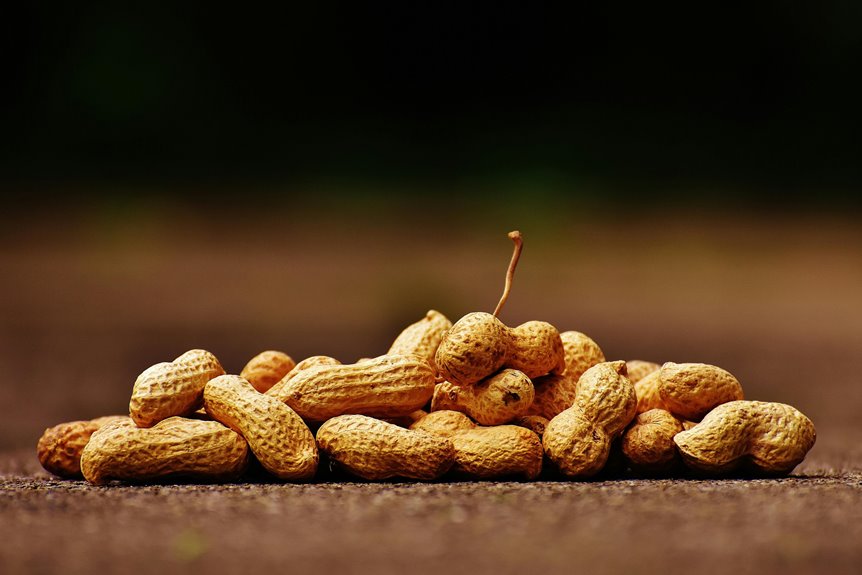
Planters peanuts work well if you’re watching calories and sodium—one ounce gives you 170 calories, 7–8 grams of protein, and heart-healthy monounsaturated fats that help manage cholesterol. The unsalted dry-roasted variety keeps sodium at just 75 mg per serving.
You’ll want portion control since they’re calorie-dense, and the 2 grams of saturated fat fits most diets when eaten mindfully. They’re a solid snack choice for weight management and heart health, though the details matter more than you’d think.
Should You Eat Planters Peanuts? Quick Answer for Your Diet Type
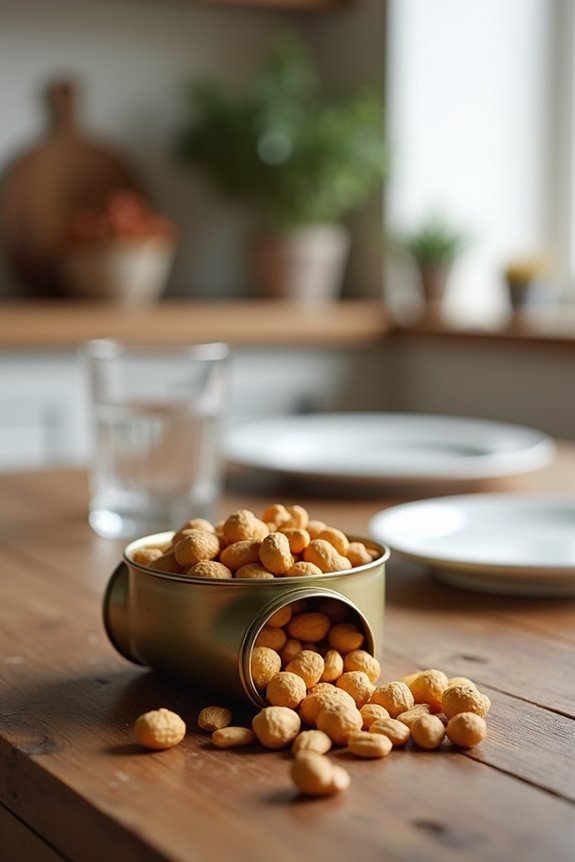
Why’s it that peanuts get such mixed reviews when you’re trying to eat better? I’ve found Planters Unsalted Dry Roasted Peanuts work well if you’re watching your intake carefully.
What to consider:
- 170 calories per ounce keeps portions manageable
- 8g protein helps you feel full longer
- 2g fiber supports digestion
- Unsalted means lower sodium than alternatives
- Mostly unsaturated fats with just 2g saturated fat, which aligns with heart health guidelines
The catch? You’ll need portion control. They’re calorie-dense, so measuring out your serving matters. If you’re counting calories or managing saturated fat intake, these peanuts fit the bill—provided you stick to one ounce and don’t have a peanut allergy.
Nutrition Facts: What 1 Oz of Peanuts Actually Delivers
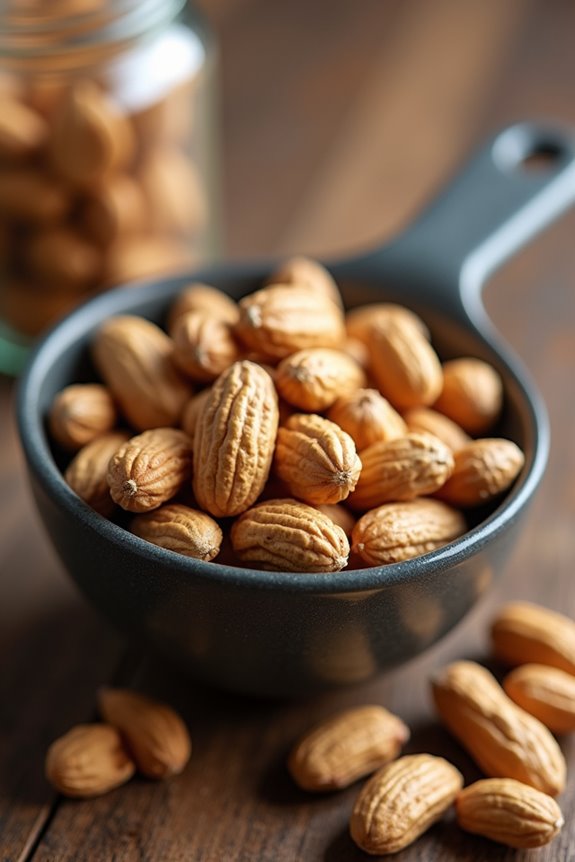
- 2 grams of dietary fiber supporting your digestive health
- Only 1 gram of sugar, keeping things relatively clean
- Key minerals like manganese (25% of daily value) and niacin (30% of daily value)
- Vitamin E at 2.3 mg, an antioxidant that matters for your cells
The nutrition facts show these peanuts deliver real nutritional density without unnecessary additions—just roasted peanuts doing their job.
The Fat Profile: Why Monounsaturated Fats Protect Your Heart
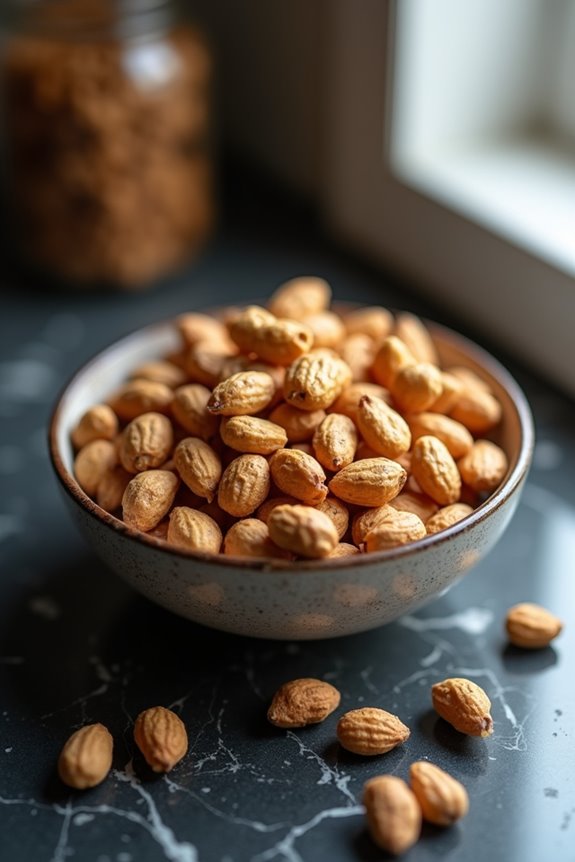
When you’re looking at a nutrition label, the fat content might make you nervous—but I’d argue that’s exactly backward with Planters unsalted dry roasted peanuts.
Here’s what actually matters: about 50% of peanut fat is monounsaturated fats, the kind research links to CHD risk reduction. You’re getting 7g of these beneficial fats per ounce, plus trans fat 0 g—meaning you’re not working against your heart health.
These monounsaturated fats do real work for you. They lower LDL cholesterol (the problematic kind) while keeping HDL cholesterol stable, improving your overall peanut fat profile. Think of it like olive oil’s benefits in convenient form.
When you swap saturated fats for peanuts, you’re making a practical choice that supports heart health without sacrifice.
Protein Content: How Peanuts Keep You Feeling Full
Now that we’ve covered how peanuts protect your heart through their fat profile, let’s talk about what makes them such a satisfying snack: protein.
A 1-ounce serving of Planters dry roasted peanuts delivers 7–8 grams of protein—that’s significant for keeping hunger at bay. Here’s how this works for you:
- Protein triggers fullness signals in your brain, reducing overall appetite between meals
- Fiber (2g per serving) combines with protein to extend satiety longer than carb-heavy snacks
- The protein-to-calorie ratio gives you more staying power per 170 calories than lower-protein alternatives
- Portion control becomes easier when you’re genuinely satisfied, supporting weight-management goals
When I grab a handful of these peanuts, I’m not hunting for snacks an hour later. That’s the protein and fiber doing their job—keeping you fuller, longer.
Sodium Levels: Impact on Blood Pressure and Health
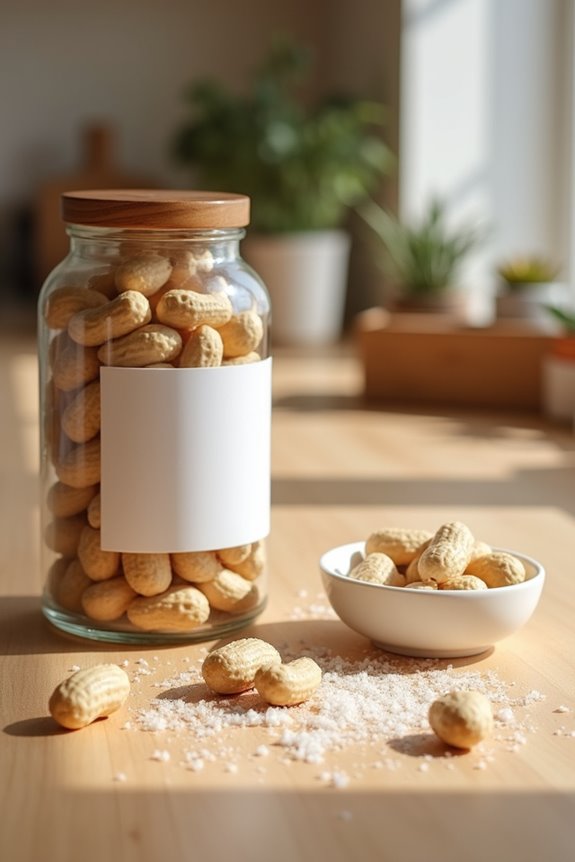
Why does sodium matter so much when you’re picking a snack? I didn’t think much about it either until I realized how much sodium sneaks into everyday foods. When you eat too much sodium, your body holds onto water, which can raise your blood pressure. That’s why I switched to Planters Unsalted Dry Roasted Peanuts.
Each 1-ounce serving contains just 75 mg of sodium, making it a low-sodium choice. The nutrition facts also show 0 g trans fat, which is another benefit for your heart. By choosing unsalted varieties over salted options, you’re actively supporting better blood pressure control.
| Factor | Benefit |
|---|---|
| 75 mg sodium | Manages intake |
| Unsalted option | Reduces risk |
| 0 g trans fat | Heart healthy |
| One serving | Easy portion |
| Daily substitute | Supports health |
Why Roasted Peanuts Retain Health Benefits (Bioactives Explained)
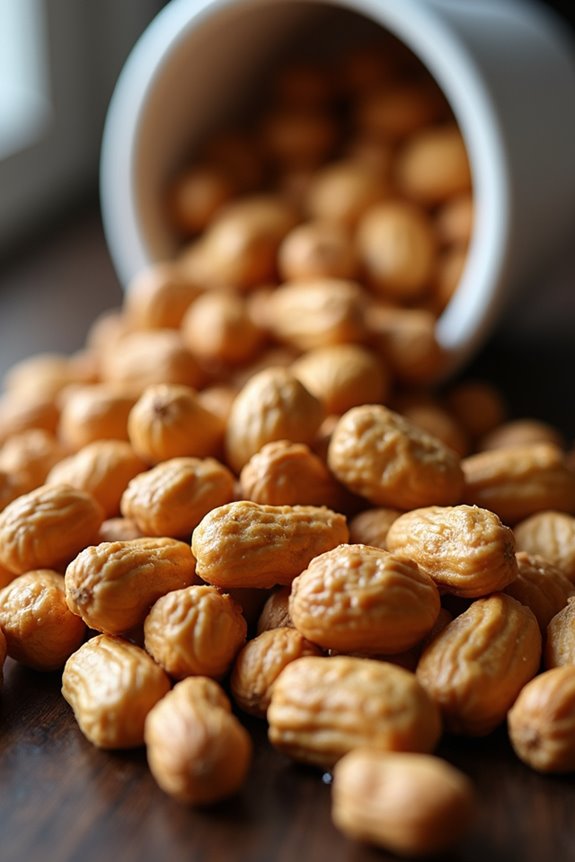
The bioactive mix you’re getting in roasted peanuts is solid: Coenzyme Q10, resveratrol, flavonoids, phytosterols, and vitamin E all remain stable through the roasting process and work together to neutralize free radicals in your body. Plus, when you add peanut skin back into products like peanut butter (which Planters does in some varieties), you’re getting more fiber and phenolic content without extra processing. So your roasted peanuts still deliver roughly 7 grams of monounsaturated fats per ounce—the heart-healthy kind—plus protein and fiber that work together to support longevity.
Roasting Temperature and Bioactives
When you roast peanuts, something interesting happens—the heat actually boosts the healthy compounds (called bioactives) that make peanuts worth eating in the first place. I’ve learned that the temperature you choose really matters for maximizing those benefits.
Here’s what I discovered about roasting temperatures and their effects:
- 180°C for 12–15 minutes elevates phenolics and antioxidants significantly
- 160°C for 40–60 minutes achieves similar bioactive increases with gentler heat
- Coenzyme Q10 and vitamin E levels rise through both roasting and boiling methods
- Monounsaturated fats remain stable while antioxidant activity potentially increases
The takeaway? You’re not sacrificing nutrition when you choose roasted peanuts. The heat actually works in your favor, enhancing the compounds your body appreciates most.
Heat-Stable Antioxidant Compounds
How do peanuts keep their good-for-you compounds intact even after roasting? The heat actually strengthens certain beneficial substances in peanuts rather than destroying them.
When we roast peanuts at 160–180°C, the roasting process elevates heat-stable antioxidants like vitamin E, flavonoids, and resveratrol. These compounds don’t break down; they become more concentrated. We also see increases in Coenzyme Q10 and phenolics—compounds that fight free radicals in our bodies.
Keeping peanut skin on products like peanut butter matters. The skin contains additional phenolics and fiber, boosting antioxidant content further.
How Planters Peanuts Compare to Almonds, Cashews, and Walnuts
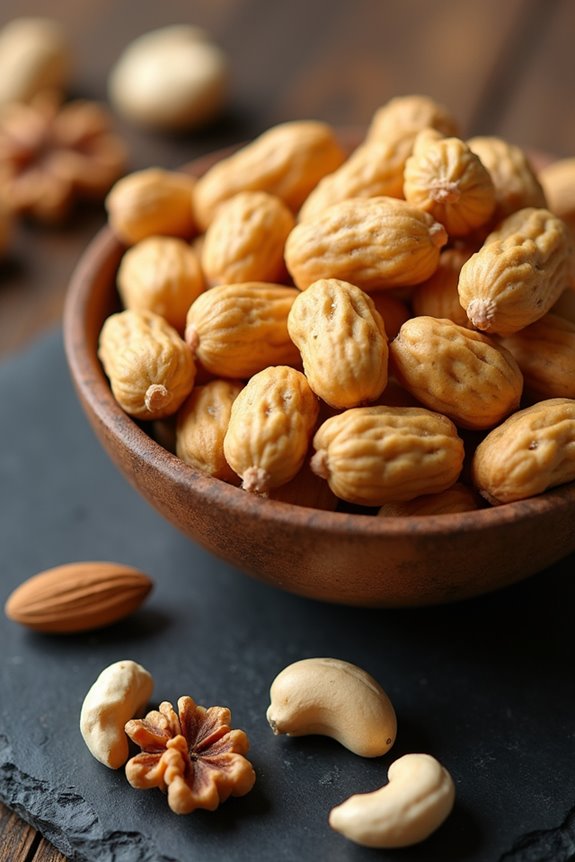
I’ve found that when you’re picking between different nuts, the nutritional profile matters more than you’d think—Planters unsalted peanuts give you about 7–8 grams of protein per ounce, which matches almonds and beats cashews (which only have around 4 grams), while their 14 grams of total fat sits lower than almonds but includes heart-friendly monounsaturated fats. What I find practical is that peanuts deliver solid vitamin E and niacin like almonds do, though walnuts edge them out with more omega-3s (a type of fat that supports heart health), and Planters’ no-added-oil approach means you’re getting less sodium than many salted varieties. If you’re weighing which nut fits your diet, peanuts hold their own for protein and satiety while staying lighter in total calories—something worth considering if heart health or weight management is your goal.
Nutritional Profile Comparison
So what’s the real difference between grabbing a handful of Planters peanuts versus almonds, cashews, or walnuts?
Peanuts stand out in the lineup:
- Protein content — Planters deliver 8g per serving, outpacing most competitors
- Monounsaturated fats — Similar heart-healthy profile to other nuts, supporting your wellness goals
- Micronutrients — You’ll get 20% calcium, 10% magnesium, and 15% vitamin E per serving
- Added sugars — Zero grams, keeping your intake clean
The advantage? Peanuts protein hits harder while maintaining that monounsaturated fats benefit you’d find elsewhere. Plus, they pack 2g of dietary fiber and calcium magnesium vitamin E that support overall health. They’re not flashier than almonds, but they’re reliable—giving you solid nutrition without the premium price tag.
Heart Health Benefits Analysis
When you’re comparing Planters peanuts to almonds, cashews, and walnuts, the heart-health story gets interesting because peanuts actually hold their own in the fat department—they’ve got 7g of monounsaturated fats per ounce, which is the good kind that supports your cardiovascular system just like you’d find in those pricier tree nuts.
Protein and Cholesterol Benefits
Here’s where it gets practical: peanuts deliver about 7–8g of protein per serving, matching competitors and boosting your satiety so you’re not reaching for snacks an hour later. Peanut consumption can reduce total cholesterol and LDL cholesterol levels. The unsalted dry-roasted format matters too—you’re avoiding extra sodium and trans fats that might undermine those benefits. Keep portions reasonable though; heart health works best with moderation.
Peanut Allergies: Symptoms, Severity, and Safe Alternatives
I want you to know what you’re facing:
- Mild symptoms include hives, itching, and oral tingling
- Severe reactions like anaphylaxis require immediate epinephrine auto-injector use
- Cross-reactivity means tree nuts or legumes might trigger similar responses
- Label reading reveals hidden peanuts in unexpected products
Finding What Works
Safe alternatives exist: sunflower seeds, sesame seeds, tree nuts (if tolerated), and pea-based snacks offer similar nutrition without the risk. Carrying medical identification and your epinephrine auto-injector protects you when reactions progress rapidly. You’re not alone managing this.
Hidden Drawbacks: Who Should Avoid or Limit Peanuts
Who Needs to Reconsider
Several groups should limit or skip Planters peanuts. Here’s what you’re dealing with:
| Group | Key Concern |
|---|---|
| People with allergies | Allergic reactions can be severe |
| Sodium watchers | Added salt increases blood pressure risk |
| Sugar-conscious eaters | Added sugar negates heart benefits |
| Weight-focused individuals | Calorie-dense (170 per ounce) causes weight gain |
| Storage-concerned folks | Contamination risk from improper conditions |
The Real Talk
If you’re monitoring sodium or sugar intake, check those labels—some brands pack significant amounts. The contamination risk matters too; proper storage prevents issues. And those 170 calories per ounce add up fast if you’re not careful. You’re justified in considering these drawbacks with care.
How Much Should You Eat Per Day?
I’ll be honest—the standard serving size of 1 ounce (about 23 peanuts or a small handful) is where you’ll want to anchor your daily intake, since that’s the portion that delivers all those nutrients without going overboard on calories. You’re looking at roughly 170 calories per serving, so fitting peanuts into your day means thinking about your total calorie budget and whether you’re eating them as a snack, a meal addition, or a pre-meal appetite suppressant. The trick isn’t just knowing the number—it’s actually sticking to it, which means measuring out your portions instead of eating straight from the jar, especially when you’re trying to manage your weight.
Recommended Daily Serving Size
How much is actually reasonable to eat? I’d suggest sticking with one ounce daily—that’s about 28 grams or roughly a small handful. This single serving gives you roughly 170 calories, 7–8 grams of protein, and heart-healthy fats without overdoing it.
Portion control matters because it’s easy to mindlessly munch through multiple servings. Here’s what one daily serving provides:
- 170 calories for sustained energy
- 14 grams total fat supporting heart health
- 7–8 grams protein for muscle maintenance
- 2 grams fiber aiding digestion
Since each container holds 16 servings, finishing a bag means consuming roughly 2,720 calories—substantially more than intended. I’ve found measuring out my daily serving beforehand prevents accidental overconsumption. This approach balances nutrition with realistic eating habits.
Caloric Intake Considerations
Where does a handful of peanuts fit into your daily calorie budget? Understanding portion control helps me make smarter snacking choices. A single 1-ounce serving delivers 170 calories—reasonable if you’re tracking intake.
Here’s what I watch:
- Fat content: 14g per serving supports satiety, meaning you’ll feel fuller longer
- Saturated fat: Only 2g keeps your heart-healthy goals on track
- Protein: 7–8g aids muscle maintenance without excess calories
- Sodium: 75mg remains modest, preventing water retention
The key is sticking to one ounce. I measure mine beforehand rather than eating straight from the jar—prevents mindless overeating. Combined with other foods, that sodium adds up, so I balance my day accordingly. For most diets aiming 2,000 calories daily, one serving represents roughly 8–9% of your total intake—a solid, sustainable choice.
Portion Control For Weight Management
The sweet spot for daily peanut consumption lands at around one 1-ounce serving—that’s roughly 23 peanuts or about a small handful. Sticking to this amount helps manage weight without feeling deprived.
Here’s why this portion works:
- Calorie control — One serving delivers 170 calories, fitting neatly into most weight management plans
- Protein and fiber — The 8g protein and 2g fiber keep you satisfied longer, reducing overall snacking
- Fat balance — You get mostly unsaturated fats (14g total) that support heart health without excess
- Sustainable habit — One daily serving feels manageable, not restrictive
Finding what actually sticks takes practice. This measured approach respects both your weight goals and your need for satisfying foods. Keep peanuts handy, but measure first—it’s the practical path forward.
Practical Ways to Use Planters Peanuts Daily
Once you’ve got a bag of Planters Unsalted Dry Roasted Peanuts in your pantry, you’ll probably wonder what to actually do with them beyond mindless snacking.
Once you’ve got Planters Unsalted Dry Roasted Peanuts in your pantry, you’ll wonder what to do beyond mindless snacking.
I’ve found these peanuts work best when integrated strategically into your daily diet. Here’s what I do:
Morning routine: I sprinkle a 1-ounce handful onto oatmeal for added protein and satiety that lasts through mid-morning.
Afternoon boost: I keep a portioned container at my desk—the 8g protein per serving keeps hunger at bay without derailing portion control.
Salad topper: I crush them lightly over greens, adding crunch plus heart health benefits through monounsaturated fats.
This approach transforms ordinary meals while supporting your wellness goals.
Are Planters Peanuts Worth the Price?
- Protein-to-price ratio: 8 g protein per serving supports satiety, meaning you’ll feel fuller longer
- Quality ingredients: No added oils or sugars keeps costs reasonable compared to flavored competitors
- Portion control matters: Smaller snack formats actually offer better per-serving value than bulk options
- Mineral content: 190 mg potassium and magnesium in one 28 g serving adds nutritional density
The price feels fair when I consider the heart-healthy fat profile and consistent quality. I’m not overpaying for branding—I’m investing in a straightforward, nutritious snack that aligns with my dietary goals. That’s worth it.
Final Recommendation: Best For, Best Avoided, and the Nuanced Middle
Best For: You’re a good fit if you prioritize heart health and want a no-fuss snack. The unsalted, dry-roasted preparation supports your sodium goals while delivering potassium and antioxidants.
Best Avoided: If weight management matters to you, the calorie density (170 per ounce) demands honest portion control. The 2 g saturated fat per serving also warrants attention if you’re limiting saturated intake.
The Middle Ground: Most of us land here. These peanuts work as occasional snacks when you’re intentional about measuring—grab a small handful, not the whole bag. That’s realistic nutrition.