The term “landscape” architects aren’t on the sidelines anymore—we’re driving climate strategy. The 2026 ASLA Climate Action Plan made biodiversity, water management, and resilience measurable project requirements, not optional additions.
We’re specifying native plants that sequester carbon, installing rain gardens that cut flooding by capturing runoff, and deploying sensors that optimize irrigation in real time.
That shift from aesthetic-focused to impact-driven work means you’re looking at projects that demonstrate environmental outcomes, not just intent. There’s more beneath this transformation worth understanding.
How 2026 Climate Action Plans Reshape Project Standards
How are we supposed to design environments that actually fight climate change instead of just looking pretty?
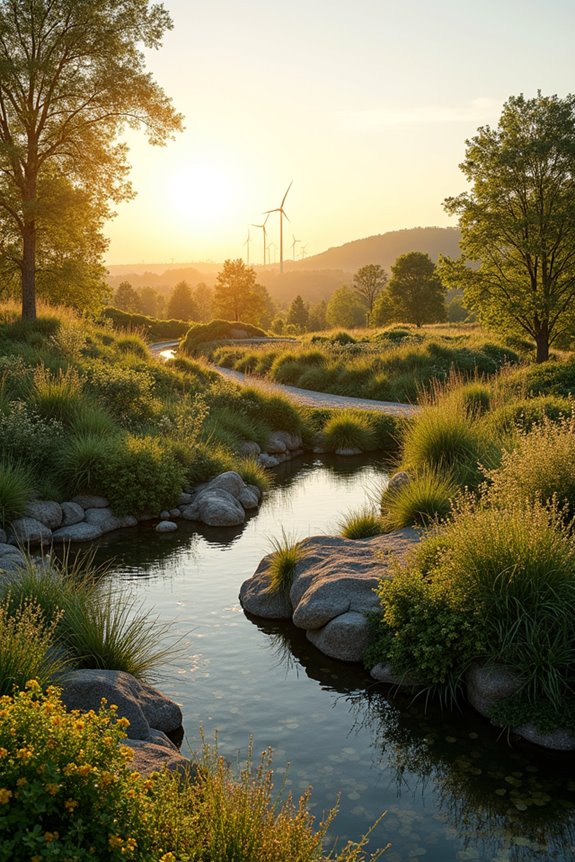
We’re moving past decorative approaches. The updated ASLA Climate and Biodiversity Action Plan sets clear targets: reduce greenhouse gas emissions and expand biodiversity by 2040. This means we’re making climate action central to every project decision.
What’s changing:
- Stormwater management now requires rain gardens, bioswales, and permeable surfaces instead of traditional drainage
- Biodiversity gains equal weight with aesthetics—plant selection directly supports carbon sequestration
- Projects must demonstrate measurable environmental impact, not just intent
We’re redesigning how landscapes function. These aren’t optional upgrades anymore; they’re foundational requirements. Your next project likely incorporates these standards whether you realize it or not.
Biodiversity and Native Planting Move From Trend to Requirement
Why do we keep designing with plants that won’t survive the next decade?
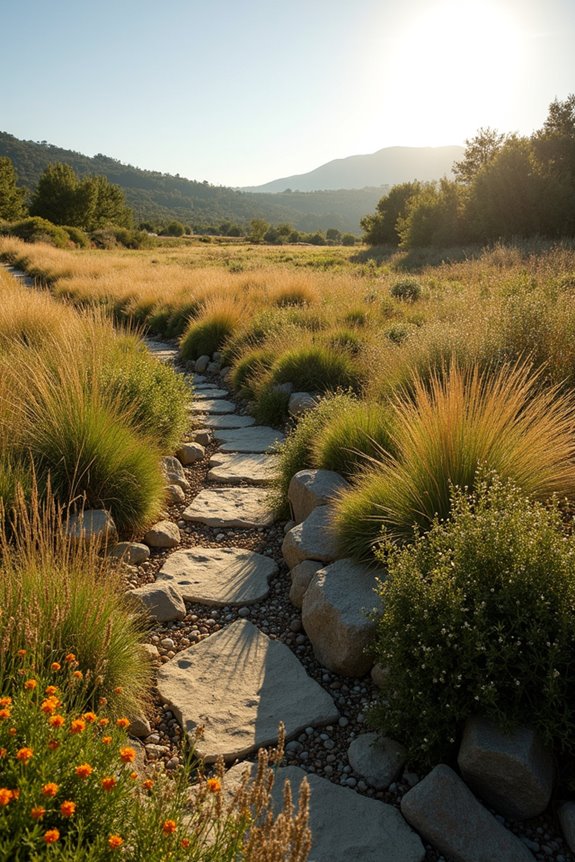
Native planting has shifted from optional nice-to-have to essential requirement. It’s not trendy anymore—it’s standard. We’re choosing species adapted to our specific climate zones because they actually perform well with minimal maintenance.
Native planting isn’t a trend anymore—it’s standard practice. Climate-adapted species simply perform better with minimal maintenance.
What’s changed:
- Native plants support local pollinators and wildlife, creating functioning ecosystems
- Climate adaptation means selecting drought-tolerant or flood-resistant species upfront
- Biodiversity becomes measurable criteria in project approval, not afterthought
Rain gardens and bioswales now integrate cohesively with native plantings, addressing flooding while supporting habitat. We’re building resilience into every design decision rather than fighting against local conditions.
Your landscape won’t need constant intervention. It’ll work with regional conditions instead of against them.
Water Management and Resilience Design: From Optional to Essential
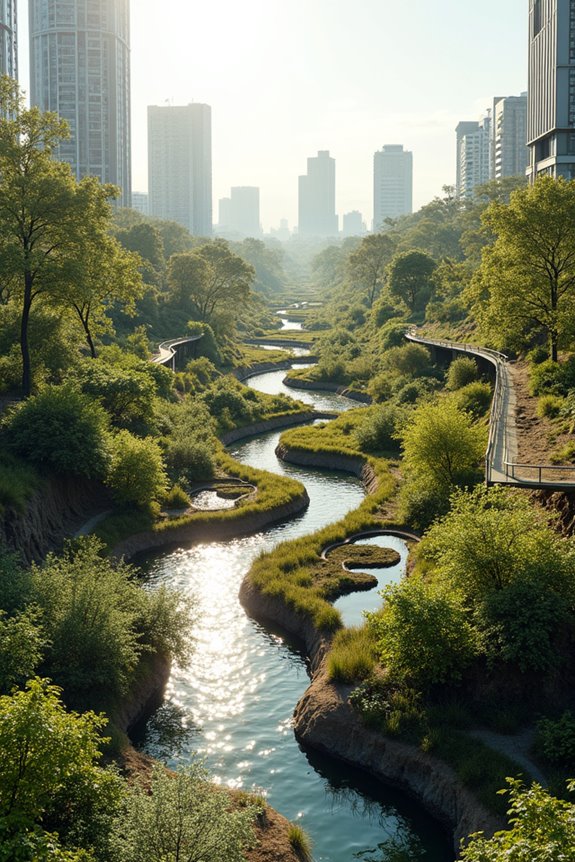
As extreme weather patterns intensify, we’ve moved from asking “wouldn’t it be nice to manage stormwater on-site?” to “how do we design environments that actually handle it?” Water management isn’t a bonus feature anymore—it’s the foundation of every project I’m working on.
Why It Matters Now
Rain gardens and bioswales are essential infrastructure. I’m designing spaces that capture runoff before it overwhelms drainage systems, reducing flood risk while recharging groundwater.
The Practical Shift
Permeable hardscapes replace traditional concrete. Native plants absorb water naturally. Sensor systems monitor soil moisture and adjust irrigation automatically, cutting water waste significantly.
Moving Forward
Resilience design integrates water efficiency with biodiversity. We’re building landscapes that work with climate stress, not against it. That’s where landscape architecture’s real value emerges.
Smart Technology and Sensors Cut Costs While Improving Outcomes
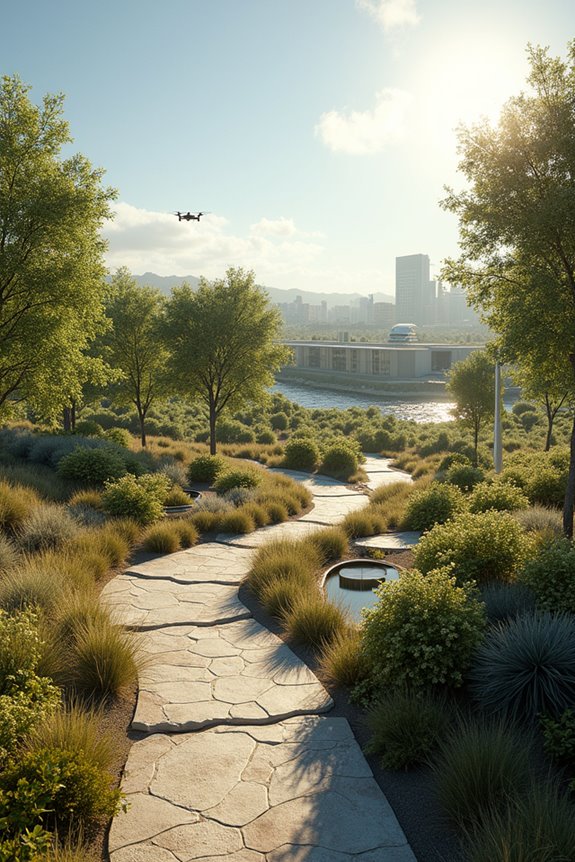
Technology’s quietly become the backbone of scenery management. You’re likely noticing smart irrigation systems popping up in neighborhoods—they adjust watering based on soil moisture and weather forecasts, cutting water waste significantly.
Smart irrigation systems adjust watering based on soil moisture and weather, cutting water waste significantly.
Here’s what changes:
- Sensors monitor plant conditions passively, catching problems before they worsen
- Data-driven insights guide plant selection and seasonal adjustments
- Solar-integrated lighting and automated shading reduce energy bills while regulating temperature
The practical payoff? You’re spending less on water, energy, and maintenance while your landscape stays in good condition. Hidden electrical conduits and app-based climate controls deliver this tech without cluttering your outdoor space. It’s not flashy—it just works, letting you control everything from your phone while focusing on what actually matters.
Wellness, Equity, and Access Become Client Priorities
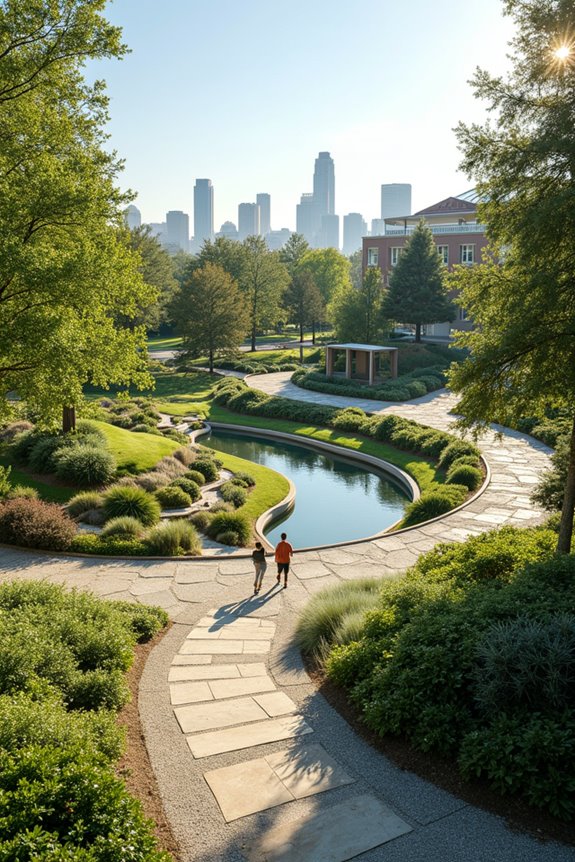
Where does your landscape actually serve the people using it—not just look nice on Instagram?
I’ve noticed clients now demand measurable wellness outcomes alongside aesthetics. They’re asking: Does this space work for everyone? That shift changes everything.
Wellness means integrating sensory elements—water features, aromatic plants, layered planting—that genuinely calm users. Equity requires designing spaces accessible to folks with different abilities and backgrounds. Accessibility isn’t an afterthought anymore; it’s built in from day one.
Your project brief now includes:
- Universal design standards
- Multiple entry points and rest areas
- Mixed plantings supporting local biodiversity
- Climate-resilient features
Clients recognize that inclusive, health-focused landscapes strengthen communities. They’re aligning business goals with genuine human needs. That’s not temporary—it’s practical investment in people.
Three Policy Levers Landscape Architects Must Control Now
If you’re serious about making landscapes that actually stick around, you can’t rely on hoping the next city council agrees with your vision. I’ve learned that we need to grab three specific levers—policy and regulatory frameworks, funding mechanisms, and governance structures—because that’s what keeps projects alive across different administrations and budgets. Without control over these levers, even the most well-designed project gets shelved when priorities shift or money dries up, so let’s talk about how you actually seize them.
Policy And Regulatory Leadership
- Build regulatory power: Draft enforceable standards that make resilience and biodiversity non-negotiable in development
- Scale advocacy education: Create accessible case studies showing ecological outcomes—wetland restoration, urban cooling, flood mitigation—that policymakers understand
- Secure government roles: More landscape architects in planning departments means design thinking shapes real budgets and timelines
We’re not asking permission anymore. We’re translating design excellence into enforceable rules that persist through election cycles and funding shifts. That’s how we protect landscapes for generations beyond our own.
Funding And Governance Integration
How do we move from designing resilient landscapes to actually funding and protecting them long-term?
I’ve learned that three policy levers unlock sustainability: funding allocation, regulatory decision-making, and long-term stewardship commitments. You can’t separate design excellence from the money and governance structures that keep projects alive.
| Policy Lever | Your Role | Impact |
|---|---|---|
| Funding Allocation | Advocate for budget lines | Stable resources for maintenance |
| Regulatory Decisions | Shape land-use policies | Protected resilience outcomes |
| Stewardship Commitments | Establish multi-generational care | Projects outlast political cycles |
When we control these levers, we’re not just creating landscapes—we’re building durable systems. Projects designed to educate policymakers about resilience justify investments today and tomorrow. That’s how we connect planetary-scale action with real governance and funding power.