
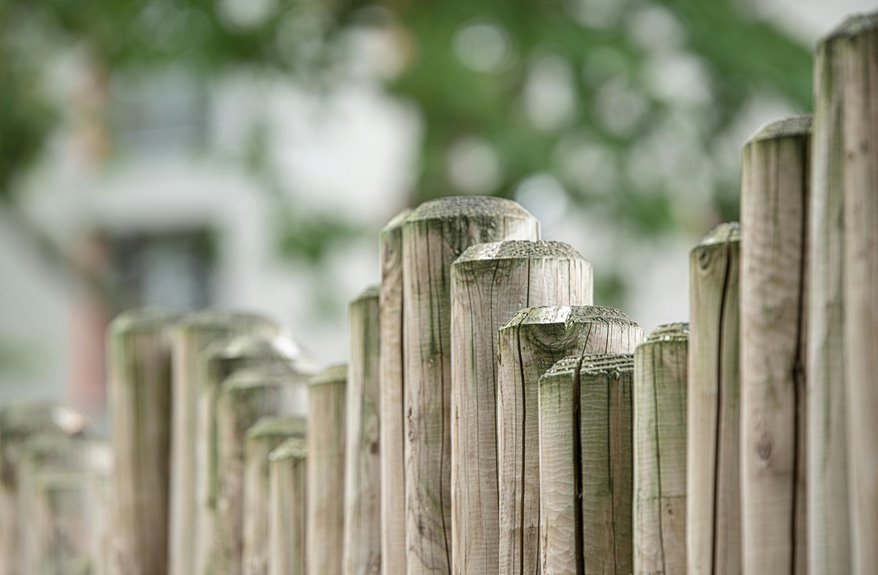
Fence timbers aren’t designed for underground use—they lack the ground-contact ratings that real fence posts carry. You’ll run into warping from moisture cycles, cracking under load, and rot that spreads fast in warm climates.
The real problem? That $20–$40 savings per post disappears when you’re replacing them every 5–10 years instead of investing $60–$90 in quality posts lasting 15+ years. The numbers tell a different story once you examine the full picture.
They’re Not Rated for Underground Use
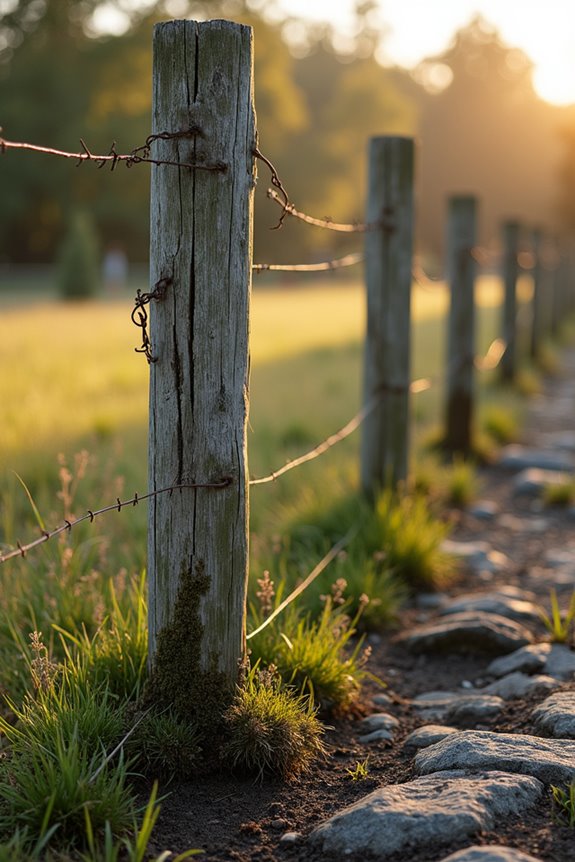
Why do landscape timbers fail so quickly when you sink them into the ground? Here’s the thing: they’re simply not designed for it. Landscape timbers lack ground-contact ratings that actual fence posts carry. This matters.
See, ground-contact rated posts undergo specific treatments and testing for underground use. Landscape timbers are the lowest grade of treated pine lumber without guaranteed insect protection. When you bury them, they’re exposed to moisture, soil chemicals, and insects that eat away at the wood from all sides.
Without proper ratings for underground exposure, your fence posts won’t have the durability you need. They’ll rot faster and potentially fail earlier than correctly rated alternatives. That’s why choosing posts rated for below-grade use protects your investment long-term.
Moisture Causes Warping and Twisting
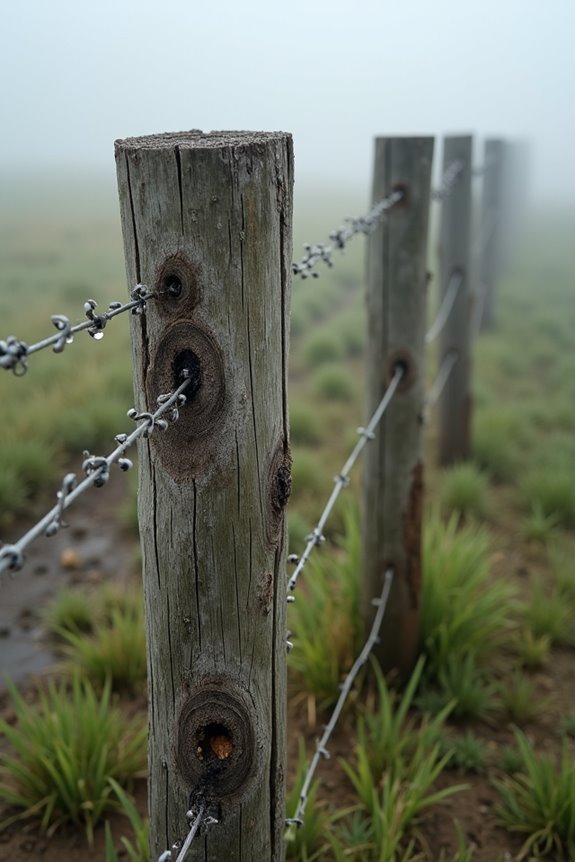
Moisture Causes Warping and Twisting
Even if landscape timbers resist rot better than standard treated lumber, they’ll still bend and twist when moisture gets involved.
Here’s what happens: water soaks into the wood’s outer surface, causing uneven drying that creates cracks and splits. Your fence posts then experience repeated cycles of wetting and drying, which accelerates movement and warping.
The moisture problem hits hard:
- Outer surfaces crack while inner wood stays damp, forcing boards to bow outward
- Repeated rain and dry spells make landscape timbers twist unpredictably throughout seasons
- Posts lose their vertical alignment, leaving gaps between boards
- Fence sections lean or sag as warping worsens over time
Unlike purpose-built fence posts designed for ground contact, landscape timbers cannot handle the constant moisture stress. Your fence becomes unstable and visibly misaligned within a few years.
Lower Grades Crack Under Load
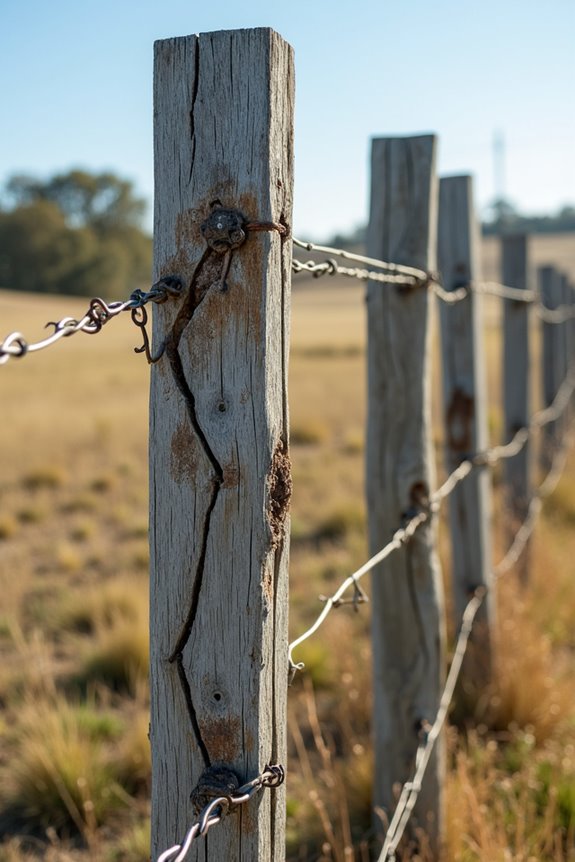
Timber landscape are typically the lowest grade of treated pine lumber available, and that’s where your real problems start when you’re using them as fence posts. Here’s the thing: 4×4 landscape timbers crack under load because they’re just not built for that kind of stress. When you’re supporting a fence panel’s weight, ground-contact rated timbers will eventually fail. Surface cracks appear even in new installations, and those gaps only get worse as moisture seeps in. Rot under load accelerates once water enters these cracks. You’re looking at structural failure within a few years, especially in humid climates or termite-prone areas. That’s why serious fence builders skip landscape timbers entirely. They’re designed for borders and edging, not bearing weight.
Rot Spreads Faster in Warm, Wet Climates

These lower-grade treated boards don’t get the same pressure-treatment protection that dedicated fence posts receive, so they absorb moisture like a sponge. In warm, wet regions, that moisture becomes a real problem.
Ground-contact landscape timbers deteriorate rapidly when soil stays damp. Fungal decay and termites spread in these conditions, advancing decay from the soil line upward into your above-ground sections. You’ll notice rot progressing faster than expected—sometimes within just a few years.
What makes this frustrating:
- Rot starts invisibly beneath the soil surface before you spot it
- Warm climates accelerate fungal growth by weeks or months
- Moisture wicks up through untreated wood grain constantly
- Replacement costs accumulate as posts fail prematurely
Unlike dedicated fence posts designed for ground-contact durability, landscape timbers simply can’t withstand prolonged moisture exposure in hot, humid environments.
Replacement Costs More Than Buying Right Initially
You might save $20 to $40 per post by choosing landscape timbers over genuine fence posts, but I’ve watched that initial savings disappear fast when replacement time rolls around.
Here’s what I’ve learned: those cheaper treated lumber posts fail within 5-10 years in most climates. Ground-contact posts last longer, sure, but they’ll still need replacing eventually. Meanwhile, you’re digging out rotted timber, hauling debris, and buying new material—often twice.
The real math works like this:
- Landscape timbers: $30-50 per post, replaced every 7 years
- Quality fence posts: $60-90 per post, lasting 15+ years
Over two decades, you’re spending double on replacements. I’ve learned the hard way: buy durable posts upfront. Your wallet will thank you.