
You’ve got three solid options: traditional drainage uses 3/4-inch bottom holes with screening to let water escape freely—ideal for hot, dry climates.
Self-watering systems (SIPs) skip holes entirely, relying on sealed reservoirs that wick moisture upward for weeks between waterings.
Hybrid systems combine both approaches for balanced performance.
Pair whichever you choose with filtration layers—coarse sand or fabric—to prevent soil from clogging your drains.
The specifics vary based on your climate and watering habits, so understanding each system’s maintenance demands matters more than you’d think.
Traditional Drainage Holes vs. Self-Watering Systems: Which Do You Need?
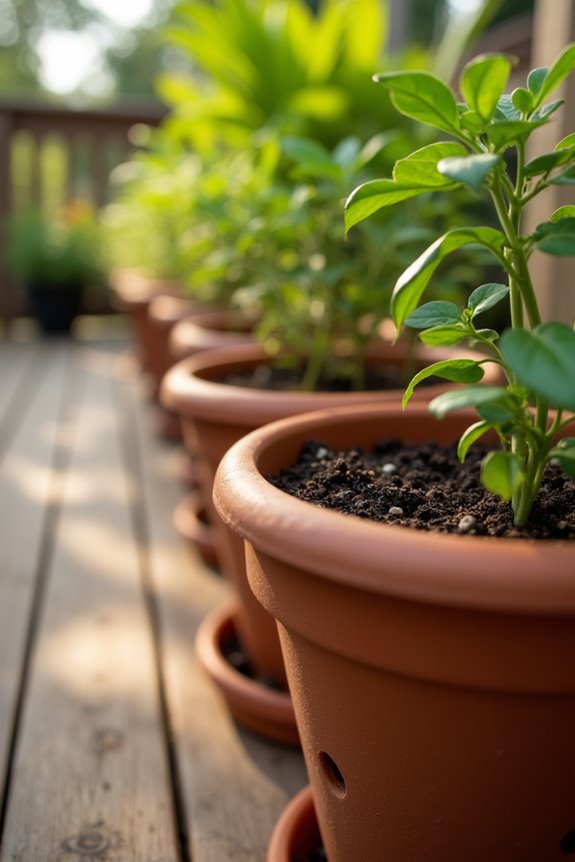
Have you ever noticed how plants in poorly draining containers struggle, their leaves turning yellow despite your best watering efforts?
Traditional drainage holes work straightforwardly: I drill about nine 3/4-inch holes across the bottom, letting excess water escape. I position them a couple inches up the sidewall to create a shallow well that catches fine soil particles while controlling drainage.
Self-watering systems take a different approach. They eliminate bottom holes entirely, using a reservoir beneath the soil that relies on capillary action—basically, soil wicks moisture upward as needed. I find this reduces surface drying considerably.
The trade-off? Self-watering planters require periodic flushing to manage salt buildup. Traditional drainage wins for simplicity and plant variety compatibility, while self-watering suits hands-off gardeners.
Why Waterlogged Roots Fail Plants in Under 24 Hours
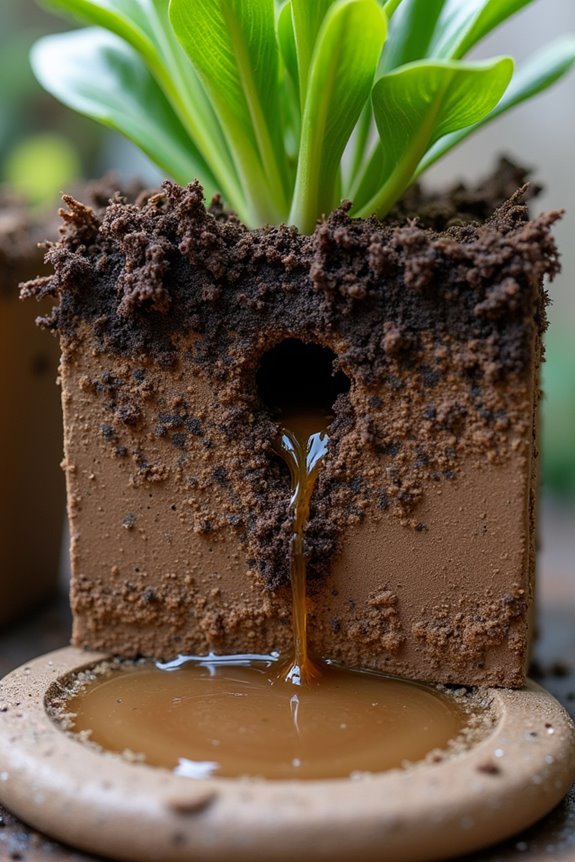
When water sits in your planter box soil without draining away, the roots can’t get the oxygen they need to survive—and this kills plants fast, sometimes in less than a day. What happens is the saturated soil creates an airless environment where harmful bacteria thrive, leading to root rot that spreads quickly through your plant’s root system. Understanding this timeline and how oxygen deprivation triggers bacterial growth shows why proper drainage is essential for plant survival.
Oxygen Deprivation in Soil
Why do roots in soggy planters collapse so fast? When soil stays saturated, air pockets disappear, and roots can’t breathe. I’ve watched plants decline rapidly because oxygen deprivation triggers anaerobic respiration—a metabolic process that produces toxic compounds like ethanol and acetaldehyde that damage root tissue.
| Condition | Effect | Timeline |
|---|---|---|
| High moisture | Pore collapse | Immediate |
| Poor drainage | Perched water table | Hours |
| Toxic buildup | Root stress | 12-24 hours |
| Gas exchange loss | Nutrient uptake fails | 24 hours |
| Complete saturation | Plant decline | 24+ hours |
Without proper drainage, roots suffocate. A perched water table—trapped water above the planter’s bottom—creates low-oxygen zones that stress everything above it. Rapidly draining systems and sub-irrigation methods maintain adequate aeration, keeping roots functional and preventing this cascade of failure.
Bacterial Root Rot Development
saturated soil blocks air from reaching roots. Roots suffocate, creating perfect conditions for rot bacteria to colonize. Black, mushy tissue spreads rapidly through the root system—sometimes collapsing your plant in under 24 hours.
Prevention beats treatment every time. That’s why drainage matters so much. Deep planters with unobstructed drain holes positioned away from supports keep water flowing out. I pair mine with soil filters to prevent clogging.
The takeaway? Invest in proper drainage now, avoid bacterial problems later.
Plant Collapse Timeline and Prevention
Once drainage fails, your plant doesn’t get a second chance—and that’s the hard truth I’ve learned the messy way.
The 24-Hour Crisis
Waterlogged roots collapse fast. When soil stays saturated, roots can’t breathe, and your plant wilts within hours—sometimes even if the surface feels moist. Root rot sets in, suffocating your plant from below.
Prevention That Works
I’ve found two strategies that actually stop this:
- Better drainage design: Install side-wall drains above the bottom well so water escapes without flooding your entire root zone
- Reservoir systems: These controlled setups provide roots with moisture without surface saturation, preventing standing water
The key? Air channels matter as much as water flow. Your planter needs both moisture and oxygen working together, not competing for space in waterlogged soil.
Drainage Hole Size and Spacing: The Math Behind 3/4-Inch Holes
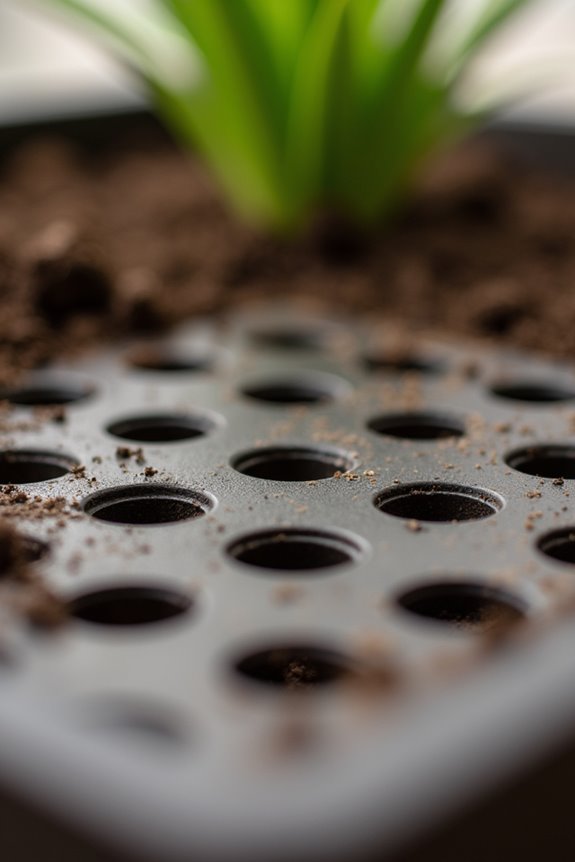
Most planter boxes benefit from drainage holes around 3/4 inch in diameter—a size that’s proven itself through plenty of trial and error. This diameter strikes the right balance between water drainage and soil retention, preventing both waterlogging and erosion.
Why This Size Works
Each hole drains roughly 1 cubic foot of water per minute when your water container fills completely. Spacing about 9 holes across the bottom distributes water evenly, avoiding localized wet spots that cause root rot.
Placement Matters
Position holes away from structural supports to prevent weakening the planter and maintain unobstructed drainage paths. This approach maintains consistent water tables above the reservoir while keeping soil where it belongs.
Bottom Screens and Filtration: Keeping Soil In, Water Out
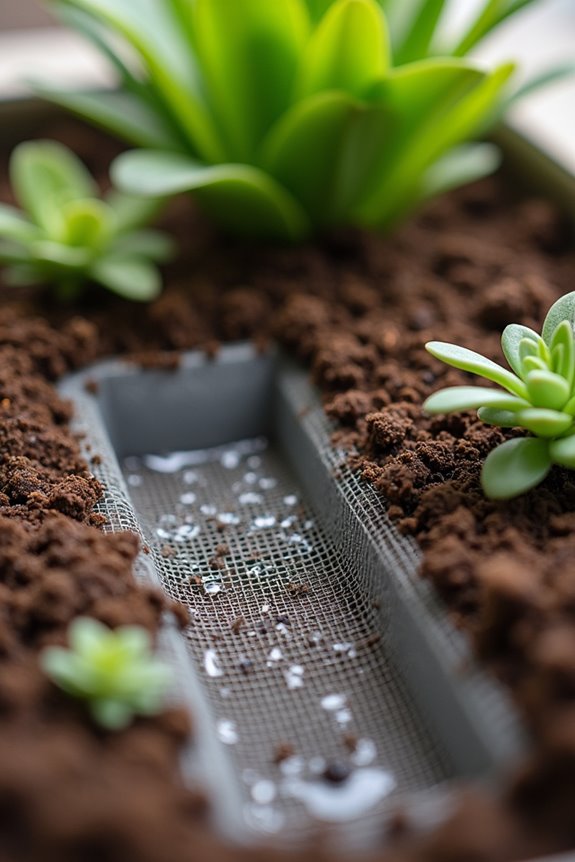
I’ve learned that placing a screen at the bottom of your planter box prevents soil loss while allowing water to drain freely. Select materials that won’t react with your soil or water, like plastic window screen or vinyl, and consider whether you need an extra filtration layer (such as 2 inches of coarse sand) to prevent fine particles from clogging your drainage holes. The right combination of screen material and filtration performance keeps your soil in place while allowing water to escape without creating a muddy mess below.
Material Selection and Compatibility
- Inert bottom screens (plastic window screen or similar) that prevent soil loss without blocking water
- Filtration aids like weed block fabric or coarse sand layers that balance drainage with soil retention
- A 2–3 inch coarse sand layer above the drain, which acts as a robust filter protecting your liner
These materials work together to stop fine soil particles from clogging your drain while maintaining proper water flow. Some gardeners even use drywall tape as a lightweight, reusable soil-retention aid over drain holes.
Filtration Performance and Soil Retention
For enhanced soil retention, layer a 2-inch thick coarse sand filter (1–2 mm grain size) on top. This slows fine particles and protects deeper filtration layers.
Filtration options include:
- Weed-block fabric (acts as root barrier too)
- Drain pads (3-layer systems work well)
- Drywall tape (lightweight, reusable alternative)
These materials replace traditional stones, keeping your soil contained while maintaining water flow—the core balance your planter box system needs.
Protecting Cedar: Why Liners Extend Planter Life
Cedar planters are popular, but the wood deteriorates quickly without protection from constant moisture. A good liner is essential for preserving cedar.
To protect cedar planters:
- Install a 20 mil plastic or EPDM liner between the wood and soil to slow moisture exposure and reduce rot
- Leave a 2-inch gap so the liner shields cedar while maintaining proper drainage
- Pair your liner with sub-irrigation to keep soil moist without direct wood contact
The right liner improves drainage performance when combined with proper drain design. Over time, you can replace or upgrade liners—a straightforward maintenance step that extends cedar planter life for years in wet environments.
Choosing Filtration Layers: Sand, Gravel, Perlite, and Fabric Barriers
| Material | Grain Size | Best Use |
|---|---|---|
| Coarse sand | 1–2 mm | Primary filter layer |
| Weed fabric | N/A | Root deflection |
| Plastic screen | N/A | Bottom protection |
| Gravel | Varies | Secondary drainage |
| Perlite | Small | Lightweight option |
Fabric barriers slow root intrusion without blocking water flow. A 2-inch sand layer protects your Fabric barriers effectively. Stack your drain board, filter fabric, and root-deflection barrier together for optimal performance.
Soil Depth and Mix: How Both Affect Water Movement
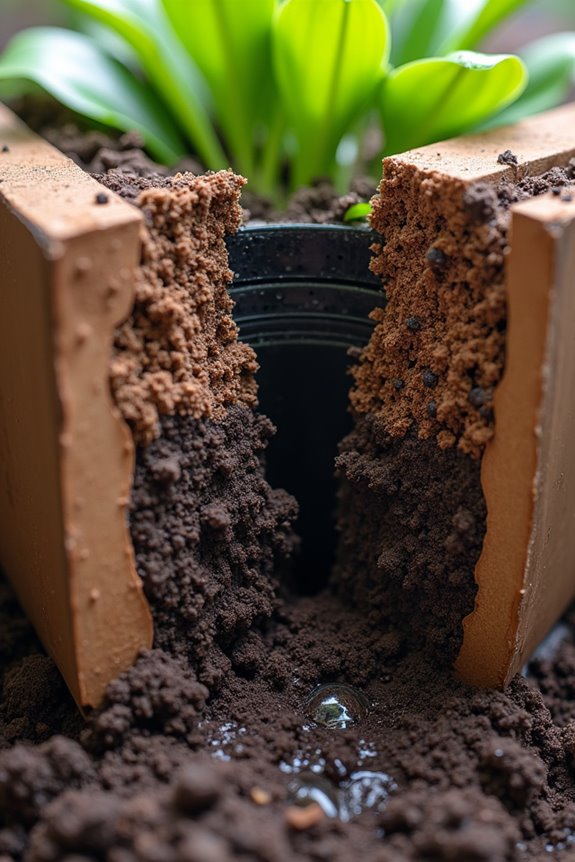
- Add perlite or coarse amendments to reduce water retention and improve drainage flow
- Avoid fine, heavy blends that compact and trap moisture near plant roots
- Match your depth to your mix—deeper planters with lighter soil dry faster, so plan accordingly
The key is pairing adequate drainage infrastructure with soil that actually lets water move through it.
Why Side-Wall Drains Outperform Bottom Drains
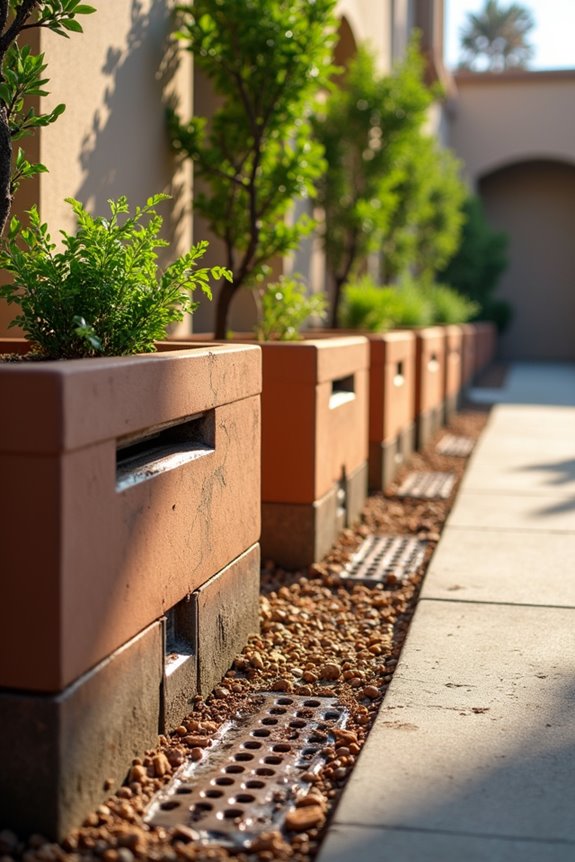
Side-wall drains excel in large planters and heavy pots where root systems can’t penetrate upward enough to block sidewall openings. The elevated drain position maintains better water release and keeps your system functioning longer. Combined with layered drain pads, you’re investing in genuine drainage performance.
Preventing Drain Clogs: Root Barriers, Fines, and Maintenance Schedules
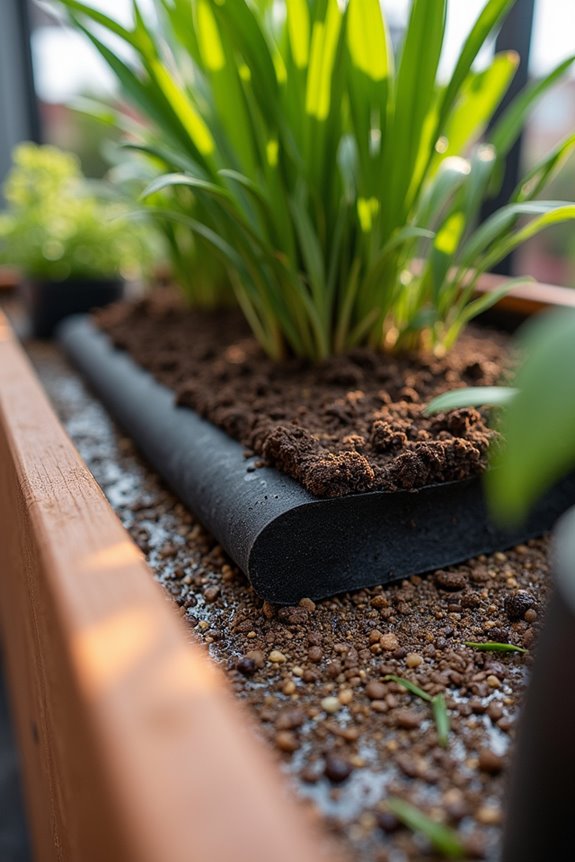
Even with side-wall drains in place, you’ve still got one persistent problem: fine soil particles—we call them “fines”—gradually migrating into your drainage system and clogging it up.
Preventing clogs requires a three-pronged approach:
- Install root barriers and filtration layers — Use a 2-inch coarse sand layer over filter fabric to trap fines while water flows through
- Create a dedicated drain well — Position a 3-layer drain pad (drain board, filter fabric, BioBarrier) to localize fines away from main drainage
- Establish regular maintenance schedules — Flush salts and debris from your reservoir quarterly to keep pathways clear
The key is selecting proper soil. Avoid compacted masonry sand; choose well-mixed blends with perlite instead. Position your drain hole slightly up the sidewall to form a micro-reservoir that naturally catches fines. This drainage strategy keeps root stress down over time.
Setting Up a Self-Watering SIP: Sealed Reservoirs and Fill Height
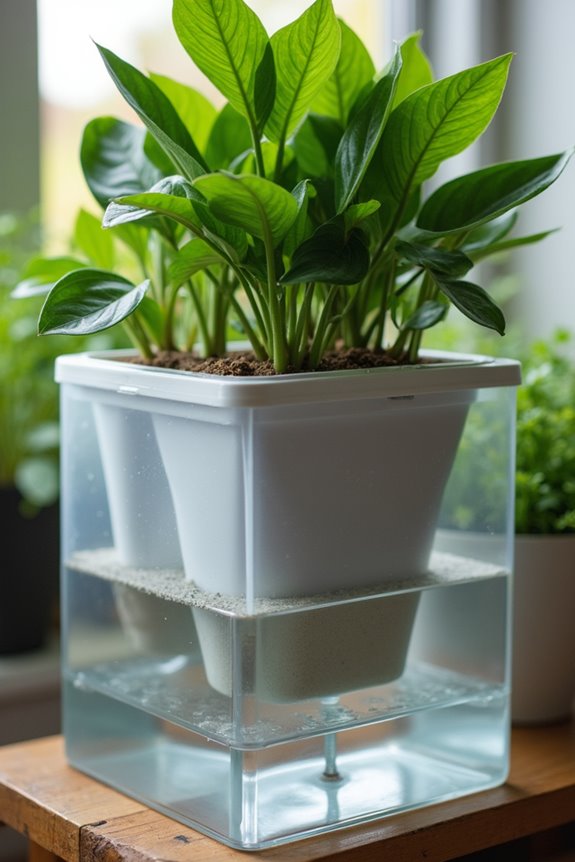
Self-watering planters reduce the need for constant watering by using capillary action to pull moisture upward through soil. Sealed reservoir designs—like the popular EarthBox system—maintain consistent moisture levels automatically.
The key is maintaining proper fill height. Monitor your reservoir weekly, keeping it topped off without overfilling through the dedicated fill tube. This consistent moisture level prevents both underwatering and overwatering.
| Task | Frequency | Fill Level |
|---|---|---|
| Check water | Weekly | 2–3 inches |
| Top off | As needed | Below tube rim |
| Flush system | Seasonally | Empty completely |
This approach works because drainage holes aren’t necessary—the sealed design keeps everything balanced.
Flushing Salt Buildup: Timing and Technique for SIP Planters
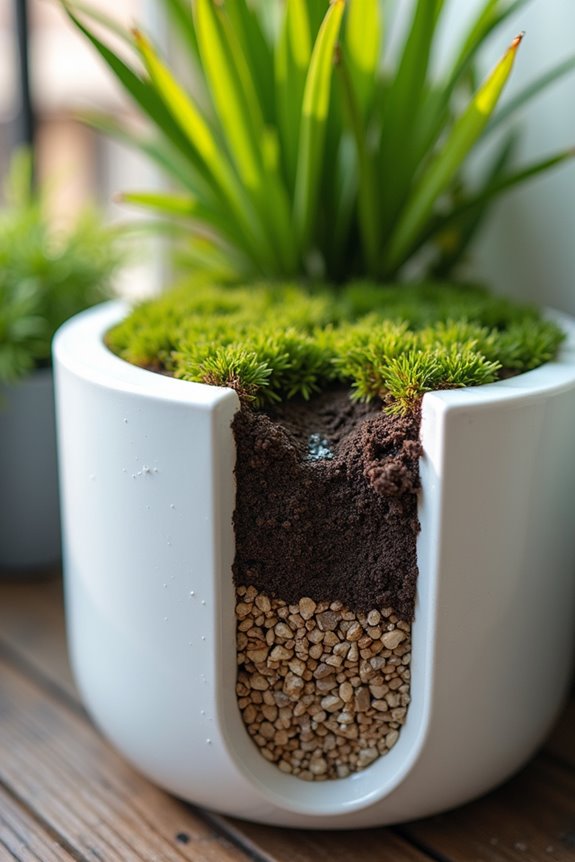
Salt Accumulation
Unlike traditional boxes with drainage holes that naturally leach salts away, SIPs trap minerals in the reservoir. Over time, this salt buildup impacts how plants absorb nutrients, creating imbalances that stunt growth.
Flushing Your Reservoir
This three-step approach works best:
- Water thoroughly with fresh water until it runs off completely
- Wait 24 hours for the reservoir to stabilize before checking levels
- Replant your new crop once everything settles
Flush between crop cycles—usually every 3-4 months depending on your water quality. Hard water accelerates salt concentration, so you might flush more frequently. This is the most important maintenance task for keeping your SIP operating effectively long-term.
Free-Standing Planters: Drainage Design Differences
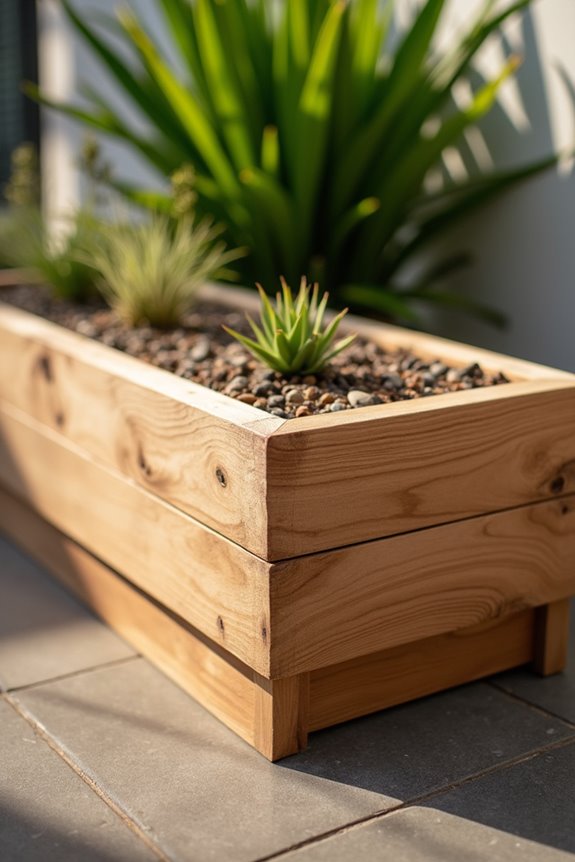
When you’re building a free-standing planter, the drainage setup looks different than in-ground beds because water can’t escape downward into soil—it’s got to go somewhere intentional. I’ve found that placing drains high on the sidewall (rather than at the bottom) creates a reservoir below where excess water collects, keeping your soil from washing into the drain holes and clogging them up. You’ll want to think through how water actually moves through your planter: using multiple 3/4-inch drain holes, a protective sand or filter-pad layer above the liner, and avoiding any compressed seals that’d trap moisture instead of releasing it.
Bottom Drain Placement Strategy
Because free-standing planters sit directly on the ground without a built-in base structure, you’ll want to rethink where you actually place your drains compared to in-ground beds. The key is positioning your bottom drain a couple inches up the sidewall rather than at the very bottom. This creates a reservoir that catches sediment before it clogs your drain.
For your planter drainage system:
- Install roughly 9 drain holes with 3/4-inch diameter openings across the bottom
- Keep drains away from planter walls and support structures to prevent structural damage
- Layer a drain board and 2-inch weed-block fabric over drains for optimal filtration
This drain placement strategy prevents waterlogging while protecting your planter’s integrity. You’re building a system that catches fines and keeps roots out of trouble.
Compartmentalized Liner Systems
How do you prevent a single drainage problem from ruining your entire planter?
Break it into sections. Compartmentalized liners isolate drainage zones, so a clogging issue in one area won’t cascade through your whole planter. Here’s what works:
The Setup:
- Drainage compartments contain fines (small soil particles) in designated zones
- A sump drain sits below each section, localizing debris
- Overlapping liners create independent drainage management zones
Root Protection Strategy:
Position your 3/4-inch drain a couple inches up the sidewall—this creates a small reservoir. Top your 4-by-6 drain board with a 2-square-foot weed block sheet folded over it, followed by your 3-layer drain pad (drain board, filter fabric, BioBarrier). This root protection setup prevents roots from contacting fines while maintaining flow.
You’re treating each compartment as its own mini-drainage system.
Preventing Localized Drainage Failures
Why do free-standing planters need a different drainage strategy than in-ground ones? They’re exposed on all sides, which means water can’t escape into surrounding soil. You’ve got to create your own escape route.
I’ve found that positioning your drain board higher on the sidewall—not at the bottom—creates a drainage reservoir below it. This well traps debris and soil fines prevention happens naturally as water settles before exiting.
What works:
- Install a 3/4 inch drain outlet with 9 holes across the bottom
- Layer your drain pad: drain board, filter fabric, and BioBarrier for protection
- Add woven filtration or coarse sand to stop fines from clogging everything
This approach balances water removal with keeping your soil intact. You’re building a mini filtration system that handles free-standing challenges your in-ground neighbors never face.
Retrofitting Drainage Into Existing Planters
If you’ve got a planter that’s already built and sitting in your garden, you can add drainage to it without starting from scratch. A drainage retrofit involves installing a plastic liner with a 3/4 inch drain port, then layering coarse filter material (sand or fabric) about 2 inches thick. Below that, add 2–4 inches of gravel to create your water reservoir.
| Layer | Purpose |
|---|---|
| Plastic liner | Holds water temporarily |
| Fine screen | Prevents soil loss |
| Filter layer | Slows water movement |
| Gravel bed | Creates drainage space |
| Drain port | Releases excess water |
| Sidewall position | Improves performance |
Position your drain higher on the sidewall—not at the bottom—so you’re creating a small well. This approach keeps your planter box in good working condition long-term without major reconstruction.
Choosing Your Drainage System: Traditional, SIP, or Hybrid
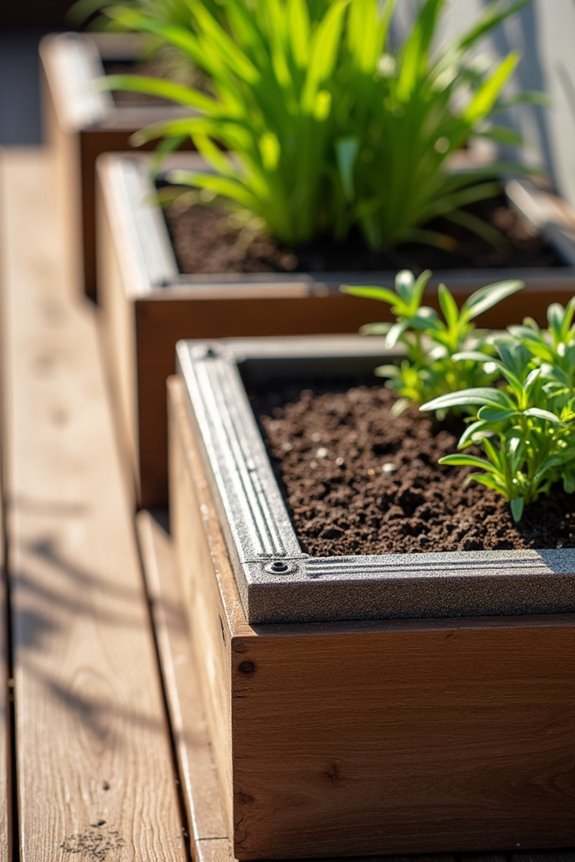
Now that you’ve got your retrofit basics down, you’re probably wondering which drainage approach actually works best for your situation.
The reality is there’s no single winner. Each system suits different needs:
- Traditional drainage uses 3/4-inch bottom holes with screening, keeping soil in place while water exits freely. It’s reliable and low-maintenance once installed.
- Self-watering (SIP) planters skip drainage holes entirely, relying on a base reservoir that wicks moisture upward for weeks. Perfect if you forget to water regularly.
- Hybrid systems combine liner-based drainage with raised drain wells and 3-layer pads, balancing soil retention with water flow and root protection.
Consider your climate, plant types, and watering habits. Hot, dry regions favor traditional systems. Forgetful gardeners love SIPs. Most of us find hybrids offer the right balance.