
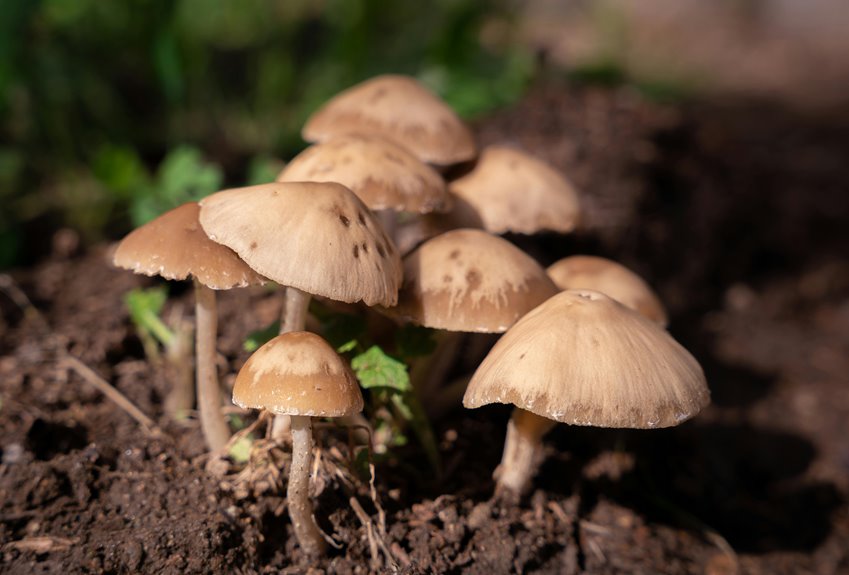
Your yard’s mushrooms signal that fungi are breaking down organic matter in moist, shady soil—basically, your lawn ecosystem is active. They appear when rainfall or watering combine with shade and decomposing leaves or thatch, creating ideal conditions.
The mycelium networks underground are actively cycling nutrients and connecting to plant roots, which is good news for soil health. You can remove visible mushrooms by mowing or hand-pulling, though they’ll vanish naturally as conditions dry out.
There’s more to know about whether your specific situation warrants concern.
What Are Mushrooms and Why Do They Suddenly Appear?
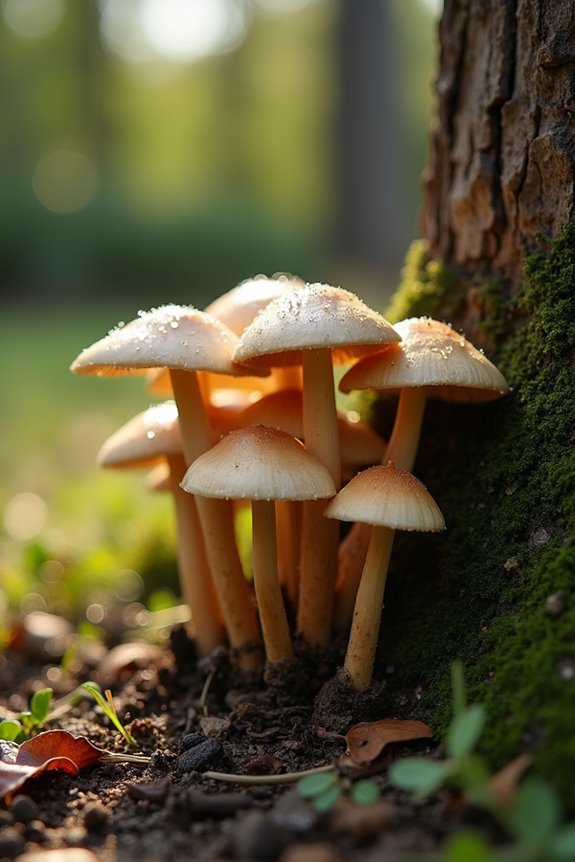
What triggers their appearance:
- Warm, moist conditions
- Recent rainfall
- High soil organic content
- Shade and poor drainage
When conditions align perfectly, mushrooms emerge rapidly as the fungi fruit. They’re a signal that your soil has active nutrient cycling occurring. The good news? Most yard mushrooms won’t hurt you just sitting there. They disappear once soil dries out or sun returns, so they’re temporary visitors indicating what’s working underground.
What’s Happening Under Your Lawn
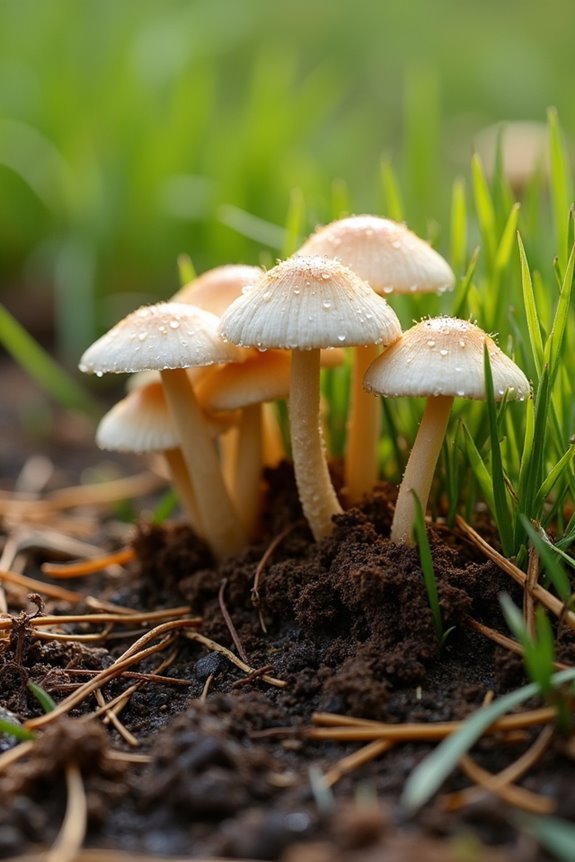
When conditions align—moisture, shade, and organic material—fungi fruit aboveground as mushrooms in yard spaces. You’re witnessing soil that’s functioning properly, not a problem requiring panic. This biological activity indicates your lawn has sturdy living systems beneath the surface, which most gardeners actually want.
Why Moisture and Shade Trigger Mushroom Growth
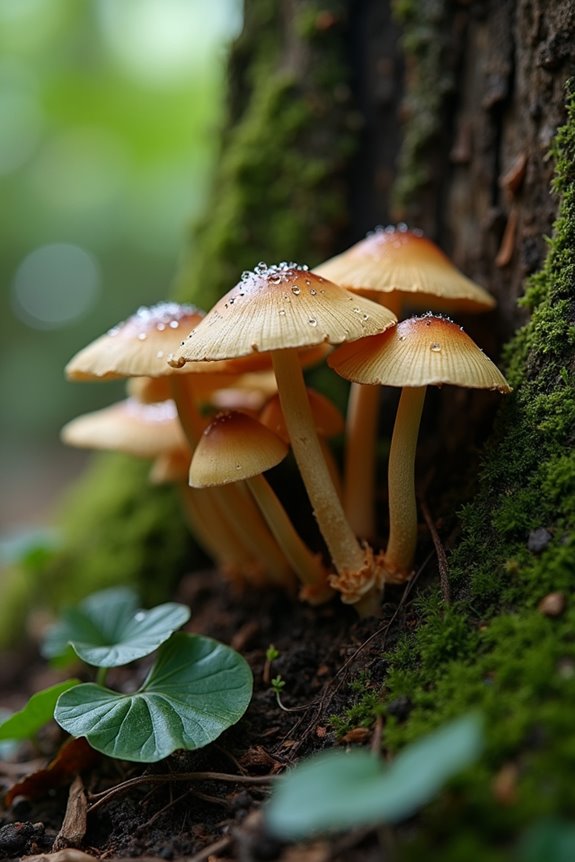
I’ve noticed that mushrooms grow readily when two things happen together: your lawn stays moist and sunlight can’t reach the soil. When you water your grass or it rains, that moisture soaks into the soil and creates the damp environment fungi need to grow, especially in shaded spots under trees or near your house’s north side. The combination of moisture plus shade—which keeps that water from evaporating quickly—basically turns your yard into a fungal greenhouse, allowing the underground network of threads called mycelium to produce those visible mushroom caps we see popping up after a good rain.
Moisture Creates Ideal Conditions
Why do mushrooms seem to pop up overnight in your yard after a heavy rain? The answer lies in moisture. Fungi need consistent wetness to develop, and your yard becomes a perfect breeding ground when conditions align.
What makes moisture so critical:
- Saturated soil creates the damp microclimate fungi crave
- Shade compounds the problem by preventing evaporation
- Water-logged areas stay wet longer, feeding fungal growth
- Decomposing organic material mixed with moisture provides essential nutrients
When you’ve got moisture combined with shade—think poorly drained spots or areas beneath trees—you’re creating conditions where fungi flourish. The fungi feed on decaying matter in the soil, then produce those fruiting bodies (the mushrooms) we see above ground.
It’s not magic; it’s just basic biology working against us.
Shade Promotes Fungal Growth
Now that you understand how moisture feeds fungal growth, there’s another player that makes things worse: shade. Fungi thrive in dark, damp spots. When your lawn sits under tree cover or building shadows, it doesn’t dry out as quickly after rain. That lingering moisture combined with limited sunlight creates the ideal conditions for fungal development.
The problem compounds itself. Shaded areas stay cooler and wetter longer, stimulating mycelial development (that’s the underground fungal network). Eventually, it fruits into mushrooms you’ll spot popping up. Think of it this way: fungi love what kills regular grass—dim conditions and standing water.
The fix? Trim overhanging branches to increase sunlight and air circulation. More light means faster drying, fewer mushrooms.
How Healthy Soil Leads to More Mushrooms
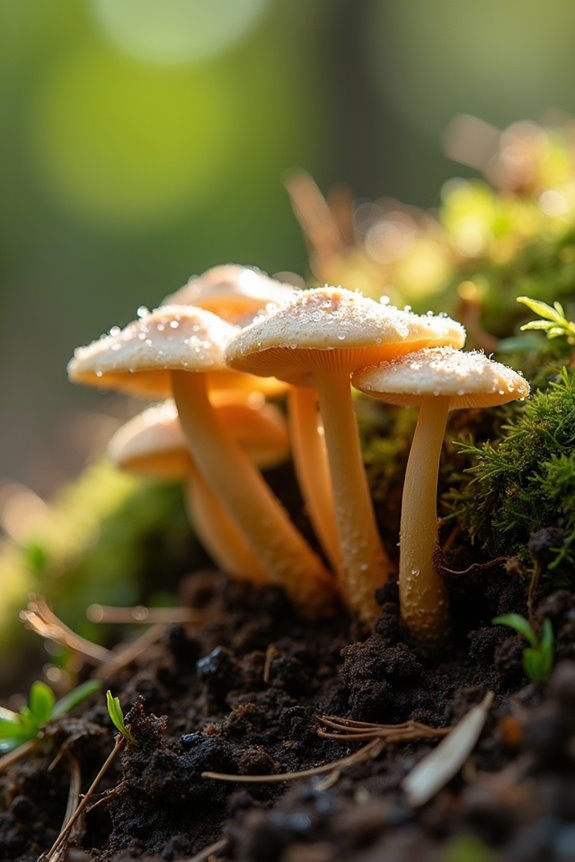
When you’ve got rich soil packed with organic matter—think decomposing leaves, dead roots, and woody debris—you’re basically running an all-you-can-eat buffet for the fungi living underground. I’ve noticed that yards with thicker thatch layers and more leaf litter tend to sprout mushrooms like clockwork, since fungi feed on this dead material and break it down into nutrients your plants can actually use. These mycelial networks, which are the fungal threads spreading through your soil, don’t just feast on organic matter; they also form partnerships with plant roots, trading nutrients and water for sugars, which means your mushroom problem is actually a sign your soil’s ecosystem is working at full capacity.
Organic Matter Breakdown Process
Because fungi need dead organic material to survive, you’ll find more mushrooms in yards where leaves, grass clippings, and roots accumulate and decompose. The mycelium—underground fungal filaments—actively breaks down this organic matter into nutrients your soil can use.
| Stage | Timeline | What Happens | Result |
|---|---|---|---|
| Fresh Input | Week 1-2 | Fungi colonize new material | Rapid decomposition begins |
| Active Breakdown | Week 3-8 | Mycelium spreads through debris | Nutrients release gradually |
| Mushroom Fruiting | Week 6-12 | Fungi produce visible fruiting bodies | You spot mushrooms |
| Soil Integration | Week 12+ | Remaining material becomes humus | Soil enrichment complete |
This process isn’t harmful—it’s actually beneficial. Your mycelium network connects with plant roots, transferring water and nutrients. More accumulated organic material means more fungal food, triggering repeated mushroom appearances as conditions favor fruiting.
Mycelial Networks And Nutrient Cycling
The underground fungal filaments we talked about earlier—the mycelium—aren’t just decomposing dead leaves on their own. They’re actually connecting your yard’s soil into something special called mycelial networks, and they’re working hard at nutrient cycling. Here’s what’s happening beneath your feet:
- Fungal filaments break down organic matter into nutrients plants can absorb
- Networks connect plants and trees, sharing water and nutrients between them
- Rich soil supports expanded mycelium, increasing mushroom fruiting potential
When you’ve got healthy soil packed with organic material, these networks function effectively. The mycelium decomposes debris efficiently, cycling nutrients back into your soil. This active fungal life creates ideal conditions for mushrooms to appear. You’re basically looking at visible proof that your soil’s underground community is operating well, which is honestly quite interesting.
Are Mushrooms in Your Yard Poisonous to Kids and Pets?
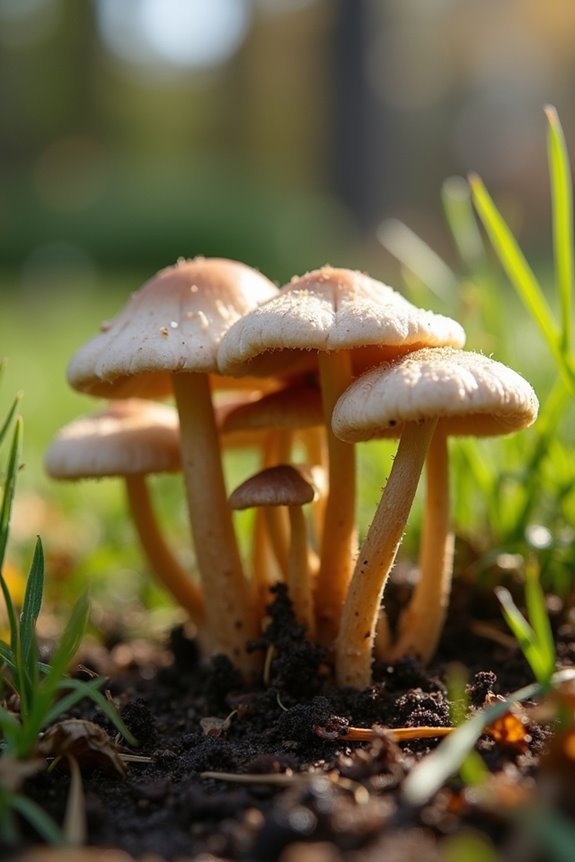
How concerned should you actually be about those mushrooms popping up in your lawn? Here’s the straightforward answer: most yard mushrooms won’t hurt you just from touching them. The real risk comes from eating them. That said, poisonous mushrooms do exist—like the false parasol, a common culprit causing serious stomach issues if ingested, especially across the Eastern U.S.
Your best move? Remove visible mushrooms before kids or pets can nibble them. Wear gloves while handling, then toss the picked fungi into a paper bag for trash. This containment approach beats leaving them around. Though mowing won’t permanently stop mushrooms—the underground mycelium persists—removing fruiting bodies substantially reduces immediate risk during peak play seasons.
Common Yard Mushrooms and What They Mean for Your Plants
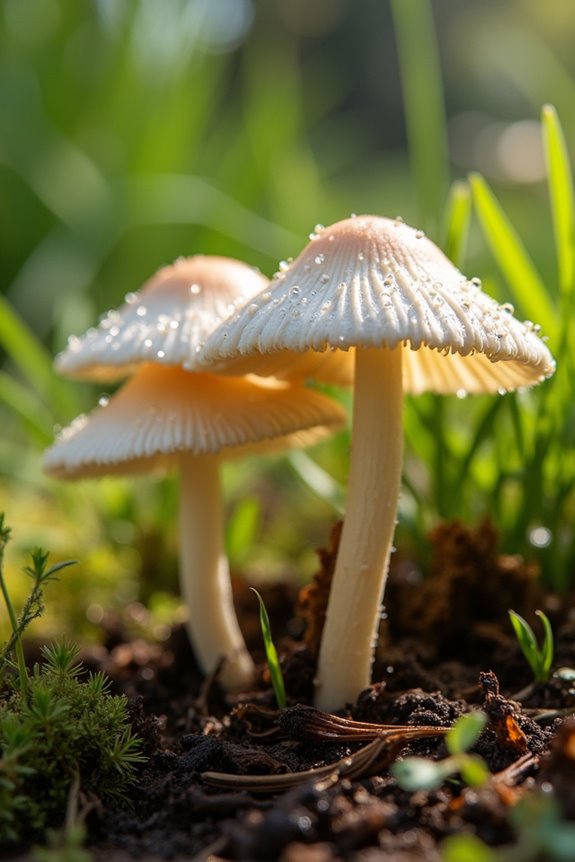
Why do mushrooms suddenly carpet your lawn after a heavy rain? They’re telling you something about your soil’s health and activity below the surface.
Mushrooms carpet your lawn after rain—they’re nature’s signal that your soil’s ecosystem is thriving beneath the surface.
I’ve learned that mushrooms in yard ecosystems fall into two main categories:
- Saprophytic mushrooms break down dead leaves and grass, signaling active nutrient cycling
- Mycorrhizal species form partnerships with trees, improving their water and nutrient absorption
- Clustered growth near tree bases can indicate drainage problems or potential root decay
The key insight? Most mushrooms aren’t dangerous to your plants themselves. They’re nature’s recyclers, working alongside your soil’s living network. When you spot them, you’re witnessing active decomposition—a sign your yard’s ecosystem is functioning.
How to Remove Mushrooms From Your Lawn
Once you’ve spotted those umbrella-shaped fruiting bodies dotting your lawn, you’re probably wondering if you need to do anything about them.
Quick Removal Methods
You have options. Simply mowing or raking tackles most mushrooms in your yard without fuss. For stubborn ones, pull them by hand—wear gloves if you prefer.
Why They’ll Disappear Naturally
Mushrooms in your yard fade on their own once conditions change. As your soil dries and sunlight increases, they typically vanish without intervention.
Long-Term Solutions
To prevent regrowth, remove mushrooms from your lawn by addressing root causes. Improve drainage, aerate compacted soil, and dethatch to reduce the organic material feeding these fungi. These steps create conditions where mushrooms struggle to return.
When Tree Mushrooms Signal a Problem Worth Fixing
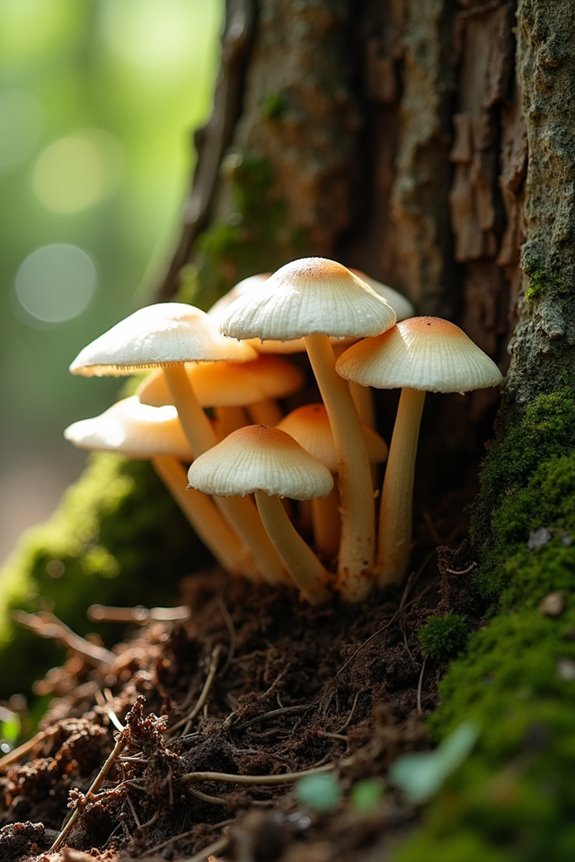
Unlike lawn mushrooms that come and go with the seasons, mushrooms sprouting from your trees—especially bracket fungi on trunks or honey fungus clustered at the base—indicate structural concerns that require attention.
What these fungi tell you:
- Internal decay – Bracket fungi indicate wood rot inside your tree, potentially compromising its structural integrity
- Root rot risk – Honey fungus at the base suggests active decay in root systems, often from excess moisture or poor drainage
- Future failure – A weakened tree may fail under stress, posing safety hazards to your property
Contact a certified arborist if you notice mushrooms clustered near your tree’s base or if the tree shows thinning branches, visible cracks, or poor vigor. Early assessment prevents costly problems down the road.