
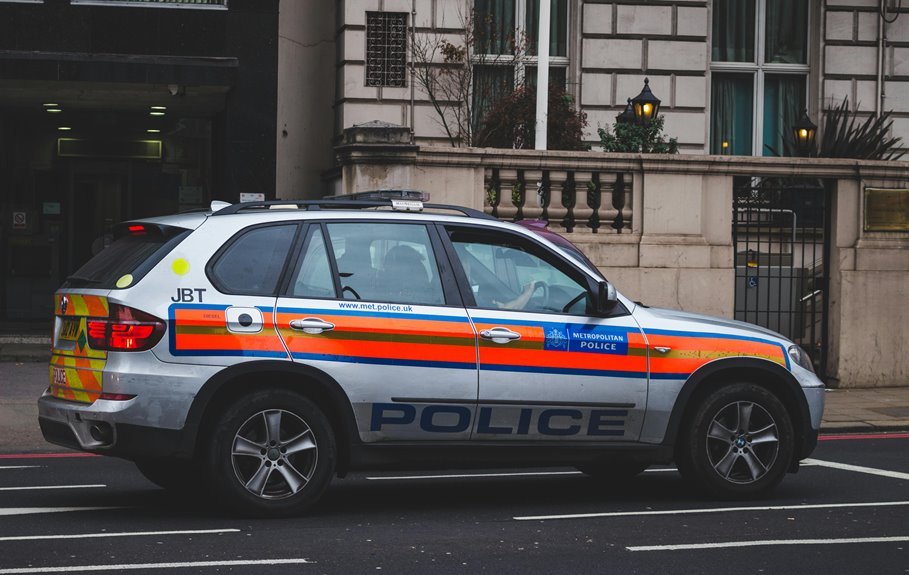
Scotland Yard got its name from an actual medieval London street and courtyard that sat behind the Metropolitan Police’s first headquarters at 4 Whitehall Place, established in 1829. The name stuck because it became lodged in public memory through newspapers, novels, and detective stories.
Even after four relocations—to Norman Shaw Buildings (1890), Broadway (1967), and Victoria Embankment (2016)—the brand persisted like a ghost haunting new addresses.
The real reason it endured involves how detective innovation and cultural impact transformed a simple location name into Britain’s policing symbol, a story with considerable depth.
The Medieval Street That Named a Police Force
Ever wonder why London’s police headquarters goes by such an oddly specific name? I’ll walk you through it.
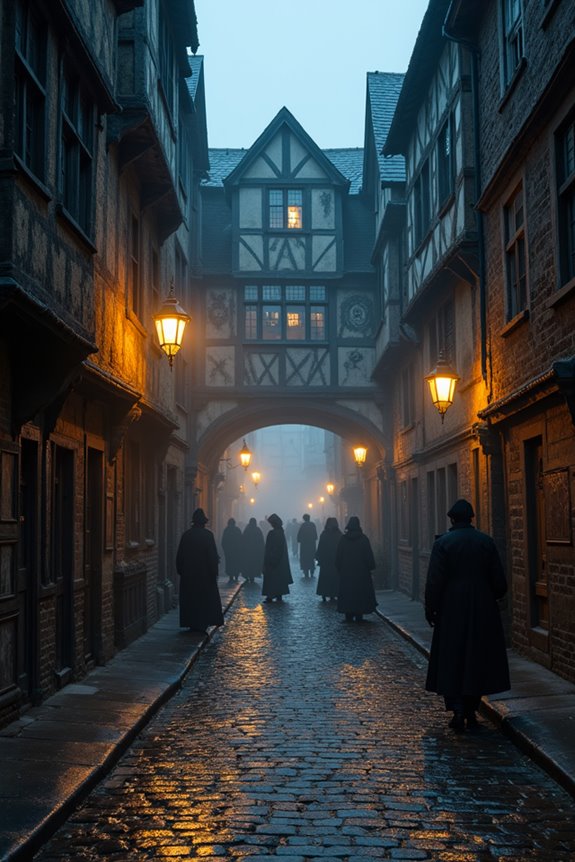
Back in the day, Great Scotland Yard was an actual street in London. Behind it sat a courtyard that shared the same name. When the Metropolitan Police set up their first headquarters at 4 Whitehall Place in 1829, that Scotland Yard courtyard was right there, accessible from the rear entrance.
The officers worked from that location for decades. Eventually, the toponymic name—meaning a place-name that becomes associated with an organization—stuck around. Even after the force relocated to Norman Shaw Buildings in the 1890s, people kept calling it Scotland Yard. The name persisted, becoming forever linked to London’s police force.
Why Whitehall Made Scotland Yard’s Reputation
The Whitehall location didn’t just house police headquarters—it positioned the Metropolitan Police at the center of London’s crime-fighting operations, which built the organization’s credibility and made “Scotland Yard” synonymous with detective innovation. I’d argue that having a permanent, recognizable base in such a prominent area meant the public could actually point to where serious crimes got solved, turning the name into a symbol of professional policing rather than just an administrative address. When the headquarters expanded through the 1880s and added new buildings, it reinforced Scotland Yard’s reputation as the nerve center for crime prevention, establishing the name’s connection with skilled detective work across the entire city.
Crime Prevention Foundation
How’d Scotland Yard become synonymous with top-tier police work? Here’s the thing: when the Metropolitan Police Service operated from Whitehall, they weren’t just responding to crimes—they were preventing them. That’s what set them apart.
The headquarters became known for crime prevention strategies that actually worked. Officers didn’t simply chase criminals after the fact; they used intelligence and detective work to stop problems before they started. This proactive approach built Scotland Yard’s reputation fast.
When they moved to New Scotland Yard in 1890, that prevention-focused identity stuck with them. The name itself became shorthand for professional, organized policing. Today, wherever the Metropolitan Police Service operates from, that legacy of smart, forward-thinking law enforcement—rooted in those Whitehall days—still defines what Scotland Yard means to people.
Detective Innovation Origins
Behind that courtyard at 4 Whitehall Place, something shifted in how police actually worked. The Metropolitan Police didn’t just respond to crime—they started investigating it systematically. That Yard became the birthplace of detective work in Britain, where officers pioneered new methods we’d recognize today.
| Innovation | Location | Impact |
|---|---|---|
| Criminal Records | Whitehall | Tracked offenders systematically |
| Detective Units | Whitehall | Specialized investigation teams |
| Evidence Methods | Norman Shaw Buildings | Scientific crime analysis |
When the Metropolitan Police relocated to the Norman Shaw Buildings on Victoria Embankment in 1890, Scotland Yard’s reputation followed. The name stuck because it represented something real—a detective-driven force that changed policing forever. We’re part of that legacy whenever we discuss modern investigation techniques.
How Scotland Yard Became a Symbol
I find it compelling that Scotland Yard transformed from a simple courtyard name into shorthand for the entire Metropolitan Police Service—a shift that happened largely because people needed a quicker way to reference the headquarters and its detective work. When the headquarters moved in 1890 to the Victoria Embankment, the name persisted rather than fading away, and “New Scotland Yard” became so woven into British culture that it appeared consistently in newspaper headlines, detective novels, and films. What solidified its position as a cultural icon was how the name eventually represented not just a building, but an entire investigative legacy and symbol of British policing that extended far beyond London’s streets.
Metonym For Metropolitan Police
| Period | Location | Name Used |
|---|---|---|
| Pre-1890 | Great Scotland Yard | Scotland Yard |
| 1890-1967 | Victoria Embankment | New Scotland Yard |
| 1967-2016 | Broadway | New Scotland Yard |
| 2016-Present | Curtis Green Building | New Scotland Yard |
You’ve probably noticed this pattern elsewhere. Once a toponym—a place-based name—gains cultural traction, it sticks. The Metropolitan Police remains “Scotland Yard” in our collective imagination, demonstrating that institutional identity transcends physical relocation.
Cultural Icon In Media
Now here’s where Scotland Yard’s story gets interesting—the name didn’t just stick around after the Metropolitan Police moved; it actually became larger than the building itself. Writers and filmmakers seized on the name, transforming it into shorthand for detective work and crime-solving prowess.
Early literary adoption set the tone. Wilkie Collins featured Scotland Yard in *The Moonstone* (1868), while Robert Louis Stevenson’s *Dr Jekyll and Mr Hyde* (1886) cemented the association with investigations.
Modern media reinforced its legacy:
- TV series like Scotland Yard(1953–1961) reinforced the image
- Video games such as Watch Dogs: Legion reference it today
The Metropolitan Police’s detective units—the CID and Flying Squad—became inseparable from Scotland Yard’s public image. The name has been absorbed into our cultural consciousness, where it symbolizes everything about professional detective work and high-profile cases.
Name Persistence Across Four Building Relocations
- Public familiarity with “Scotland Yard” as the Met Police identifier
- The name’s function as a cultural shorthand for detective work
- Leadership decisions to retain branding despite physical moves
- The 2014 sale of 10 Broadway didn’t disrupt the convention
Name persistence occurred because changing it would have damaged the headquarters’ credibility and public recognition. The Met Police understood that rebranding the building while preserving the legend served their institutional interests.
The Origin Story Nobody Agrees On
How’d a police headquarters end up with a name that nobody can definitively explain?
I’ll level with you—historians haven’t settled this one. The most common theory points to a courtyard behind the original Whitehall Place headquarters, though the exact reasoning remains unclear. Another camp argues Great Scotland Yard, a nearby street, inspired the name.
Then there’s the landowner theory: a man named Scott supposedly owned the yard, connecting the name to property ownership rather than Scottish royalty.
Medieval London theories suggest some Scottish or royal presence influenced the naming, but nothing’s confirmed.
Here’s what matters: Scotland Yard became a toponymic symbol—a name that stuck regardless of relocations. The origin of the naming process matters less than how powerfully the term endured, making it iconic despite its uncertain beginnings.
Scotland Yard in Victorian Culture
Whether the name came from a courtyard or a Scottish landowner, what matters is what happened next: Scotland Yard became shorthand for detective work itself during the Victorian era. Crime fiction writers and filmmakers seized on the name, weaving it into sensational stories that captured public imagination. The Metropolitan Police’s move to New Scotland Yard on Victoria Embankment in 1890 only strengthened this association. What really changed Scotland Yard into legend, though, was the actual innovation happening inside those buildings. Plainclothes detectives developed new techniques, forensics emerged as a scientific discipline, and investigative methods evolved beyond simple patrol work. Readers and audiences weren’t just consuming stories—they were witnessing real change in how police solved crimes, making Scotland Yard synonymous with modern detective work itself.
Why Scotland Yard’s Name Outlasted the Building
What’s remarkable about Scotland Yard isn’t that it stayed in one place—it didn’t—but that the name stuck around anyway, moving through London like a ghost haunting new addresses.
The Power of Public Memory
Here’s the thing: once the public and media adopted Scotland Yard as shorthand for the Metropolitan Police, the name became unstoppable. You’d see it in newspapers, novels, and detective stories. The headquarters could relocate from Whitehall Place to Norman Shaw Buildings to Broadway to Victoria Embankment, but the brand remained locked in our collective memory.
| Location | Year | Status |
|---|---|---|
| 4 Whitehall Place | Original | Public entrance cemented identity |
| Norman Shaw Buildings | 1890 | Name already entrenched |
| Broadway | 1967 | “New Scotland Yard” branding |
| Victoria Embankment | 2016 | Name persisted despite relocation |
Why Names Trump Buildings
The courtyard at Whitehall Place became legendary. Literature reinforced it. Culture celebrated it. Your mental image of policing itself became Scotland Yard—not brick and mortar, but an idea that endured.
Why Scotland Yard Still Defines British Policing
Why does a name born from a Victorian courtyard still command respect across the globe? I’d argue it’s because Scotland Yard became shorthand for something bigger than buildings or addresses. When you mention Scotland Yard, people immediately think of the Metropolitan Police’s detective work—the CID units investigating crimes across London. Despite moving three times since 1890, from Norman Shaw Buildings to modern headquarters, the name stuck.
Here’s what matters: Scotland Yard represents expertise and tradition. Novels, films, and TV shows cemented this image. The name embodies policing excellence, international collaboration, and investigative prowess. It’s less about New Scotland Yard’s physical location and more about what it symbolizes—a legacy of solving cases that defined British detective work for generations.