
A quality patio heater pays for itself in one season if you use it around 60 evenings annually. You’re reclaiming fall and winter months for outdoor living—propane models deliver 48,000 BTU for $15–$20 per evening, while electric infrared offers instant body heat for smaller spaces.
The real worth isn’t the upfront cost; it’s avoiding cheap models that need replacing yearly. Durable construction with weather-resistant materials means reliable warmth for years ahead, turning your cost-per-use into genuine value over time.
How Patio Heaters Extend Your Outdoor Season
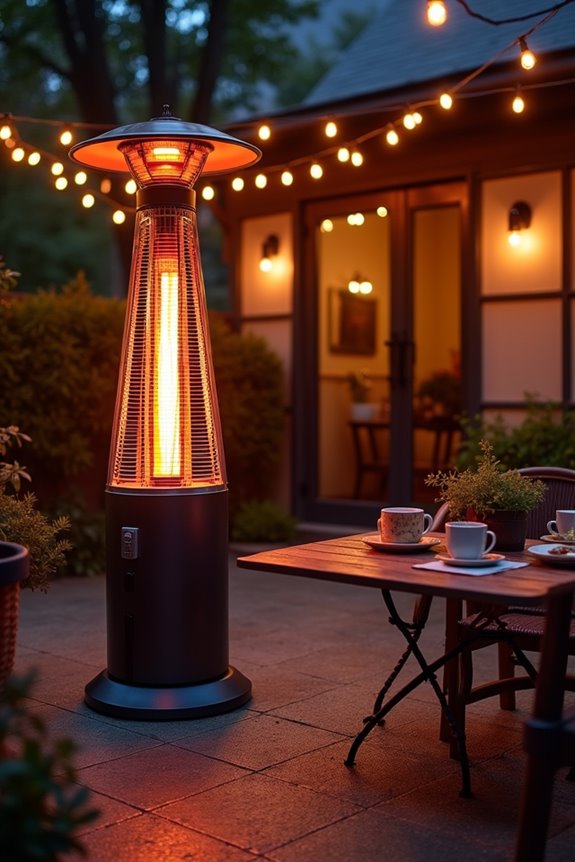
Why do we pack away our outdoor furniture when temperatures drop? You don’t have to anymore. Patio heaters let you reclaim those crisp fall and winter months for dining and hanging out outside.
Two main options work well:
Propane models create a 10–15 foot radius of warmth, lasting 8+ hours per tank. They’re ideal when you’re hosting larger groups.
Electric infrared heaters work overhead in covered spaces, covering about 200 square feet with an IP24 weather rating. They’re perfect for smaller patios.
Both extend your outdoor season significantly. You’re no longer confined indoors during cooler months. The investment pays off through months of added outdoor living—no special skills needed, just heat and comfort when you want them.
Does a Patio Heater Justify Its Cost? Breaking Down Real ROI
The Real Numbers
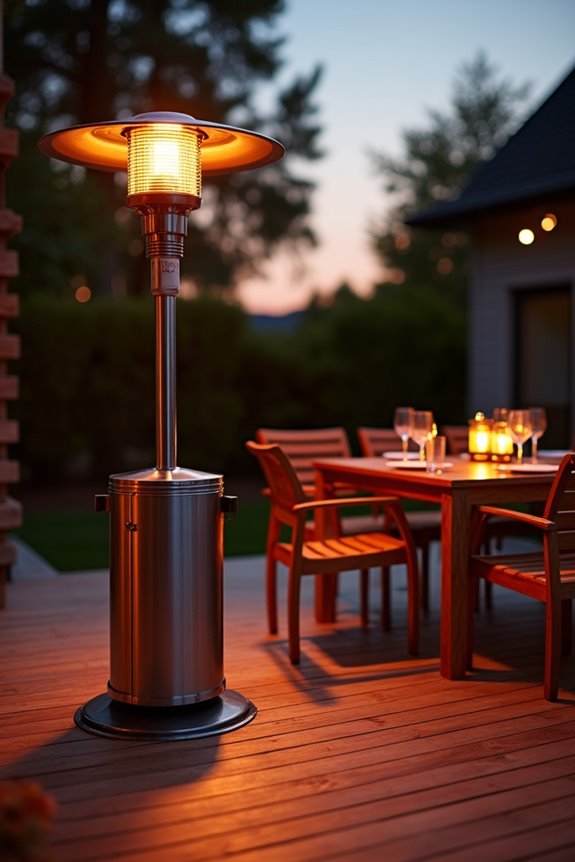
A quality propane heater like the AZ model runs $170–$209 upfront, delivering 48,000 BTU for 8+ hours per tank. That’s roughly $15–20 per evening of use. Compare this to cheaper alternatives that break after one season—you’re just buying the same thing repeatedly.
Why Durability Matters
Durability directly impacts your ROI. Higher-quality units last years, not months. Wind resistance also factors in; a wobbly heater tips over, damages itself, and wastes fuel.
The Equation
If you entertain 60 evenings annually, quality equipment pays itself back through avoided replacements and consistent performance. That’s the real worth: fewer trips to replace junk, more time actually enjoying your space.
Propane vs. Electric Patio Heaters: Which Delivers Real Value?
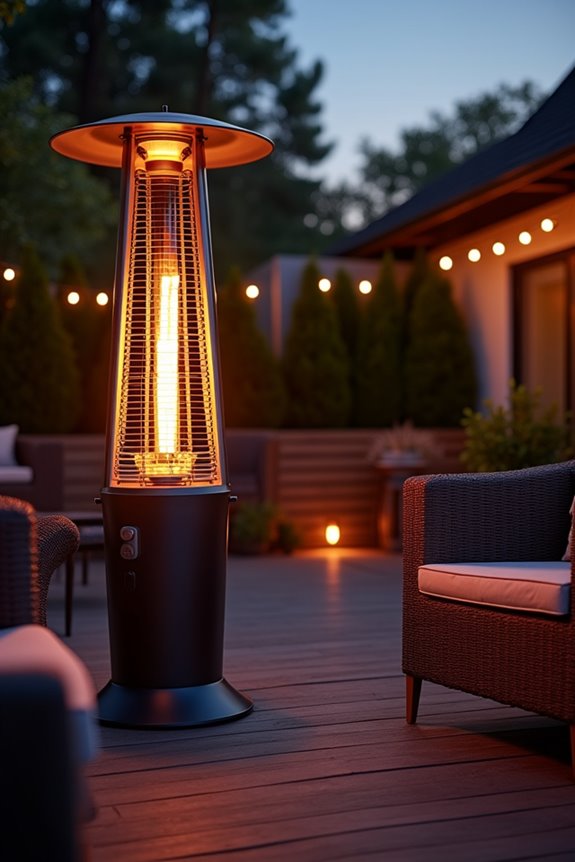
When you’re weighing propane against electric, you’re really deciding between broad, ambient warmth and targeted comfort—and I’ll show you how that choice affects both your upfront spending and long-term bills. Propane units like the HLDS01-xx pump out 48,000–50,000 BTU across a 10–15 foot circle and run 8+ hours per tank, making them workhorses for larger patios, whereas infrared electric heaters (think EnerG+ HEA-21288LED at 5,100 BTU) give you instant, body-directed heat in tighter spaces but cap out around 200 square feet of coverage. The real value question comes down to your space size and how you use it—bigger gathering areas favor propane’s economy over time, while small or covered patios often win with electric’s quick warmth and zero flame risk.
Heat Efficiency and Coverage
Heat Efficiency and Coverage
The real difference between propane and electric patio heaters comes down to how they deliver warmth and what that means for your actual comfort.
Propane units deliver strong output—we’re talking 48,000–50,000 BTU that heat the air around you, creating a warming radius of 5–15 feet. They work well in larger spaces and handle wind better than you’d think.
Electric infrared heaters take a different approach. They target *you* directly rather than the air, delivering immediate warmth at roughly 5,100 BTU-equivalent. The EnerG+ HEA-21288LED covers about 200 square feet, but you’re locked into fixed positioning.
The trade-off? Propane gives broader coverage; infrared gives quicker, more controllable warmth. Your choice depends on whether you’re heating a crowd or just yourself.
Long-Term Cost Analysis
Long-Term Cost Analysis
Why do so many people regret their patio heater choice after a season or two? They didn’t run the numbers first.
The Rental vs. Purchase Reality
Renting costs $50–$150 daily, adding up quickly for frequent use. Buying ranges from $75–$2,000 depending on quality. Here’s the breakdown: if you use your patio heater more than a dozen times yearly, purchasing wins financially.
Propane Patio Heaters: Higher Output, Ongoing Fuel
Propane units deliver 48,000 BTU across 10–15 foot circles, running 8+ hours per tank. You’ll face recurring propane costs, but portability covers variable spaces well.
Electric’s Efficiency Edge
Electric models cost less to operate monthly but need fixed mounting. Both paths require honesty about your actual usage patterns—that’s where real value emerges.
Understanding BTU: Why Output Matters More Than You Think

You’ve probably noticed that patio heaters tout their BTU numbers like they’re the only thing that matters, but here’s the thing—higher heat output doesn’t automatically mean you’ll feel warmer in your backyard. I’ve found that propane units (think 48,000–50,000 BTU) and electric infrared models (around 5,100 BTU equivalent) work so differently that comparing them side-by-side is almost meaningless, since propane spreads warmth across a wider circle while electric infrared directs heat straight at your body. Wind, your patio’s layout, and how the heater actually distributes that energy matter just as much as the raw BTU number itself.
Heat Coverage And Distance
The AZ Patio Heaters HLDS01-xx, for instance, pumps out 48,000 BTU and warms a circle roughly 10 to 15 feet across. That’s substantial for most patios. Meanwhile, the HLDS01-GTxx delivers 40,000 BTU but only covers about 5 feet—better for ambiance than practical warmth.
Key factors affecting your coverage:
- Higher BTU = broader reach
- Wind and outdoor conditions reduce effective distance
- Larger spaces demand more powerful units
Electric infrared models like the EnerG+ HEA-21288LED offer modest 5,100 BTU but heat your body directly across 200 square feet. Consider your actual space before investing.
Propane Versus Electric Output
When you’re comparing patio heaters, here’s what actually matters: understanding how BTU output shapes your comfort, not just how many numbers a manufacturer prints on the box.
| Heater Type | BTU Output | Coverage Area | Heat Method | Best For |
|---|---|---|---|---|
| Propane | 48,000–50,000 | Large radius | Ambient air | Big gatherings |
| Electric Infrared | 5,100 | ~200 sq ft | Direct body heat | Small spaces |
| Propane | 48,000–50,000 | Expansive | Broad warming | Quick heating |
| Electric Infrared | 5,100 | Focused zone | 100% efficient | Draft-prone areas |
| Propane | High | Widespread | Air heating | Open patios |
Propane delivers raw power—those 48,000–50,000 BTU units heat your whole patio fast. Electric infrared works differently: it targets you directly at 100% efficiency, needing just 5,100 BTU. Think of propane as heating the room; electric infrared heats the person. Your choice depends on space size and what “warm” means to you.
Durability and Safety: Protecting Your Patio Heater Investment
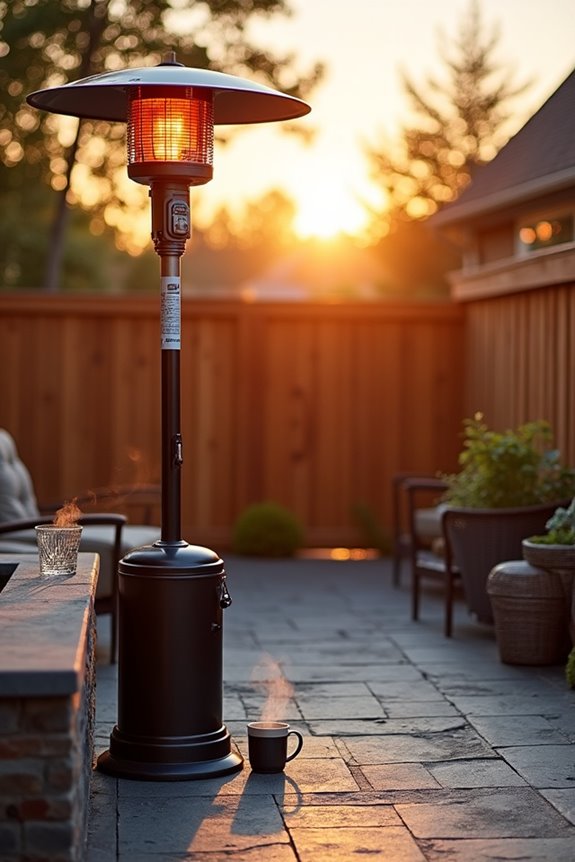
How much should I actually spend on a patio heater if I want it to last? I’ve learned that investing in a durable, high-quality unit beats replacing cheaper models repeatedly. Here’s what matters:
Essential Safety Features
- Built-in tip-over shutdown
- Overheat protection
- Stable construction for wind resistance
Durability Matters
Quality propane models provide superior ambient heat coverage across larger areas. Yes, they need regular tank refills and protective covers, but higher-end units deliver better longevity. Avoid glass-tube “ambiance” heaters—they look nice but insulate poorly and fail faster.
Maintenance Extends Life
I keep mine performing well through annual cleaning, checking gas connections, and proper off-season storage. These simple steps prevent premature replacement and protect my investment.
Propane, Electric, or Tabletop: Which Heater Fits Your Space?
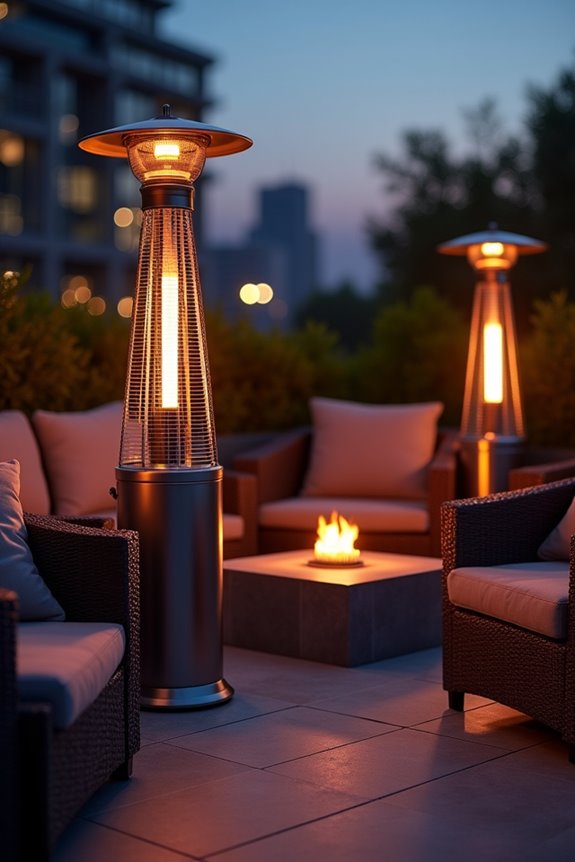
Once you’ve settled on quality and durability, you’ll need to pick the right type of heater for your actual space—and that choice shapes everything else. Let me break down what each option actually delivers:
- Propane models pack 40,000–50,000+ BTU, warming larger outdoor areas and surrounding air effectively
- Electric infrared units like EnerG+ provide 5,100 BTU with direct body warmth, requiring outdoor-rated outlets but covering roughly 200 sq ft
- Tabletop designs emphasize visual appeal, though they heat smaller radii around 5–8 feet
For covered patios, propane handles bigger spaces, while infrared electric heaters deliver immediate warmth regardless of wind. Consider your square footage, electrical setup, and whether you prefer mobility or permanent heating solutions.
What Actually Happens After Year One: Owner Durability Data
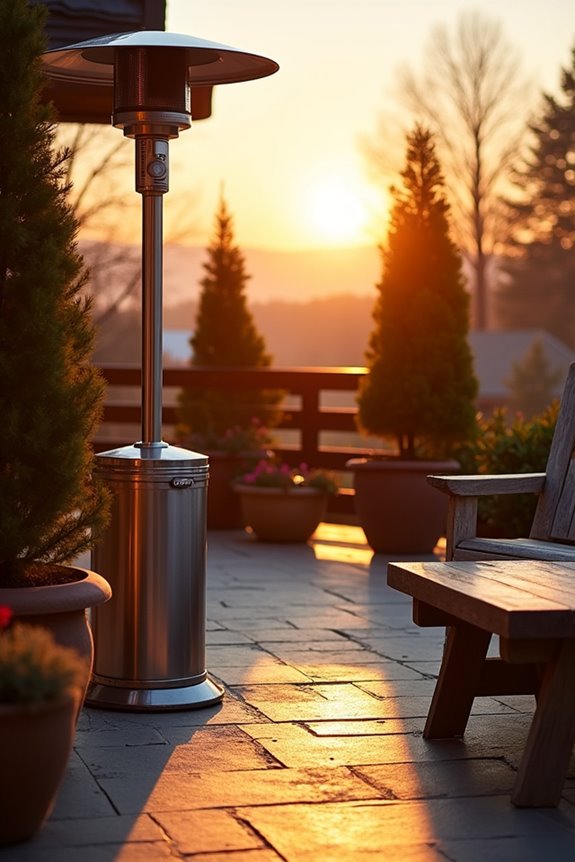
After your first season wraps up, you’ll notice something practical: the patio heater that seemed like an impulse buy is still standing there, and you’re actually thinking about using it next year instead of relegating it to the garage.
The Real Ownership Cycle
That’s when durability matters most. Quality patio heaters—like propane models heating 10–15 foot circles for 8+ hours per tank—prove their worth through repeated use. You’ll find yourself buying the same model again, which tells you something: it works.
Long-Term Value Emerges
Most owners follow a predictable path: early imperfect experiences shift toward weather-ready designs that handle seasons without constant maintenance. A durable heater becomes reliable infrastructure for your outdoor space, not seasonal clutter. That’s genuine long-term value talking.
Avoiding the Cheap Patio Heater Cycle: Long-Term Value Strategy
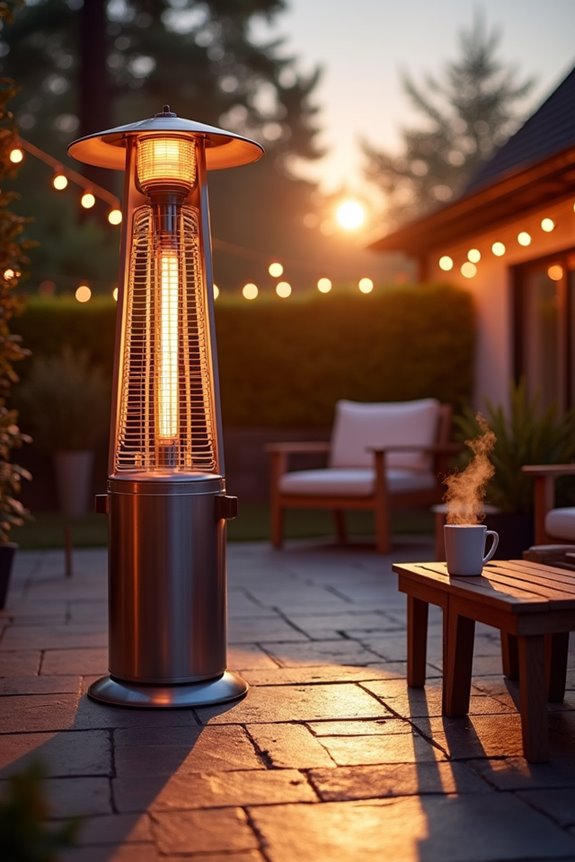
Why do so many of us end up buying three or four budget patio heaters over a decade when one quality model would’ve done the job?
Why waste money replacing budget patio heaters every two years when one quality model lasts a decade?
We’re drawn to low upfront costs, but that initial $150 portable heater rarely lasts beyond two years. I’ve learned that durable overhead models break this cycle by delivering genuine long-term value.
Here’s what separates lasting investments from repeated replacements:
- Weather resistance: Powder-coated steel and sealed components withstand rain and wind, not just sunny days
- Sturdier construction: Heavier materials mean better heat retention and stability on windy patios
- Year-round durability: Quality heaters support extended outdoor seasons without degrading
Trading up costs more initially, but you’re actually spending less over time while enjoying consistent warmth and reliable performance.