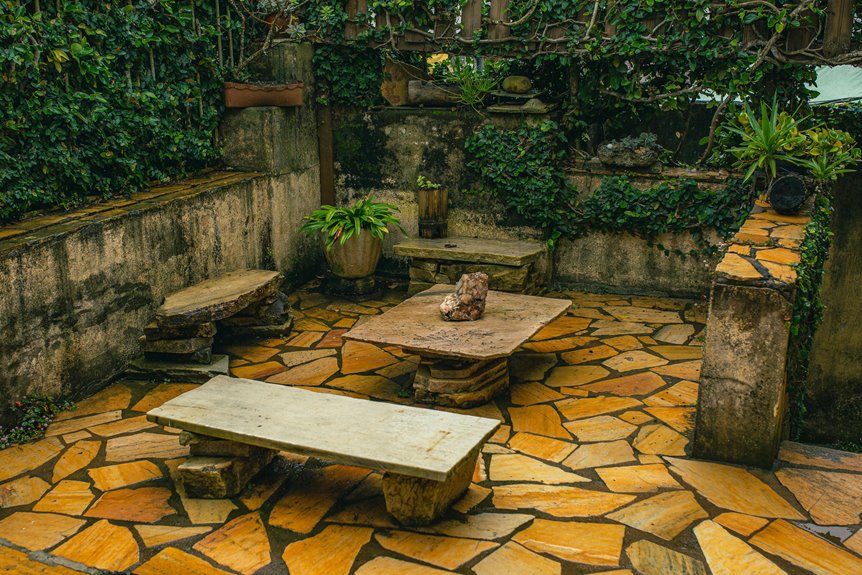
The word “patio” entered English around 1818 as a direct Spanish borrowing, describing open-air courtyards that Spanish settlers had built across the Americas since colonial times. It traces back through medieval Spanish architecture and possibly to Proto-Indo-European roots meaning “to fasten” or “bind together”—concepts reflected in enclosed, secured spaces. Unlike “terrace,” which derives from Latin and emphasizes raised elevation, “patio” stays grounded and intimate. Understanding this linguistic journey helps us accurately catalog outdoor spaces and recognize how architecture shaped language itself.
Patio: From Spanish Courtyard to English Vocabulary
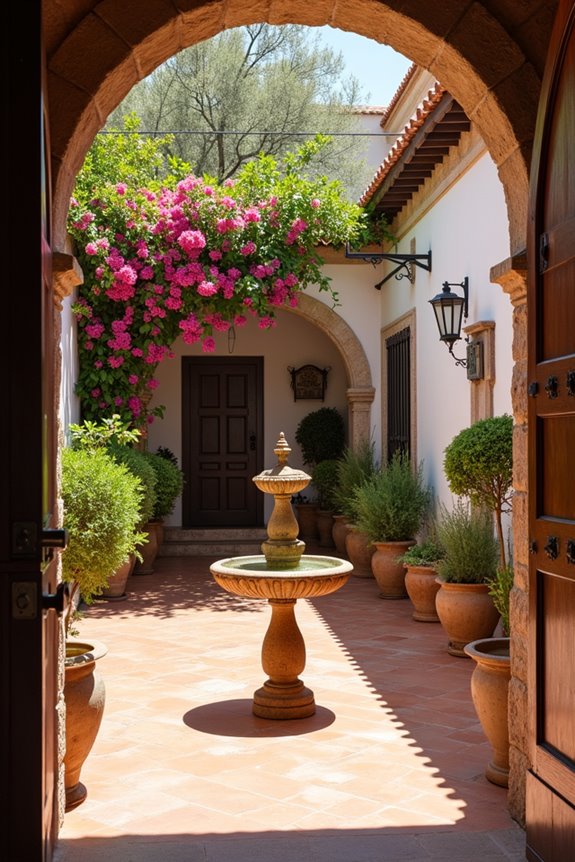
Have you ever wondered why we call that outdoor space beside our house a “patio” instead of just saying “porch” or “terrace”? The answer traces back to Spanish colonial influence across the Americas. Originally, a Spanish courtyard referred to an inner space open to the sky—a practical design for homes in Mexico, Peru, and beyond. When English speakers encountered these spaces during the early 20th century, they borrowed the word directly from Spanish, pronunciation and all. By 1818, English vocabulary had formally adopted patio as an inner court. The definition later expanded by 1941 to include paved terraces attached to buildings. This linguistic journey shows how patio evolved from regional architecture into everyday English, connecting us to Spanish building traditions we still use today.
Where Did “Patio” Come From? Competing Theories Explained
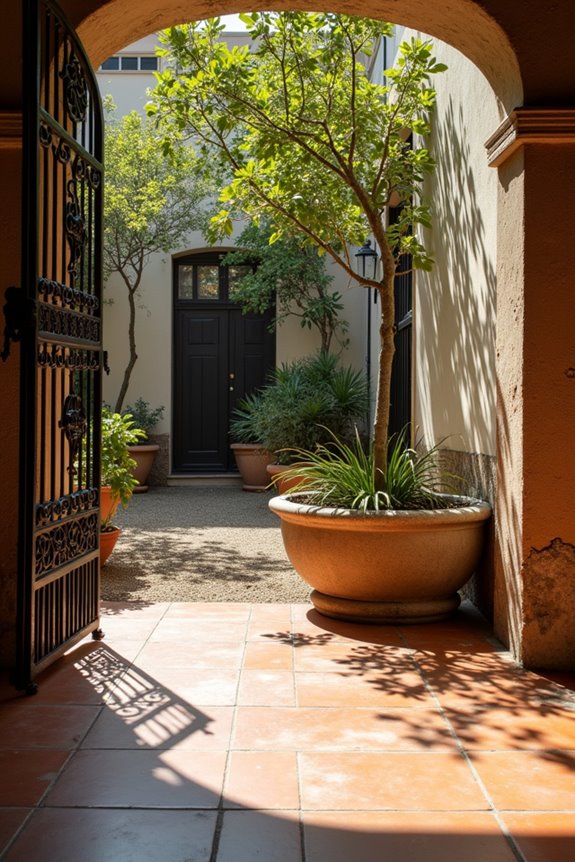
Where exactly did “patio” come from? I’ll walk you through the main contenders that etymologists debate today.
The origin of “patio” remains debated among etymologists, with Spanish roots branching into multiple competing theories.
The patio origin traces back to Spanish, but the Spanish roots themselves branch in different directions:
- Pati (communal pasture) — suggests the word originally described shared grazing land before shifting to courtyards
- Latin patere (to lie open) — points to the idea of an exposed, uncovered space
- Old Provençal patu/pati — offers alternative linguistic pathways through medieval language networks
The etymology puzzle gets messier when you consider broader connections to words like *pact*, *pax*, and *palisade*. None provides a single definitive answer, yet all reveal how language evolves across cultures. By understanding these competing theories, you’re learning how words migrate and transform—much like the patio itself evolved from inner courtyard to modern outdoor space.
How Spanish Colonists Brought Patios to the Americas
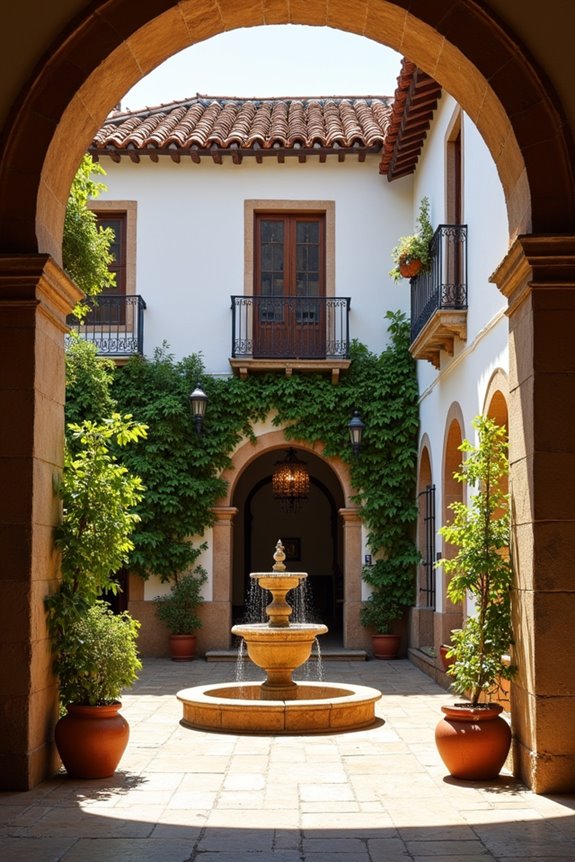
When Spanish conquistadors and settlers arrived in the Americas starting in the late 1400s, they didn’t just bring weapons and diseases—they brought their entire way of living, including the patio. These Spanish colonists recreated their homes’ architectural features across new territories. They constructed courtyards from Mexico through Peru, maintaining the same open-air design they’d known back home. The patio became essential to daily life—a sheltered outdoor space where families gathered, cooled off, and conducted business. Spanish colonists didn’t just build these spaces; they embedded the word itself into local languages. The term “patio” retained its Spanish pronunciation and spelling, a linguistic footprint that remains today. This architectural and linguistic legacy shows how colonization shaped not just landscapes but our everyday vocabulary.
The Renaissance Garden: When Patios Became Formal Spaces
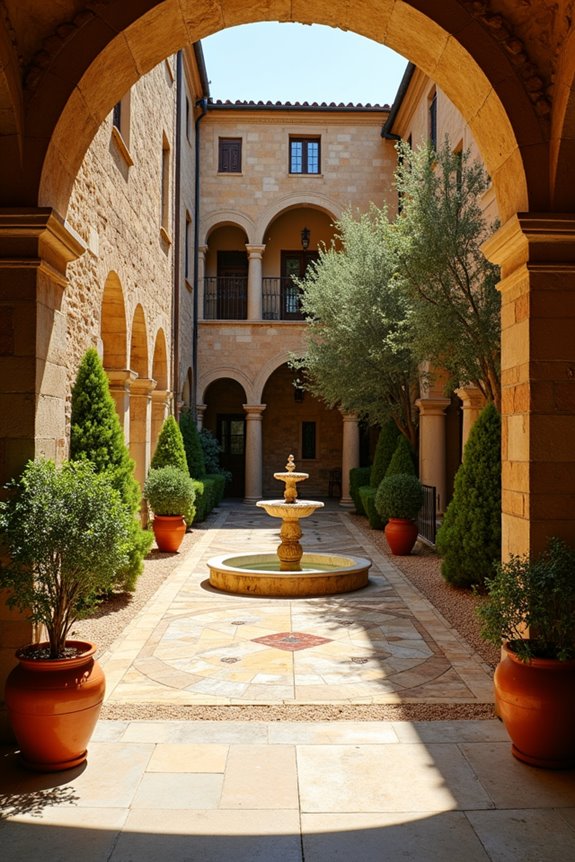
As Spanish colonists scattered their patio legacy across the Americas, something significant was happening back in Europe—the patio itself was undergoing fundamental change. During the Renaissance, Italian landscape gardeners redesigned patios from simple courtyards into carefully planned outdoor rooms. Here’s what changed:
- Geometric precision replaced casual layouts with symmetrical designs
- Paved surfaces signaled human control over nature through ordered terraces
- Architectural connection linked homes directly to meticulously arranged gardens
These Renaissance gardens were intentional compositions. They featured axial planning—basically straight lines and balanced shapes—that connected indoor spaces to outdoor terraces. Patios became transitional zones, the bridge between your house and the expansive garden beyond. This emphasis on control and order influenced garden design for centuries afterward, establishing patios as essential architectural features.
The 1950s Patio Boom: America’s Shift to Outdoor Living
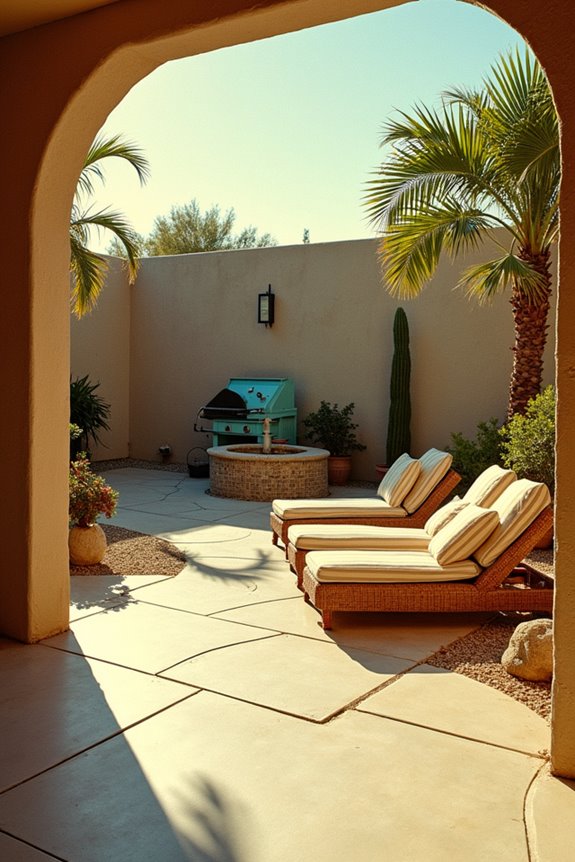
The patio transformed from a European architectural detail into an American lifestyle essential almost overnight. The 1950s boom fundamentally changed what people expected from their homes. Before this era, patios existed mainly in dictionary definitions—formal, enclosed spaces beside buildings. But something shifted culturally.
Suddenly, outdoor living became the norm rather than a luxury. Affordable plastic furniture made entertaining outdoors accessible to everyday families. People weren’t maintaining Renaissance formality anymore; they were grilling burgers and hosting weekend neighbors on simple chairs.
The 1950s patio boom didn’t just add square footage to homes. It reshaped how people valued their properties and defined family time, cementing outdoor spaces as integral to American home design and real estate appeal.
Patio vs. Terrace: Two Words, Two Different Origins
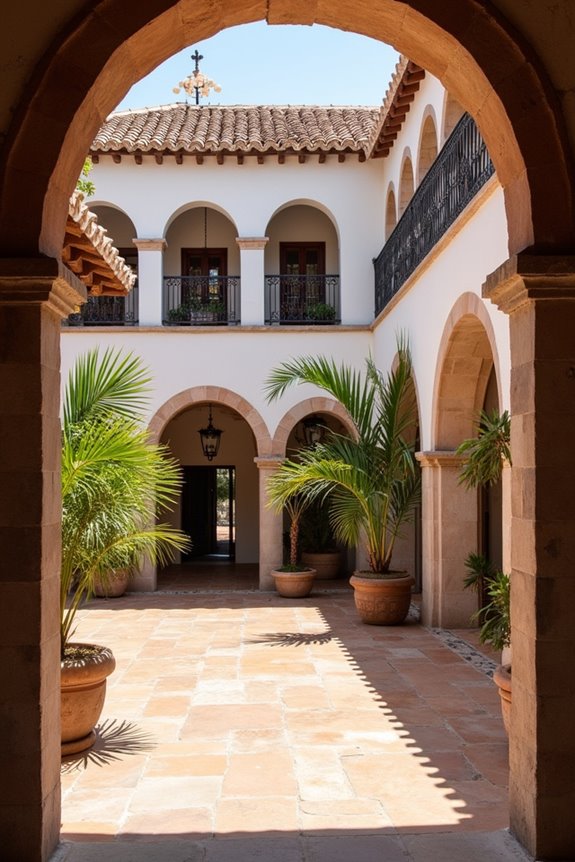
I’ve noticed that while we often use “patio” and “terrace” interchangeably, they actually trace back to completely different roots—patio comes from Spanish while terrace derives from Latin terre (meaning earth)—and this linguistic split reflects how each space functions differently in actual design. The etymology itself tells you something useful: patio likely stems from either pati (a communal pasture) or patere (to lie open), whereas terrace emphasizes the physical construction of raised earth and masonry that creates elevation changes on sloping ground. Understanding where these words came from explains why a patio typically sits flat and paved right next to your house, while a terrace involves stepping up or down with built-in stairs and embankments.
Etymology and Language Roots
While we often use “patio” and “terrace” interchangeably when talking about outdoor spaces, they’ve actually taken completely different linguistic routes to reach English. “Patio” comes straight from Spanish, where it originally described an inner courtyard—think of the open-air courtyards you’d find in colonial Mexican or Spanish colonial architecture, surrounded by buildings on all sides.
Here’s where patio etymology gets interesting:
- Communal pasture theory – Some scholars connect patio to the Spanish *pati*, meaning shared grazing land
- Latin patere connection – Others trace it to Latin meaning “to lie open,” suggesting exposed spaces
- Unsettled debate – No single universally accepted source exists among etymologists
Meanwhile, “terrace” derives from Latin *terre* (earth), reflecting its different architectural purpose. When we’re discussing these spaces as peers, understanding their separate origins helps us appreciate how language shapes our outdoor living concepts.
Architectural Features and Design
Architectural Features and Design
Once you know where “patio” and “terrace” come from linguistically, you’ll start noticing how their architectural differences match up with those separate origins.
The Patio’s Design
Spanish architecture shaped the patio as an open courtyard—typically paved and flat, nestled within or directly beside your building. It’s that accessible ground-level space you can step into from indoors.
The Terrace’s Design
Terraces work differently. They’re raised, stepped surfaces on sloping ground, often faced with stone or turf. Think elevated platforms rather than recessed courtyards.
Why This Matters
These distinctions aren’t just semantic. When cataloging spaces or writing captions, recognizing whether you’re describing a Spanish-influenced courtyard or a Renaissance-style raised platform changes how accurately you communicate the space’s actual function and design.
Historical Development and Usage
How’d these two words end up describing what seems like the same outdoor space?
I’ve noticed we toss “patio” and “terrace” around interchangeably, but they’re actually linguistic cousins with different family trees. The patio’s etymology traces back to Spanish, originally meaning an open-to-sky courtyard. By 1818, English speakers adopted this definition, describing inner courts with sky access. Terrace came separately—from Latin terra through French and Italian routes—typically meaning a raised, level surface.
Here’s what sets them apart practically:
- Origin story: Patio’s Spanish roots versus terrace’s Latin lineage
- Original function: Patio as intimate communal space; terrace as elevated platform
- Modern usage: Both describe outdoor areas, yet carry distinct historical weight
Understanding this distinction helps us appreciate how language shapes our connection to shared spaces.
From Classical Courtyards to Modern Outdoor Rooms
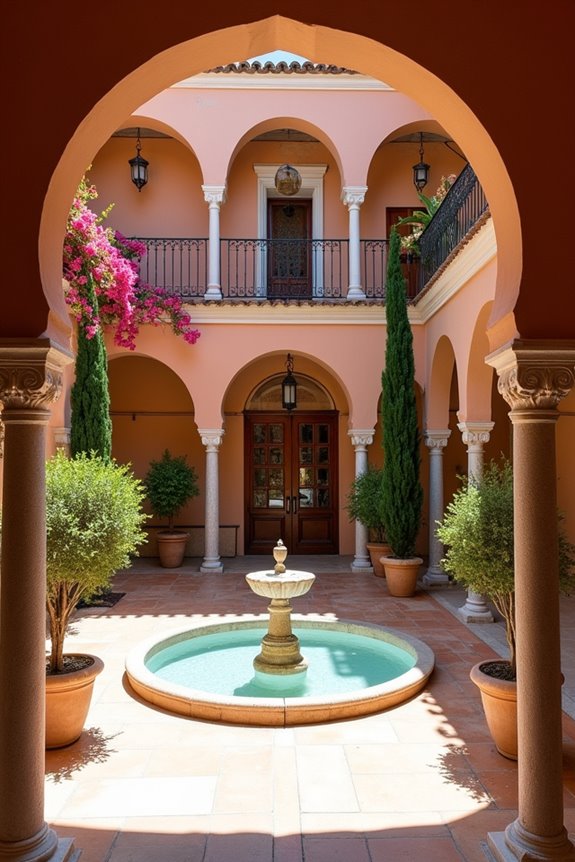
Ever notice how your backyard doesn’t look anything like a Spanish colonial mansion, yet we still call it a patio?
That’s because the concept evolved dramatically. Classical Spanish courtyards—those open-to-sky spaces designed for airflow and light—established the foundation. Renaissance architects refined these designs with formal layouts and decorative elements.
By the 1940s, the definition shifted. English dictionaries now described patios as paved terraces beside buildings, signaling a transformation from strict formality to practical living spaces.
Today’s patios blend that heritage with modern comfort. We’ve traded ornate fountains for grills and lounge chairs. The bones remain the same—outdoor rooms connected to our homes—but the purpose changed from architectural showpiece to everyday hangout spot where we actually relax.
Why Patio Etymology Matters for Garden Archives
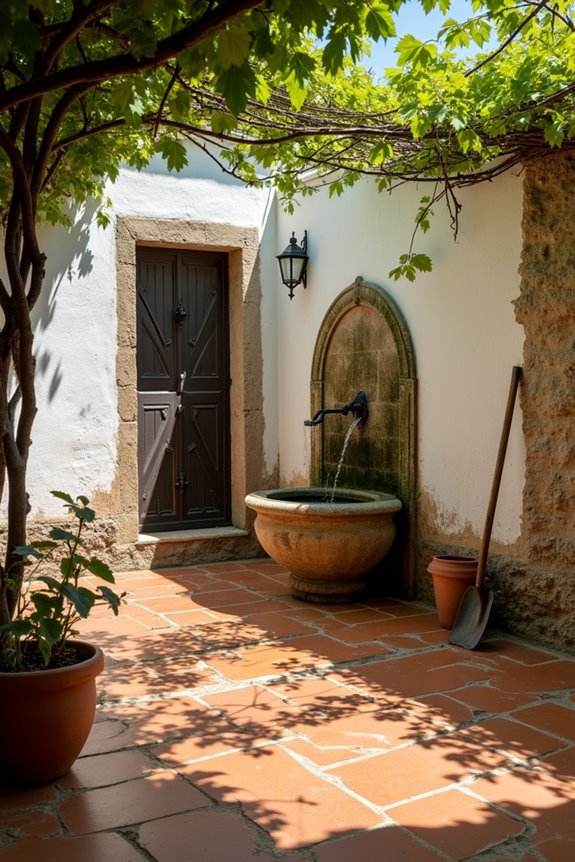
When you’re cataloging historical garden photographs or describing outdoor spaces in a museum database, why does it matter whether you label something a “patio” versus a “terrace”? Understanding patio etymology helps us classify spaces accurately and communicate their history properly.
Here’s why this matters for garden archives:
- Precision in description — Knowing patio’s Spanish origin and its definition as an open-to-sky, paved space prevents mislabeling
- Historical accuracy — Tracing how the term evolved from inner courtyards to modern outdoor rooms documents cultural exchange
- Research reliability — Proper patio etymology ensures scholars find exactly what they’re seeking in databases
When we honor these linguistic roots, we’re serving our community of archivists, historians, and garden enthusiasts who depend on consistent, thoughtful cataloging practices.
The Proto-Indo-European Roots Behind “Patio” and Related Words
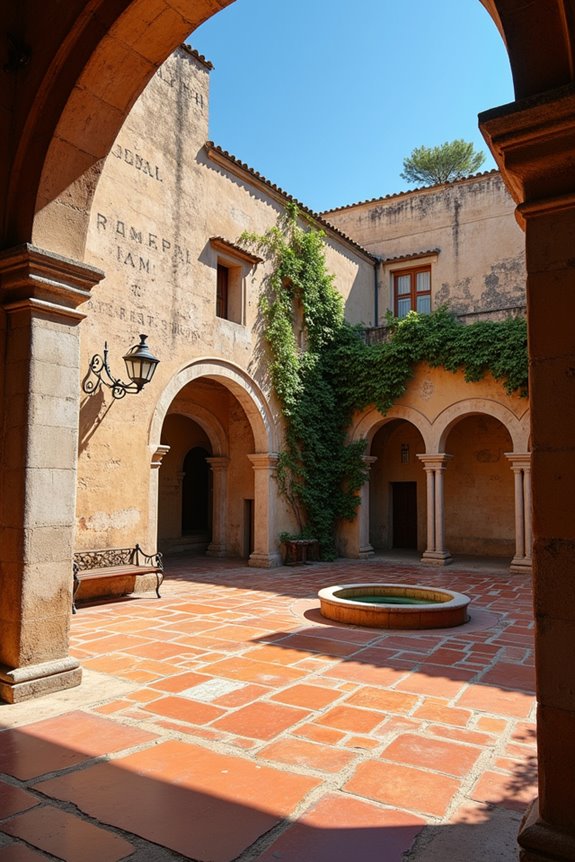
I find the *pag-* root particularly interesting because it pulls together a whole family of English words—pact, palisade, pax, page, and pallet—all tracing back to the Proto-Indo-European concept of “to fasten.” When we look at patio through this lens, we’re watching how a single ancient root word branched out across different languages and took on new meanings over thousands of years. The connection suggests that patio originally carried the sense of something enclosed or fastened together, which makes sense when you consider how patios function as defined outdoor spaces attached to homes.
The *Pag- Root Connection
To understand where “patio” really comes from, we’ve got to examine the Proto-Indo-European root *pag-, which means “to fasten” or “to bind together.” Some linguists—though not all of them agree—think this ancient root connects a whole family of words we still use today: pact, pax, page, pallet, palisade, and yes, patio itself.
Why This Connection Matters
The PIE pag- root suggests something fundamental about how our ancestors thought:
- Binding creates order—fastening things together meant security and structure
- Enclosing provides safety—binding/enclosing spaces protected communities
- Spanish borrowing preserved it—the word traveled through Romance languages, keeping its essence intact
We’re exploring how a single ancient concept—fastening—shaped the spaces where we gather today.
Linguistic Pathways To Modern English
How’d the word “patio” actually make it into English dictionaries?
The journey’s quite direct once you trace it. Spanish colonizers brought the term north, and English speakers picked it up during the 19th and 20th centuries. As a loanword, “patio” entered our language when we needed a word for those open outdoor spaces Spanish architecture introduced.
The etymology itself reveals the path:
- Spanish settlers built homes with central courtyards
- English speakers encountered these spaces and borrowed the Spanish term
- Early dictionaries recorded the word in colonial contexts
This loanword adoption shows how etymology works in practice. When cultures meet, languages merge. We didn’t invent a new English word; we borrowed one that already described exactly what we needed.