
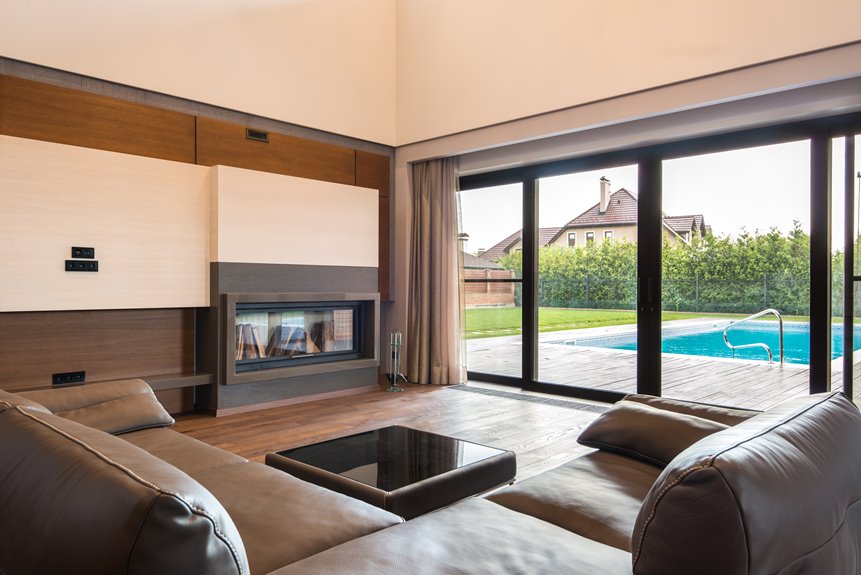
The best patio doors in 2026 depend on your climate and budget.
Fiberglass doors ($2,800–$4,500) last 30–50 years with minimal maintenance and resist warping in extreme temperatures.
Vinyl-clad options ($899–$2,499) offer solid value and Energy Star certification for budget-conscious buyers.
Aluminum frames deliver slim sightlines but need thermal breaks for efficiency.
Brands like Andersen, Pella, and Milgard provide dealer support and transferable warranties.
Your local energy codes—particularly SHGC and U-factor ratings—determine which doors qualify for installation.
Matching materials to your climate saves thousands in long-term repairs and energy bills.
What Makes a Great Patio Door in 2026?
What really separates a solid patio door from one you’ll regret installing? It’s the combination of efficiency, durability, and security working together.
Energy efficiency matters. Look for Energy Star certified doors that will lower your energy bills. Materials like fiberglass and vinyl resist warping and hold up against temperature swings better than older options.
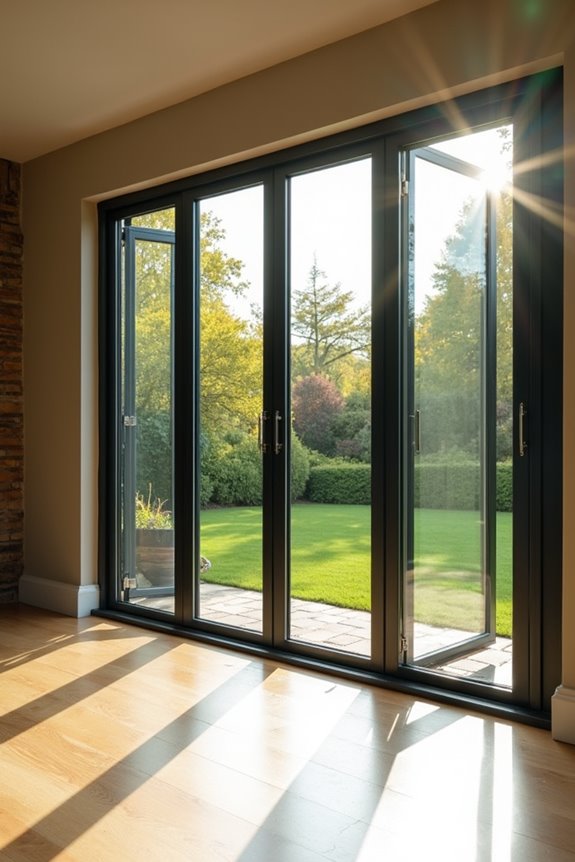
Design trends favor function. Larger glass panels with slim frames create that seamless indoor-outdoor feeling. The frames stay structurally sound despite their sleeker appearance.
Security can’t be an afterthought. Multi-point locking systems and reinforced frames protect what matters. These features have become standard expectations, not premium add-ons.
Balance your priorities. Customization options exist, but they’ll impact your timeline and budget. Consider your climate and local building codes before deciding.
Best Vinyl-Clad Patio Doors for Budget Buyers
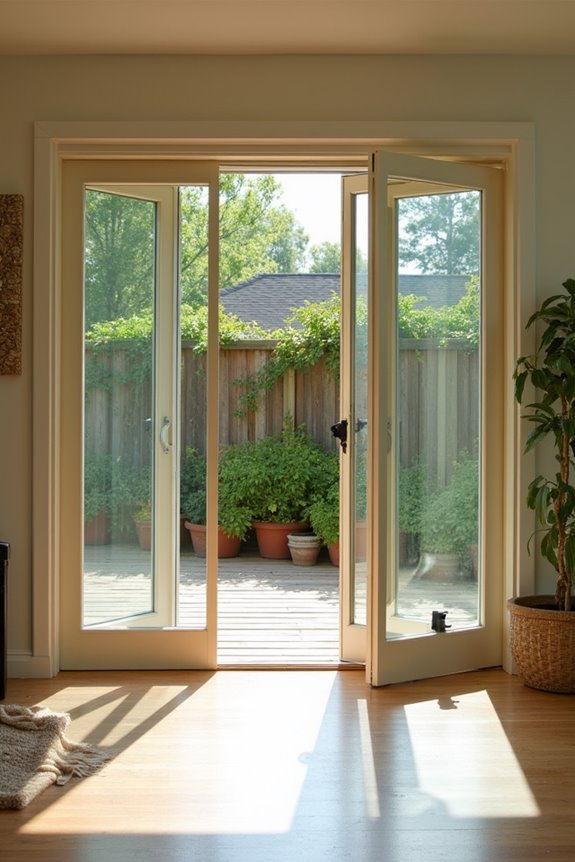
When you’re shopping for patio doors on a budget, vinyl-clad sliding doors deserve serious consideration. I’ve found they offer solid value through smooth ball-bearing rollers and ENERGY STAR ratings that keep your energy bills reasonable.
Why Vinyl Works for Budget-Conscious Buyers
You’ll spend roughly $899–$2,499 installed, depending on size and hardware. Vinyl doors resist moisture well and need minimal maintenance—no constant repainting required. They’re straightforward performers without unnecessary frills.
| Feature | Benefit |
|---|---|
| Ball-bearing rollers | Smooth, effortless operation |
| ENERGY STAR certified | Lower utility costs |
| Moisture resistant | Durability in wet climates |
| Low maintenance | Less upkeep time and money |
| Title 24 compliant | Meets California standards |
The tradeoff? Limited color and style choices compared to fiberglass. Premium vinyl options bridge cost and performance reasonably well, though they may not match fiberglass longevity. They’re dependable doors that do their job without drama.
Premium Fiberglass Patio Doors for Long-Term Value
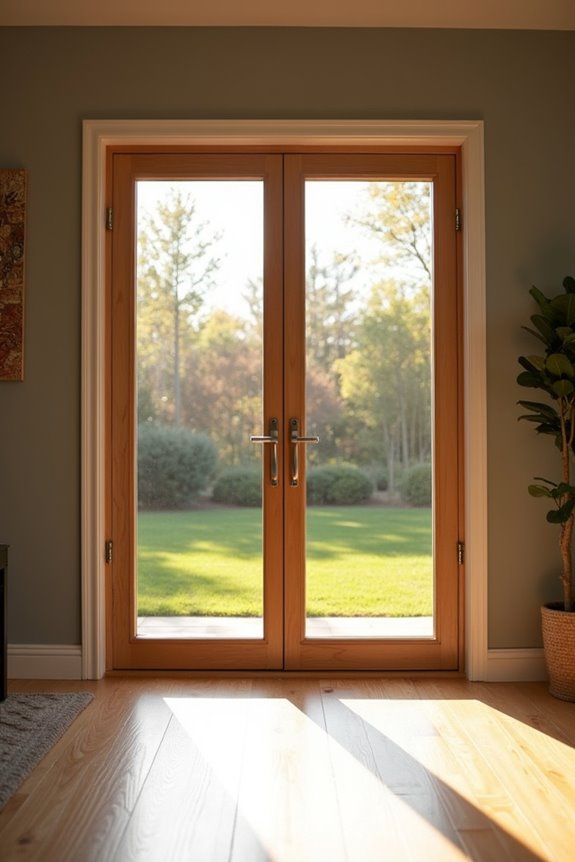
If you’re willing to invest more upfront, fiberglass patio doors can save you real money over decades—we’re talking 30–50 years of durability that’ll outlast vinyl by a significant margin. They won’t warp, dent, or yellow from UV rays like other materials do, which means they’ll handle everything from scorching heat to freezing temperatures without losing their structural integrity or appearance. Plus, their energy-efficient framing keeps those monthly heating and cooling costs down while meeting strict building codes, so you’re banking savings on both replacement and utility bills.
Fiberglass Durability Benefits
Because fiberglass frames don’t absorb moisture or expand in heat the way wood does, they’re built to last—we’re talking 30 to 50 years with minimal maintenance. You won’t deal with warping, rotting, or that yellowing that sneaks up on other materials.
Here’s what makes fiberglass doors stand out:
- Stable dimensions – Fiberglass maintains its shape in extreme climates without expansion issues
- Low maintenance reality – Skip the constant repainting; finishes resist fading and cracking naturally
- Structural integrity – Strong frames handle temperature swings without compromising performance
The durability factor means you’re choosing a practical solution that performs year after year, freeing you from the endless upkeep cycle that comes with other materials. These doors simply work for homeowners looking for reliable, long-term performance.
Long-Term Cost Savings
Premium fiberglass patio doors cost more upfront—typically $2,800 to $4,500 per door before installation—but here’s where the math shifts in your favor over time. You’re investing in a 30–50 year lifespan, which beats wood and vinyl by a decade or more.
| Factor | Fiberglass | Vinyl | Wood |
|---|---|---|---|
| Lifespan | 30–50 years | 20–30 years | 20–30 years |
| Maintenance Cost | Low | Moderate | High |
| Energy Efficiency | ENERGY STAR capable | Good | Fair |
| Replacement Frequency | Once | Twice | Twice |
Why fiberglass wins financially:
- Lower maintenance costs—no warping, swelling, or UV yellowing
- Energy efficiency reduces heating/cooling bills annually
- Solid warranties protect your investment
- Fewer replacements mean long-term savings
You’re paying once and enjoying decades of reliable performance alongside consistent energy savings.
Weather Resistance Performance
While vinyl doors can warp in extreme heat and wood doors swell when moisture hits them, fiberglass doors stay put—and that stability matters when you’re counting on your doors to handle whatever weather comes your way. Fiberglass’s durability stems from its resistance to rot, warping, and swelling across different climates.
What makes fiberglass excel:
- Superior insulation—fiberglass achieves lower U-factors than vinyl or aluminum, keeping your home comfortable during temperature swings
- UV-resistant coatings—finishes maintain color and surface integrity for decades without fading
- Reinforced frames with multi-point locking—these resist wind-driven infiltration and impact damage
Proper installation matters too. Ensure your installer uses correct flashing, sealed joints, and compatible weatherstripping to minimize air and water leakage. That’s where real weather resistance happens.
Aluminum Patio Doors and Composite Options Explained
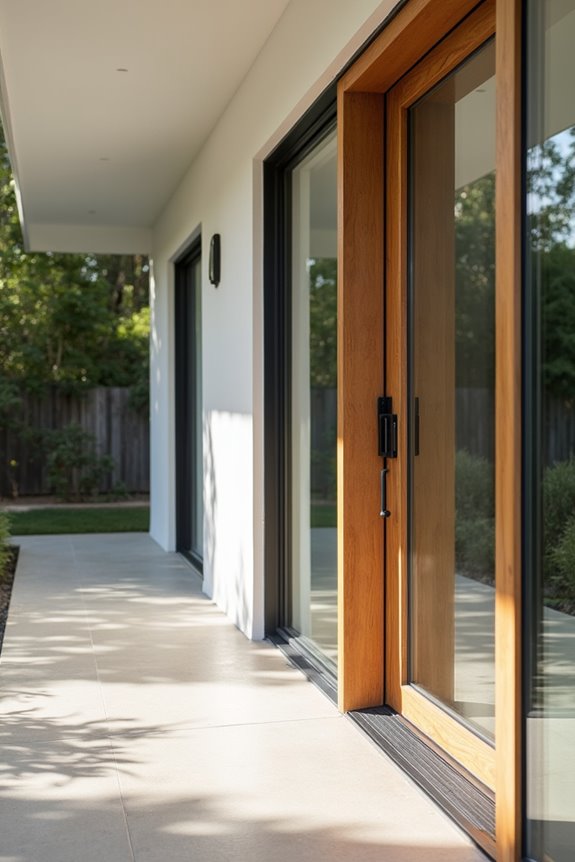
I’ve found that aluminum frames and composite materials each bring distinct strengths to the patio door conversation—aluminum gives you slimmer sightlines and those 1,000+ color options I mentioned earlier, while composites handle temperature swings without the thermal bridging issues pure metal can create. When I look at durability and performance, I’m really comparing how well these materials resist warping, maintain their U-value (that 0.20 rating means serious insulation), and hold up over years of expanding and contracting with seasonal changes. Let me break down what makes each option worth considering for your specific situation.
Aluminum Frame Advantages
Why do so many modern patio doors feature aluminum frames? Aluminum delivers strength without bulk, and a sleek look that works well for contemporary homes.
Here’s what makes aluminum frames stand out:
- Slim sightlines – You get larger glass panels because aluminum doesn’t need thick frames, so you’re seeing more of your patio and less of the door itself.
- Thermal performance control – While aluminum conducts heat more than other materials, thermal breaks (interior barriers) and low-emissivity coatings keep your home comfortable and your energy bills reasonable.
- Durability with minimal upkeep – Aluminum resists warping and rot, meaning less maintenance over time compared to wood options.
This balance between contemporary aesthetics and practical performance works well for most homeowners.
Composite Material Benefits
When you combine aluminum’s strength with composite materials, you’re getting the best of both worlds—a door that won’t warp, needs minimal maintenance, and keeps your energy costs in check.
Why Composite Material Benefits Matter
Composite aluminum patio doors deliver durability that lasts. Here’s what makes them stand out:
- Minimal upkeep: No painting or staining required
- Resistance to warping: Composites won’t twist or bow like wood
- Better thermal performance: Interior composites reduce heat transfer compared to pure aluminum
- Higher stiffness: Supports large glass panels without flexing
Yes, they cost more upfront. But you’re investing in a door that handles weather, temperature swings, and daily use without degrading. For homeowners wanting reliability without constant maintenance, composite aluminum doors represent solid, practical value that holds up.
Durability And Performance
- Fiberglass doors resist warping and rot better than wood, lasting 20+ years with minimal upkeep
- Aluminum frames offer strength but need thermal breaks to prevent condensation issues affecting energy efficiency
- Composite materials like Andersen Fiberx combine wood’s appearance with superior weather resistance and lower maintenance demands
Doors must stand up to sun, rain, and temperature swings without constant repairs. Fiberglass and aluminum-clad composites deliver this reliability. Wood doors have aesthetic appeal but demand regular maintenance or they will warp and deteriorate faster than desired.
Andersen Corporation: Premium Quality and Dealer Support
If you’ve shopped for patio doors and noticed Andersen’s name pop up repeatedly, there’s a solid reason—they’ve been manufacturing windows and doors since 1903, and they’re now one of North America’s largest producers in the industry.
What Sets Them Apart
Andersen’s three-tier lineup spans from budget-friendly 200 series to premium A series custom options. All feature Fiberx composite material and Energy Star ratings, meaning you’re getting proven performance across price points.
Andersen’s tiered lineup delivers Energy Star performance across all price points, from budget 200 series to premium A series options.
The Dealer Support Advantage
Here’s where Andersen excels: their vast dealer network means you’re not handling installation alone. You’ll find local experts who understand your climate and can handle everything from measurement to installation.
Warranty Coverage
They offer transferable owner-to-owner warranties, which matters if you sell. It’s the kind of confidence you want supporting your investment.
Pella Corporation: Smart Features and Integrated Design
- Between-glass blinds with smart sensors – Privacy adjusts automatically, no manual tugging required
- Three distinct product lines – Architect Series (wood-clad), Lifestyle (modern aesthetics), and Impervia (fiberglass durability) meet different needs
- Energy Star partnership spanning 25+ years – They’ve invested in efficiency, not just marketing it
The premium pricing reflects those advanced features. If you value automation and thoughtful design, Pella’s wide availability through Lowe’s and showrooms makes exploring their options accessible.
Milgard Windows & Doors: West Coast Reliability
If you’re living near the coast or in a climate where salt air and moisture are constant challenges, you’ll appreciate that Milgard’s patio doors are built specifically for these tough conditions—their fiberglass and vinyl frames resist corrosion better than standard materials. I find it reassuring that they meet or exceed energy efficiency standards like ENERGY STAR ratings, which means you’re getting thermal performance that reduces your heating and cooling costs. Their durability in coastal climates isn’t just marketing talk; it’s backed by their full lifetime warranty, which covers the original purchaser against defects in materials and workmanship.
Durability For Coastal Climates
Why do some patio doors hold up better than others when you’re living near the ocean?
It comes down to materials and protection. Milgard’s coastal durability works because they’ve engineered solutions specifically for salt-air exposure. Here’s what sets them apart:
- Ultra Series fiberglass resists corrosion better than standard materials, lasting decades near the water
- Low-E glass comes standard, reducing humidity damage and salt buildup on your doors
- Trinsic Series vinyl/aluminum hybrid combines low maintenance with proven coastal performance
Their full lifetime warranty covers you and even broken glass on select options. What stands out is their West Coast focus—they understand what ocean living demands. Yes, their dealer network’s limited regionally, but that regional expertise means they’ve solved actual coastal problems, not theoretical ones.
Energy Efficiency Standards Met
When you’re comparing patio doors, energy efficiency ratings matter just as much as durability—especially if you’re trying to keep your heating and cooling bills reasonable. Milgard includes low-E glass as standard across its lineup. This coating reflects heat while letting light through, which means your HVAC system doesn’t work overtime.
| Feature | Milgard Standard | Energy Savings |
|---|---|---|
| Low-E Glass | Yes, included | 20-30% reduction |
| Frame Material | Fiberglass Ultra | Superior insulation |
| West Coast Climate | Optimized | Year-round efficiency |
You’re getting professional-grade energy efficiency without paying extra for upgrades. Milgard builds efficiency into every door rather than offering it as an afterthought.
Wellste: Custom Aluminum Doors at Factory Pricing
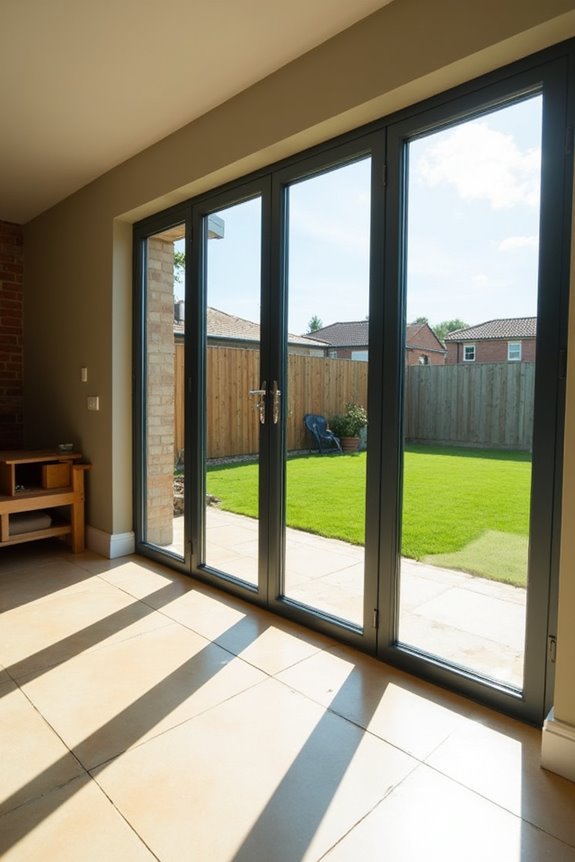
How do you get high-performance patio doors without the retail markup? Wellste’s approach offers a direct alternative—they’ve been manufacturing aluminum doors since 1996 and ship directly from their factory to your home.
What their model delivers:
- Over 1,000 customization options in colors and textures, so you’re not forced into standard choices
- NFRC-certified U values as low as 0.20, meaning superior insulation without middleman markups
- One-stop production and doorstep delivery, eliminating local dealer margins
Wellste’s aluminum doors hold AAMA triple-performance certification and ISO 9001 credentials. They partner with AGC and Renault Glass for quality glazing. Exporting to 60 countries, they’ve proven their manufacturing consistency. You’re buying directly from the source—which typically translates to better pricing on premium specifications.
Marvin, JELD-WEN, and Alternative Brands for Specialized Needs
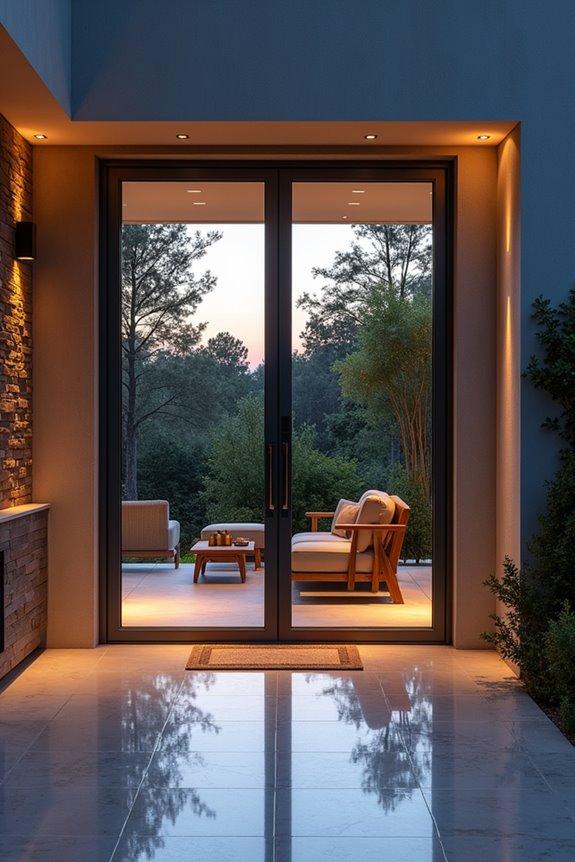
Once you’ve decided between direct-factory options like Wellste and established retailers, the next question becomes whether you need premium design flexibility, material variety, or something more specialized.
Marvin positions itself as the high-end choice, offering sophisticated patio doors that prioritize aesthetics and customization without compromising quality. If you’re after materials beyond standard vinyl, JELD-WEN delivers broader product options across wood, aluminum, and composite materials.
Consider these alternatives for specific needs:
- ProVia – specialty fiberglass construction
- Ply Gem – value-focused material combinations
- Western Window Systems – regional performance optimization
Your choice depends on what matters most: Marvin for design-forward homeowners, JELD-WEN for material flexibility, or specialized brands when your climate, budget, or aesthetic demands something different from mainstream options.
Patio Door Types: Sliding, French, or Bi-Fold-Which Type for You?
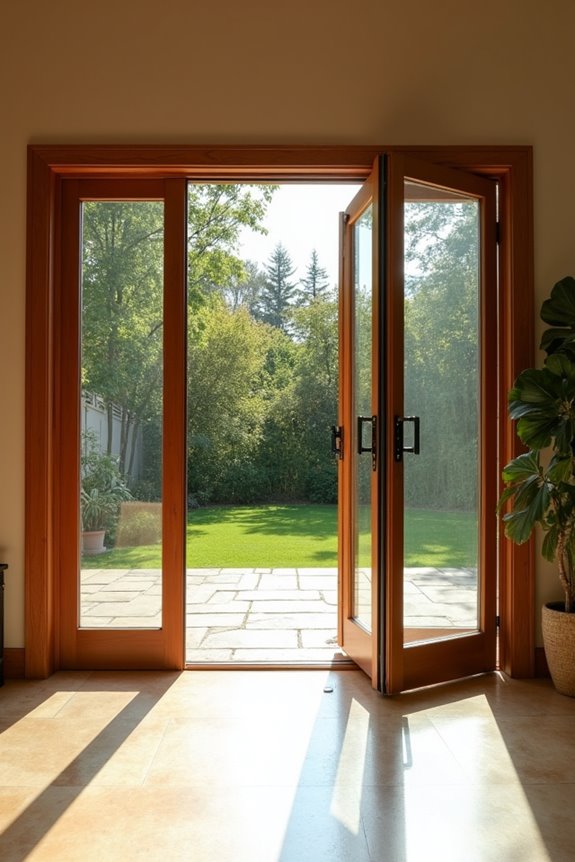
The real question isn’t which patio door type is objectively “best”—it’s which one fits your space, lifestyle, and what you’re willing to maintain.
I’ve found that matching your door to your actual needs matters more than brand prestige. Here’s what separates them:
- Sliding doors maximize views and save floor space—perfect if you’re tight on square footage
- Bi-fold doors create indoor-outdoor merging when you want full opening capability
- French doors deliver classic aesthetics with better security seals, though they demand more maintenance
Material choices matter too. Vinyl and fiberglass balance durability without excessive cost, while aluminum suits modern spaces. Wood? It’s beautiful but requires consistent care.
Whatever you choose, prioritize ENERGY STAR ratings and weatherstripping. That’s where your real savings happen.
Your Climate and Codes: Why They Shape Your Choice
I’ve learned the hard way that where you live matters more than you’d think when picking patio doors—your climate zone, local building codes, and regional energy standards basically do half the decision-making for you. If you’re in a hot, humid area like coastal Florida, you’ll need doors with better moisture resistance (vinyl or fiberglass beats wood), while someone in a cold zone like Minnesota needs doors with low U-factors (around 0.30 or better) to meet ENERGY STAR requirements. Your local jurisdiction probably has specific codes you must follow, and choosing a door that doesn’t align with them means installation headaches, failed inspections, or worse, an invalid warranty.
Climate Zone Compatibility
Where you live matters more than you’d think when picking patio doors—and I’m not just talking about aesthetics. Your climate zone directly determines which doors’ll actually perform and last.
I’d recommend considering these three factors:
- U-factor ratings – This measures heat loss. Cold climates need lower U-factors (around 0.20 or less) to keep warmth in.
- SHGC (Solar Heat Gain Coefficient) – Hot regions benefit from lower SHGC values to reject summer sun and reduce cooling costs.
- Material moisture resistance – Aluminum frames sweat in humid climates, while fiberglass and vinyl handle dampness better.
Your local building codes enforce these standards for good reason. I’ve learned that choosing doors rated for *your specific zone* prevents condensation issues, energy waste, and premature failure. That’s smart building.
Local Building Code Requirements
- Coastal areas demand impact-rated glass for storm protection
- Title 24 standards (in California and similar regions) set stricter performance targets than national baselines
- Your installer needs local code familiarity to ensure proper installation and warranty coverage
Checking your local requirements upfront saves time and prevents rework later.
Energy Efficiency Standards by Region
How much you’ll spend on heating and cooling depends partly on where you live—and that’s where energy efficiency standards come in. Your region’s building codes dictate which doors qualify as efficient enough for installation.
Here’s what shapes your choices:
- U-factor ratings measure heat loss through the door—lower numbers indicate better insulation, with California requiring ≤0.32 for new builds
- SHGC (solar heat gain coefficient) controls how much sun heat enters your home, capped at ≤0.25 in California’s Title 24 compliance
- ENERGY STAR certification provides a universal benchmark to compare performance across different regions and manufacturers
Higher-performance doors cost more upfront, but you’ll recoup those expenses through reduced energy bills. Check your local codes before shopping—what works in one state might not meet another’s standards.
Patio Door Warranties: What Coverage Actually Means
What you need to verify:
- Is the warranty transferable if you sell your home?
- Does it cover glass breakage specifically?
- Will coverage apply if a non-authorized dealer installs your door?
Milgard’s lifetime warranty for original purchasers sounds solid, but Pella’s coverage gets tricky—wood components get shorter protection, and different product lines (Architect Series versus Lifestyle) have different rules. Check whether your warranty covers just the frame or includes hardware and glass too. These details matter more than the headline promise.
Getting It Right: Installation, Maintenance, and When to Replace Rollers
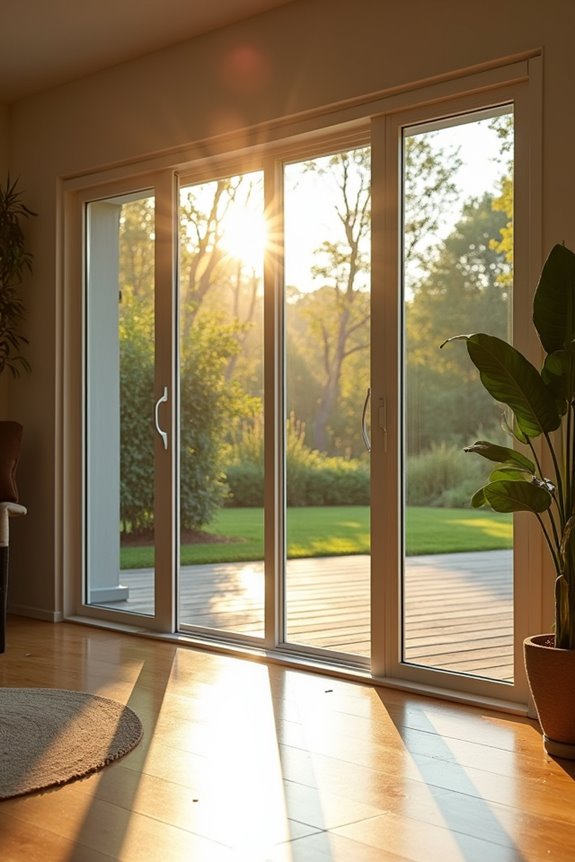
You’ve probably noticed your patio door getting stickier over time—that’s usually not a sign you need a whole new door, just that the rollers need attention.
Sliding door rollers are the essential component for smooth operation. Premium ball-bearing rollers last 20+ years when maintained properly. Here’s what I recommend focusing on:
- Clean tracks regularly — dirt buildup causes most jams
- Check roller alignment — misaligned rollers wear unevenly and stick
- Replace worn rollers early — waiting costs you money later
Maintenance beats replacement every time. I’d suggest hiring a licensed, insured contractor for installation; they’ll ensure proper alignment and weather sealing. Same-day service minimizes your downtime. You’ll know it’s time for full frame replacement when the system’s warped or heavily air-leaky—not just sticky rollers.
Decision Matrix: Matching Price, Timeline, and Warranty to Your Needs
When you’re ready to commit to new patio doors, you’re really making three separate decisions at once—and they’re all connected. You’ve got price, delivery timeline, and warranty depth to juggle simultaneously. The cheapest option rarely wins long-term. Budget doors might cost less upfront, but poor energy efficiency and weak security features increase your operating costs through utility bills and create potential vulnerabilities. Mid-range brands like Milgard and Pella offer solid warranties covering hardware and frame defects—typically 10 to 20 years. Premium options from Marvin provide extended protection. Consider your timeline too. Standard orders run 6–12 weeks; rush options exist but cost more. Match your budget against warranty terms and delivery expectations to find genuine value, not just a low sticker price.