Camden Yards is a baseball stadium in downtown Baltimore that opened in 1992 as home to the Orioles. It holds 42,455 fans and features a retro-modern design with brick, an eight-story B&O Warehouse backdrop, and Eutaw Street running through it. The stadium cost $110 million to build and changed how MLB designs ballparks—over 20 stadiums since adopted its approach. You’ll find local crab cakes and pit beef inside, plus iconic moments like Cal Ripken Jr.’s consecutive-games record.
What Is Camden Yards?
A baseball stadium might sound like just another sports venue, but Camden Yards—officially called Oriole Park at Camden Yards—changed ballpark design. Located in downtown Baltimore, Maryland, this natural grass stadium has been home to the Baltimore Orioles since 1992.
What makes it special? The distinctive design combines classic architecture with contemporary features across 85 acres near the Inner Harbor. The iconic B&O Warehouse backdrop and Eutaw Street integration altered how ballparks are constructed. Its 48,041-seat capacity opened after 33 months of construction, replacing Memorial Stadium.
The impact was significant. HOK Sport’s leadership created a retro-classic ballpark that influenced MLB stadiums across the country. Camden Yards set the standard that other ballparks follow in their design.
Where Camden Yards Is Located in Downtown Baltimore
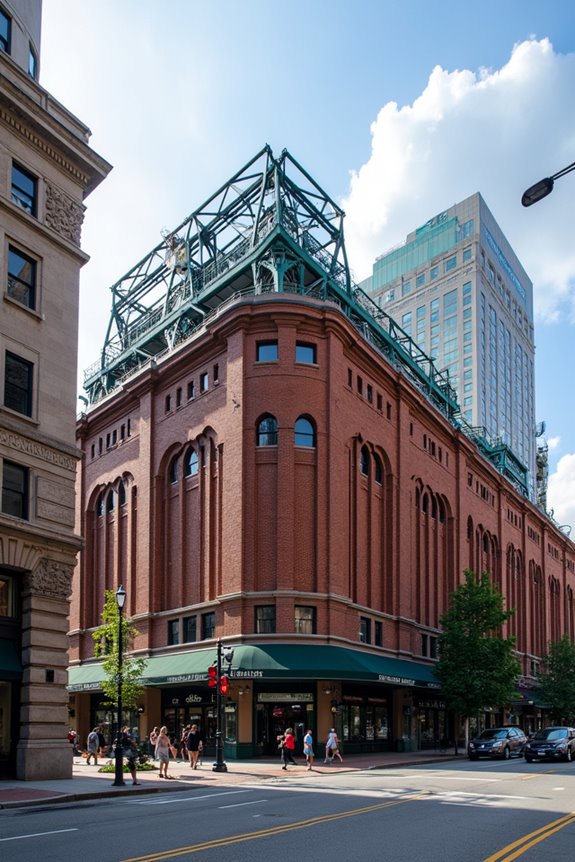
You’re basically nestled between the ballpark’s state-of-the-art design and Baltimore’s rich industrial past.
Camden Yards’ Retro-Modern Architecture
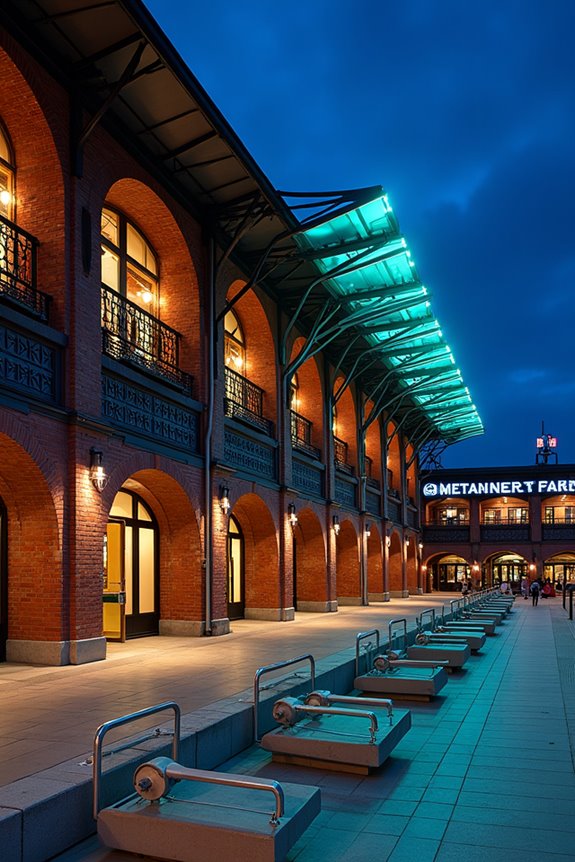
Key Design Features:
- Low-raked upper deck for better sightlines
- Straight outfield wall segments
- B&O Warehouse backdrop behind right field
Eutaw Street runs through the park itself, creating social gathering spaces that feel organic rather than corporate. This retro-modern approach—blending old-fashioned charm with modern functionality—influenced over 20 MLB ballparks afterward, making Camden Yards the blueprint for contemporary stadium design that actually belongs in a neighborhood.
Building Camden Yards: The 33-Month Project
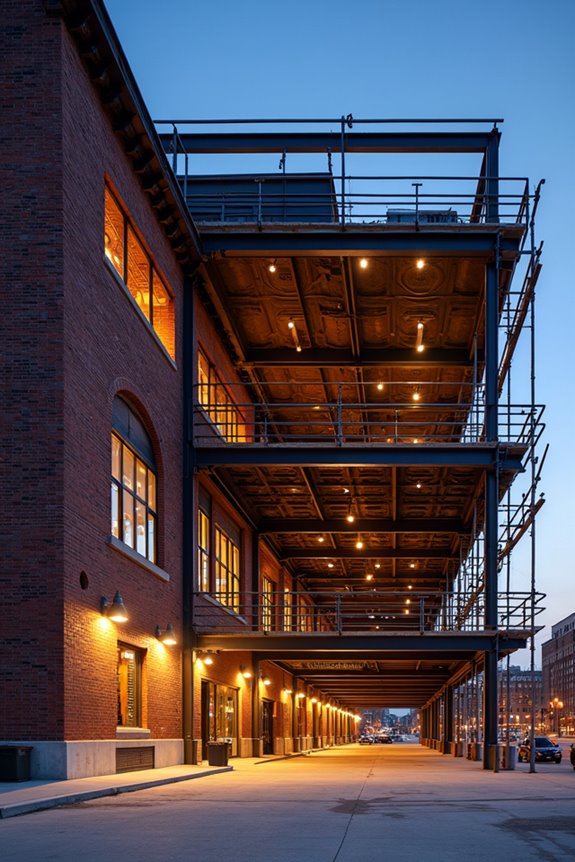
You’re looking at a pretty ambitious undertaking when you consider what it took to build Camden Yards from the ground up. Starting in 1989, the project ran for 33 months straight—that’s nearly three years of continuous work—before the ballpark finally opened its doors on April 6, 1992, replacing the aging Memorial Stadium. The whole operation involved HOK Sport (now called Populous) handling the design work, RTKL managing the master planning, and the Orioles and Maryland Stadium Authority steering the ship, all while keeping costs to around $110 million and creating something that’d actually fit into Baltimore’s downtown neighborhood rather than stand out like a sore thumb.
Construction Timeline And Duration
How long does it take to build a baseball stadium from scratch? For Oriole Park at Camden Yards, the answer was 33 months of coordinated effort starting in 1989.
The construction timeline unfolded in distinct phases:
- Groundbreaking and planning to replace aging Memorial Stadium
- Foundation work integrating downtown Baltimore’s historic character
- Steel framework rising through 1990 and 1991
- Interior systems installation, from plumbing to electrical
- Final touches preparing for the 1992 opening
The retro ballpark opened on April 6, 1992, with the Orioles defeating Cleveland 20–3. This $110 million project, led by HOK Sport and RTKL, marked a turning point in stadium design. The facility honored baseball’s past while serving modern fans.
Design Vision And Leadership
What makes a baseball stadium feel timeless rather than dated? I’d argue it’s the careful balance between honoring the past and embracing innovation—exactly what the Orioles and Maryland Stadium Authority achieved with Camden Yards.
HOK (now Populous) led the design vision, creating what we call retro-modern architecture. This meant blending classic features with contemporary innovations. The team made smart choices: brick arches that echo downtown Baltimore’s history, a low-raked upper deck that respects surrounding buildings, and the repurposed B&O Warehouse running parallel to the field.
| Design Element | Purpose | Material | Impact |
|---|---|---|---|
| Brick Arches | Historic blending | Masonry | Neighborhood harmony |
| Low Upper Deck | Scale respect | Steel/concrete | Visual balance |
| B&O Warehouse | Heritage integration | Restored brick | Authentic character |
| Eutaw Street Entrance | Community gathering | Stone/brick | Social hub |
These leadership decisions transformed a $110 million project into a benchmark for modern stadium design.
Opening Day Historic Moment
After 33 months of construction that began in 1989, Oriole Park at Camden Yards opened its doors on April 6, 1992—and the Orioles celebrated with a 20-0 shutout win against the Cleveland Indians. The energy that day demonstrated how this retro ballpark could reshape downtown Baltimore.
What made Opening Day significant:
- 48,876 capacity filled with fans experiencing something new
- Kentucky Blue Grass surface replacing the artificial turf previously used
- Historic design combining vintage elements with modern facilities
- Location advantage positioned just west of the Inner Harbor at 333 W. Camden Street
- Cultural shift showing that ballparks could serve as catalysts for city revitalization
The inaugural game was more than a baseball event. It established that retro ballpark design could influence how cities develop and function.
The B&O Warehouse and Eutaw Street: Why They’re Camden Yards’ Signature Features
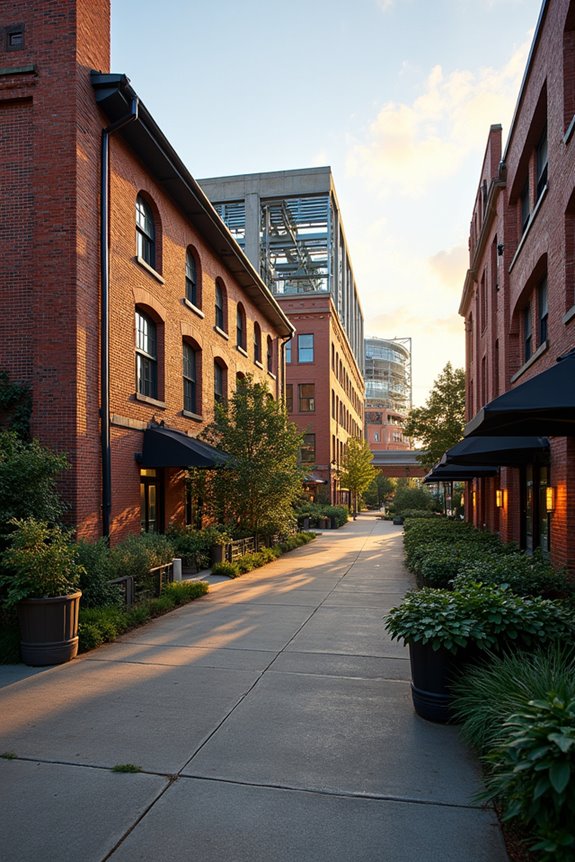
When you’re standing in Oriole Park at Camden Yards, you’ll notice two features that immediately set it apart from other ballparks: the towering B&O Warehouse behind right field and Eutaw Street running through center field.
The B&O Warehouse is an eight-story brick building that once served the railroad. It now houses offices and suites, creating an industrial backdrop that connects you to Baltimore’s past. Eutaw Street, closed to vehicles, runs right through the park—a literal piece of the city integrated into the ballpark itself.
Together, they form the retro-modern core of Camden Yards. These signature features blend old industrial character with modern baseball, giving the park a distinctive identity. Since 1992, 130 home runs have landed on Eutaw Street.
Camden Yards’ Iconic Moments: Record Breakers and Hall of Famers
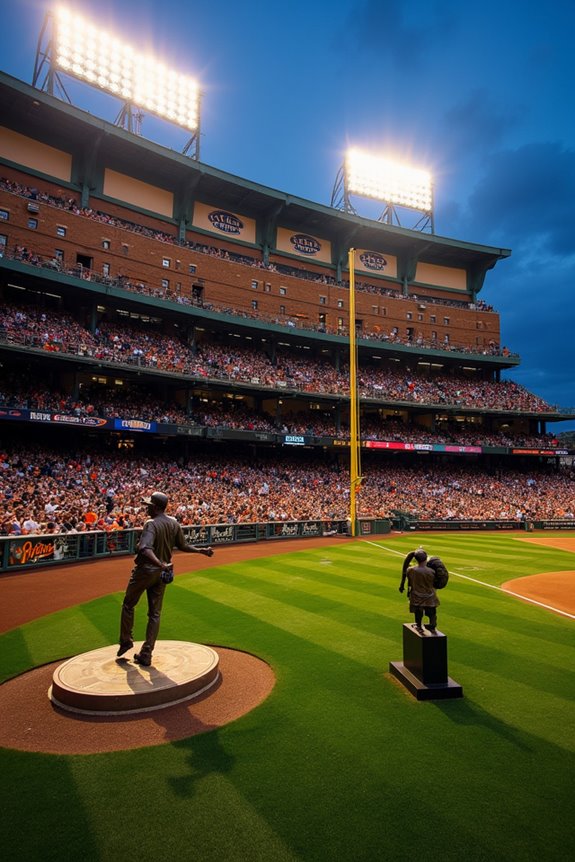
I’d be remiss not to mention the record-breaking performances that’ve made Camden Yards a stage for baseball history, especially Cal Ripken Jr.’s remarkable streak that reached its milestone right here on September 6, 1995. You’ve got Hall of Famers and record holders who’ve created memorable moments within these walls, from All-Star Games to career-defining achievements that’ll stick with fans for decades. These aren’t just statistics—they’re the moments that transformed a new ballpark into a historic venue that matters to the sport itself.
Record-Breaking Performances At Camden
How’d you like to witness history unfold right before your eyes at a ballpark? Camden Yards has been the stage for some seriously impressive moments that remind us why we love baseball.
Historic achievements at Camden Yards:
- Cal Ripken Jr.’s consecutive games streak reached 2,131 on September 6, 1995
- Eddie Murray hit his 500th home run here on September 7, 1996
- Hideo Nomo threw a no-hitter with 11 strikeouts on April 4, 2001
- The Orioles pulled off a franchise-record 10-run comeback from a 1–0–1 deficit in 2009
- The 1993 MLB All-Star Game showcased the ballpark’s early prominence
These record-breaking moments aren’t just statistics—they’re part of Camden Yards’ fabric. When you visit, you’re walking where legends cemented their legacies and where comebacks felt possible against any odds.
Hall of Fame Milestones
These weren’t just numbers on a scoreboard. They represented decades of dedication, showing up day after day. When you visit Camden Yards, you’re standing in a place where legends solidified their legacies. The ballpark itself became a witness to greatness, cementing its role as more than just a venue—it’s where baseball history got written.
Game Day Traditions and the Orioles Fan Experience
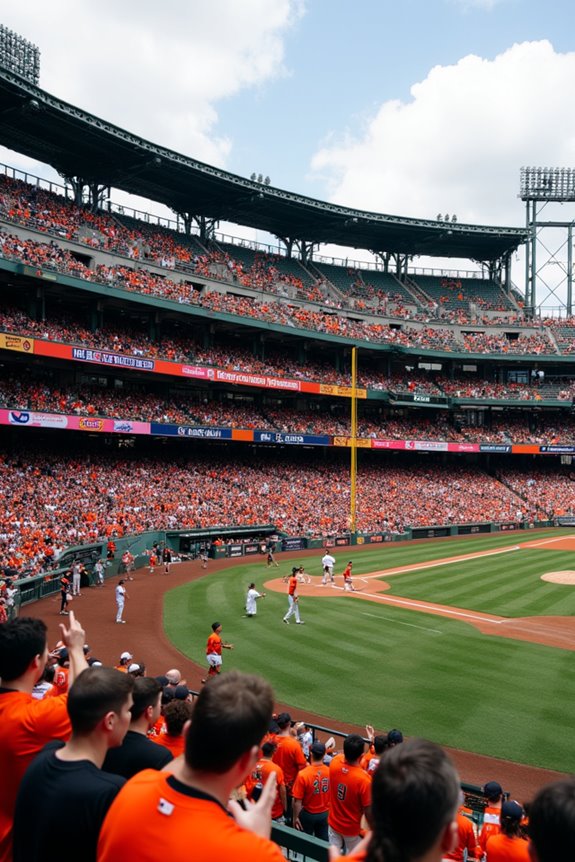
What makes stepping into Camden Yards on game day feel different from most ballparks? You’ll notice it immediately—the brick façade, the iconic B&O Warehouse looming beyond right field, and crowds flowing through the Eutaw Street entrance create genuine connection to Baltimore’s history.
The brick façade and B&O Warehouse create genuine connection to Baltimore’s history the moment you step through Eutaw Street.
The fan experience here isn’t manufactured. You’re walking through actual downtown streets, not isolated parking lots. The Yards and Center Field Lounge offer spaces where you’ll actually run into neighbors and fellow Orioles supporters.
Key game day elements:
- Kentucky Blue Grass playing surface you can practically smell
- Retro signage evoking baseball’s golden era
- Eight-story B&O Warehouse with suite views
- Eutaw Street’s open-air entrance blending ballpark with city
- Statues honoring Orioles history throughout grounds
Camden Yards made you feel like you belong here—part of something larger than just catching a game.
Local Food and Drink That Define Camden Yards
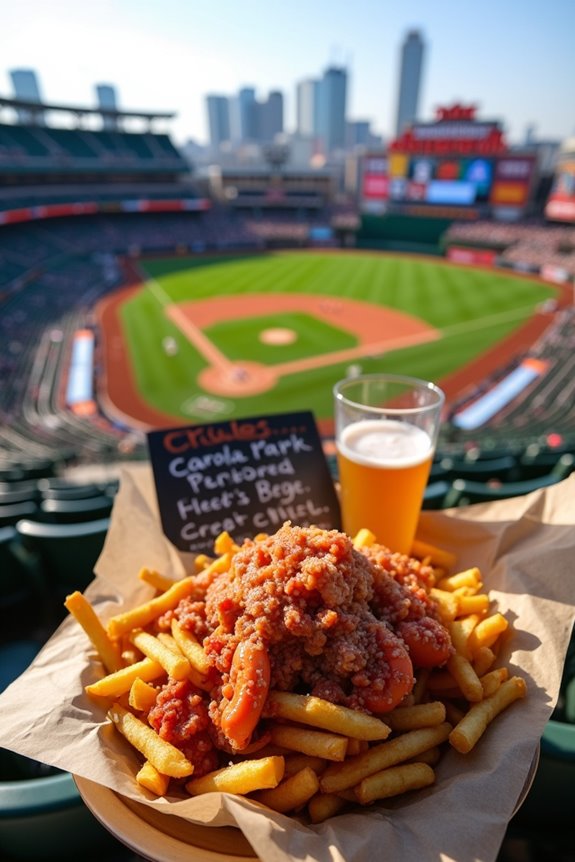
You’ll find the real personality of Camden Yards isn’t just in the architecture or the grass—it’s in what you’re eating and drinking while you’re there. Walking along Eutaw Street, you’re surrounded by food vendors and ballpark concessions that reflect Baltimore’s food culture. The B&O Warehouse area houses specialty food spots alongside traditional stadium fare. You’re getting crab cakes, Old Bay-seasoned everything, and local breweries on tap.
| Item | Location | Why It Matters |
|---|---|---|
| Crab cakes | Eutaw Street vendors | Baltimore signature |
| Local beer | B&O Warehouse suites | Community pride |
| Hot dogs | Main concourse | Classic ballpark |
| Pit beef | Food stalls | Regional tradition |
These aren’t generic stadium foods. You’re tasting what Orioles fans have eaten for generations at Orioles Park at Camden Yards. That’s belonging right there.
Camden Yards Renovations and Upgrades
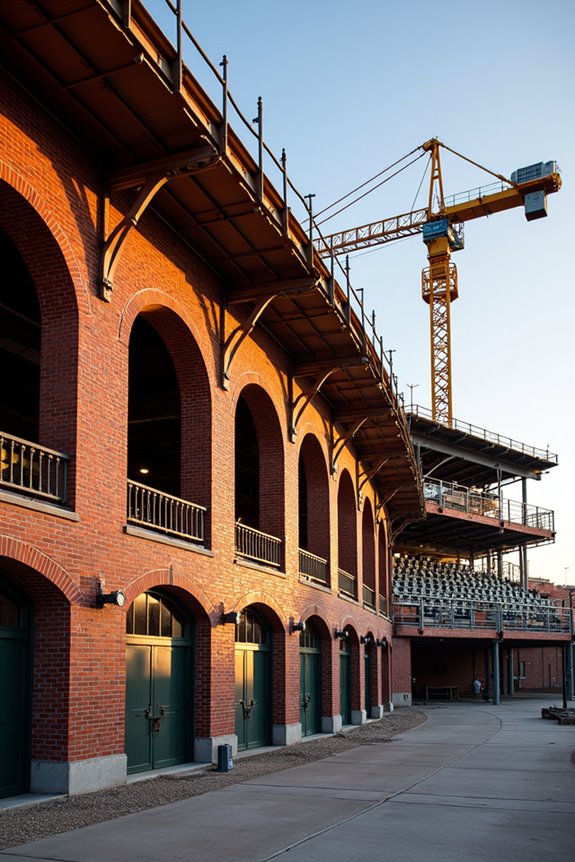
How does a ballpark stay relevant without losing what made it special in the first place? Camden Yards manages it by blending retro charm with modern updates. Since 2021, we’ve seen substantial changes that keep the park competitive while preserving its character.
The left-field wall moved back roughly 27 feet in 2022, creating new dimensions that extend to 384 feet straightaway and 398 feet to left-center. Capacity adjustments reflected these shifts, dropping from 48,000 to 42,455 by 2026. Next season brings a 4K center-field video board that’s 2.5 times larger than before.
Key upgrades include:
- Left-field wall repositioning and height adjustments
- Expanded video display technology
- Premium club areas and pavilion-style patios
- Wraparound bar seating
- Coors Light Roof Deck partnership (2024)
These renovations demonstrate that Camden Yards continues to evolve strategically.
How Camden Yards Sparked a Stadium Revolution
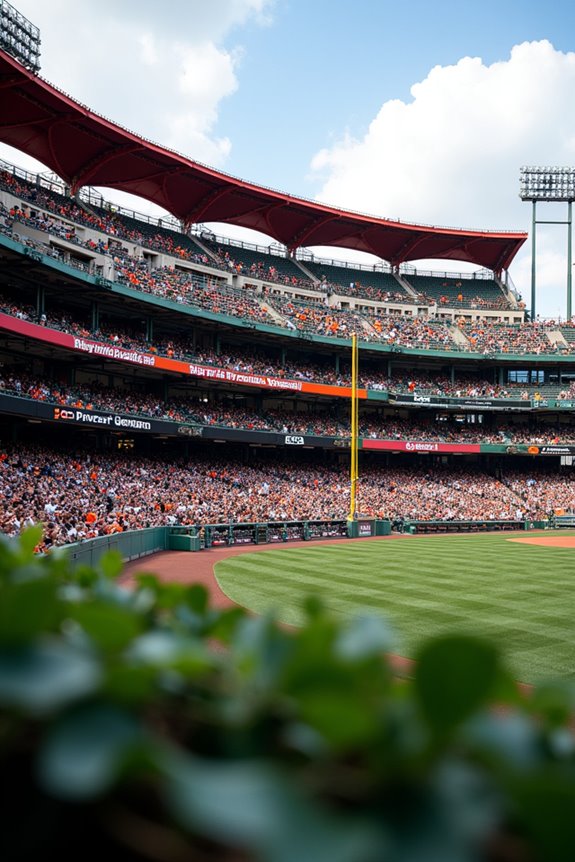
This retro-classic ballpark design influenced over 20 MLB stadiums. That’s not coincidence—it’s proof the formula works. Parks like Coors Field, Oracle Park, and Comerica Park followed Camden Yards’ playbook: traditional materials meeting contemporary amenities. The ballpark design shift centered on integrating downtown skylines and creating gathering spaces, something Eutaw Street demonstrated well. Camden Yards changed the stadium rulebook.