Check three quick vital signs: Look for waxy petals (not papery), a springy stem base, and unblemished outer petals.
Try the re-cut test—trim 2–3 cm off the stem at 45 degrees, place it in fresh water, and watch for water absorption within hours. Wilting means dehydration, browning signals heat stress, and limp stems suggest blocked vascular tissue. If your flowers don’t respond within 24–48 hours after recovery steps, they’re done. The full breakdown on saving declining arrangements follows below.
Visual Signs of a Living Flower: What Healthy Looks Like
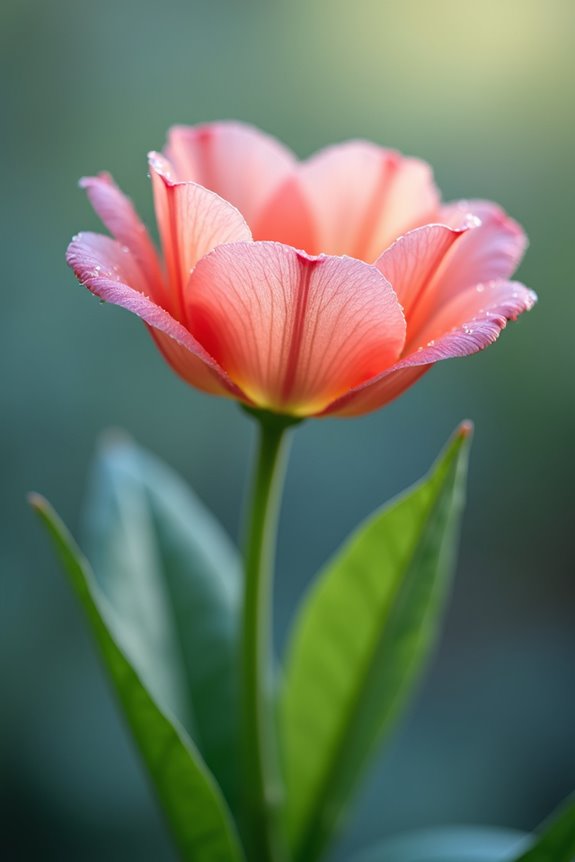
Fresh petals display a waxy shine instead of a papery texture. The springy stem base indicates good turgor—basically, the plant’s internal water pressure keeping everything plump and hydrated. Outer petals should remain unblemished without brown edges or bruising. Finally, a gentle fragrance (not overwhelming) suggests your flower is at peak freshness. These signs work together, letting you make quick, confident judgments about quality.
The Re-Cut Test: Does Your Stem Respond to Fresh Water?
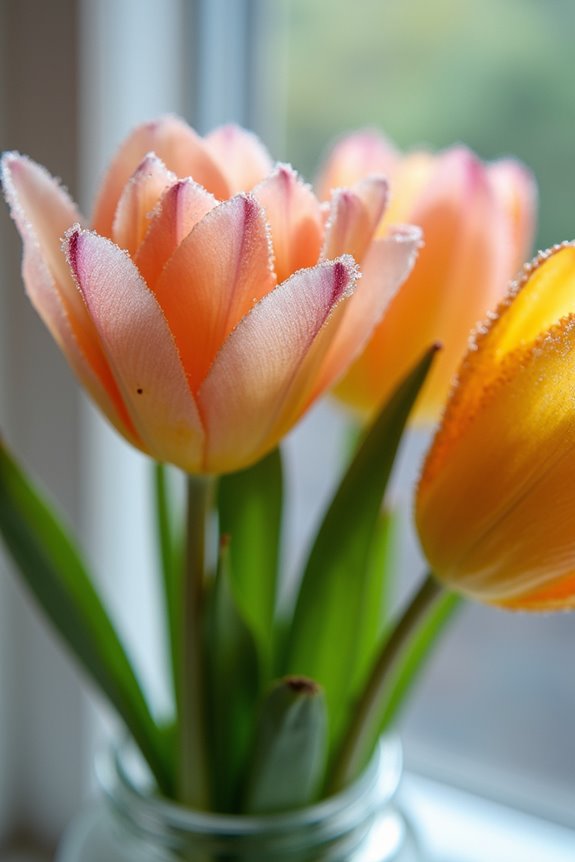
The Basic Process:
- Cut 2–3 cm off the bottom stem at a 45-degree angle to maximize water uptake
- Place the cut end immediately into fresh water
- Watch for movement or rise of water within the stem
A viable stem drinks up water within hours, indicating real vase life potential. If nothing happens after a day, that stem is probably non-viable or too stressed to recover.
I treat this test as my quick viability check before arranging anything. It’s straightforward—either the stem responds or it doesn’t. That tells me whether I’m wasting time reviving a goner.
What Wilting, Browning, and Limp Stems Really Tell You?
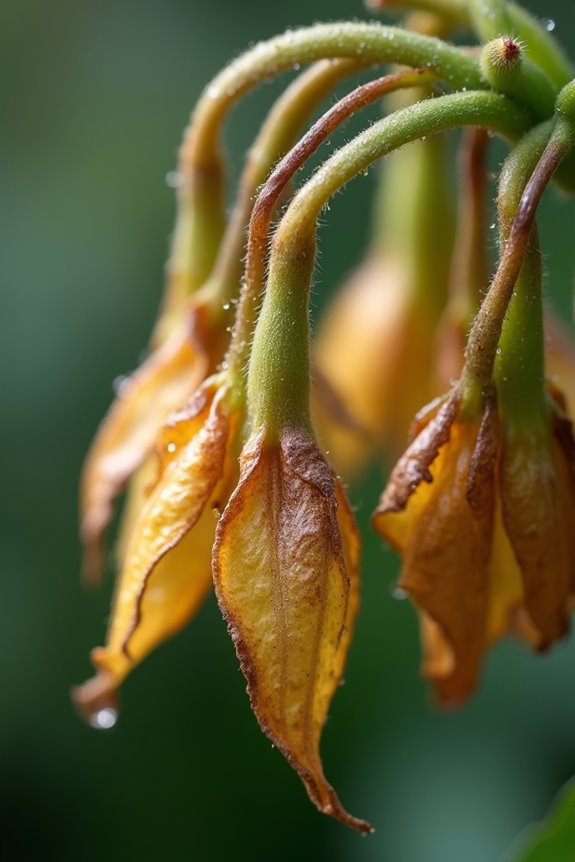
Visual clues don’t lie—wilting leaves, browning edges, and mushy stems are your flowers’ way of sending distress signals.
Wilting means your stems have lost turgor—that firm, plump quality that keeps them upright. This happens when water uptake slows, usually from dehydration or blocked vascular tissue. Recutting and fresh water often fix this within 48 hours.
Browning edges typically signal heat stress, low humidity, or nutrient gaps (potassium deficiency especially). These damaged areas won’t recover—they’re just your flowers telling you their environment’s off.
Limp stems feel soft and floppy, suggesting aged or damaged vascular tissue. After recutting, they should firm up. If they don’t, bacterial blockage is likely preventing proper hydration.
These signals are honest feedback about what your flowers need.
Can You Save a Declining Flower? Recovery Steps That Work
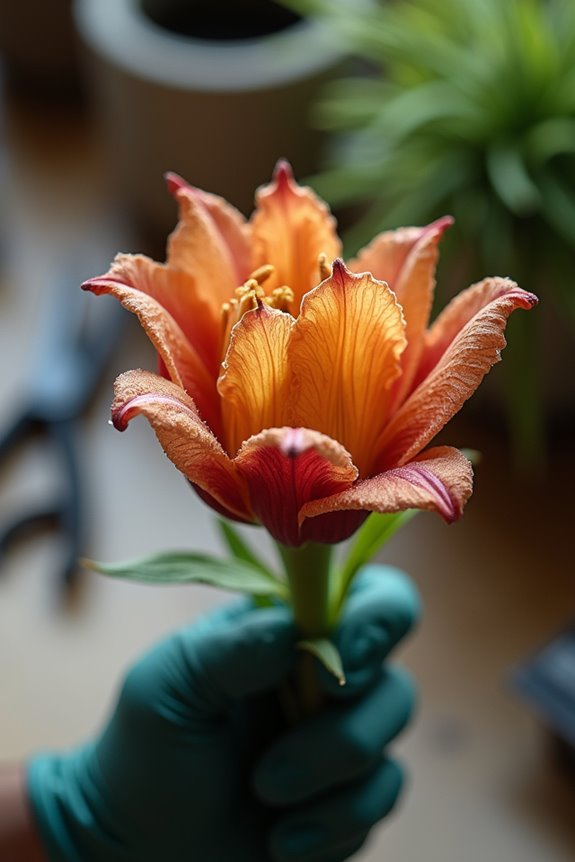
Now that you’ve spotted those distress signals—the wilting, browning, and limp stems—you’re probably wondering if your flowers are genuinely done for or if there’s still a fighting chance. Many drooping flowers can bounce back with the right intervention.
What actually works:
- Recut stems at 45-degree angles underwater, removing leaves below the waterline to reduce bacteria
- Use fresh water with flower food in a clean vase, changing it every 2–4 days to keep hydrates flowing
- Place your arrangement in a cool shaded area away from direct sun and heat
Within 24–48 hours, your stems firm up or they don’t. If they remain limp after this recovery window, it’s time to remove those stems and accept defeat. You’ve done what you can.
How to Handle Cut Flowers From Harvest to Vase
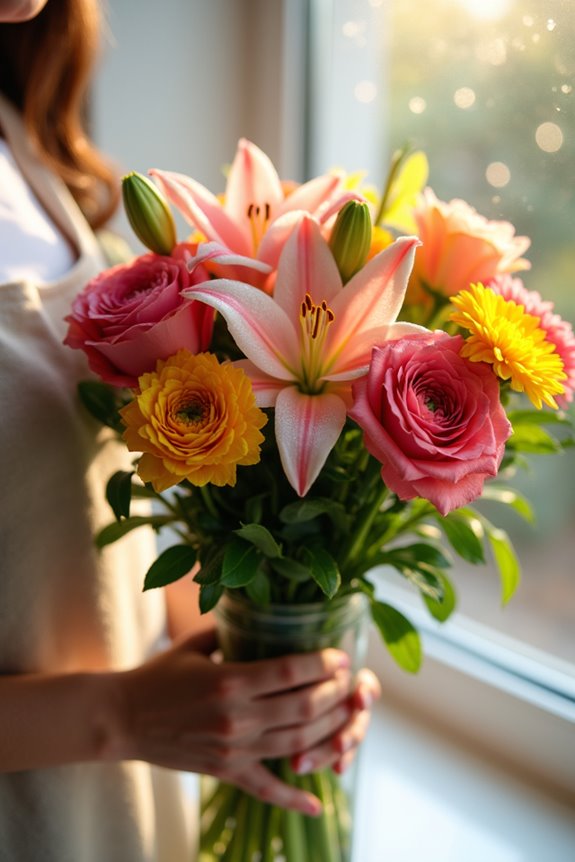
Why do cut flowers wilt so fast when they leave the garden? The answer’s simpler than you’d think: they lose water faster than they can absorb it.
The Critical First Steps
Timing matters. Collect cut flowers in the morning when stems are fully turgid, then place them immediately into water. Here’s what to do next:
- Recut stems underwater at a 45-degree angle to prevent air from entering the xylem
- Remove leaves below the waterline to reduce bacterial growth
- Use a clean vase with dissolved flower food
Maintaining Vase Life
Recut bottoms every 2–4 days and change water regularly. This simple routine extends vase life by improving water uptake and keeping stems healthy longer.