

Landscape architecture offers steady, meaningful work—you’ll spend 60–70% of your time designing with CAD software and 30–40% solving real problems on job sites.
The median salary sits around $79,000, with growth projections of 3–10% depending on location.
You’ll need 4–5 years of education plus licensure before practicing legally.
It’s a solid career if you’re comfortable with economic cycles, enjoy switching between desk precision and field problem-solving, and value long-term projects.
The specifics of whether it fits your goals and circumstances deserve closer examination.
What Landscape Architects Actually Do Every Day
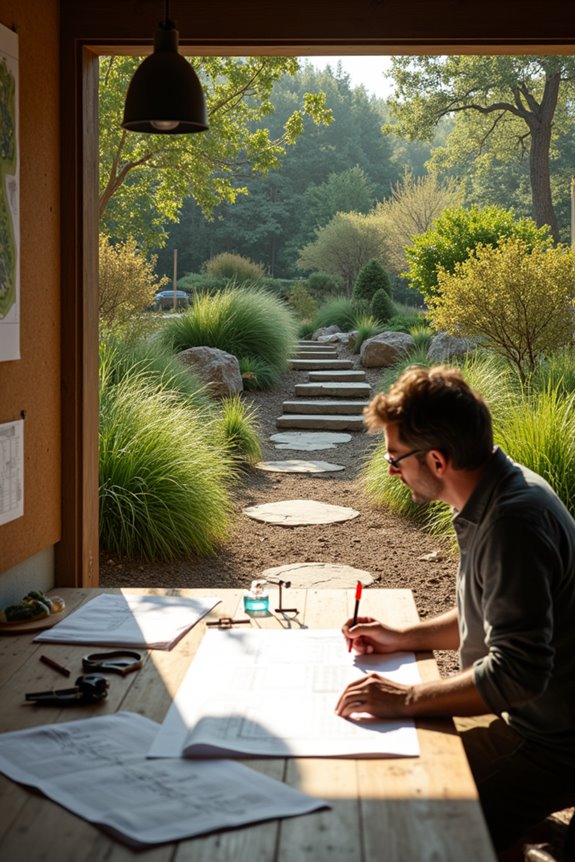
Ever wondered what fills a landscape architect’s day beyond sketching gardens? I’ll be honest—it’s messier and more interesting than that.
My mornings often start in the office, where I’m hunched over CAD/CADD software, translating site ideas into digital plans. I’m creating detailed drawings that show everything from walkway dimensions to drainage systems. But here’s the thing: collaboration keeps projects moving. I’m constantly bouncing between client calls, engineer meetings, and architect check-ins to ensure our designs actually work.
Afternoons flip the script. I’m outside surveying project sites—checking soil conditions, observing how people actually use spaces, noting drainage patterns. This on-site reality informs everything I design back at my desk. It’s the back-and-forth between computer work and ground truth that makes the job stick.
Landscape Architect Salary: What You’ll Actually Earn
Your actual salary range spans from roughly $52,000 to $132,000, depending on experience and location. Early career means lower end; veterans push toward $90,000+. It’s solid middle-class territory.
Consider related roles: landscape planners average $66,000, while maintenance technicians earn $28,500–$39,000. The design focus pays better.
Long-term prospects look decent too. You’re looking at 3–10 percent job growth, which means steady opportunities ahead. The specialized expertise you develop directly translates to better paychecks.
Getting Licensed: Education and Timeline

Getting Licensed: Education and Timeline
The salary prospects we’ve covered won’t mean much if you can’t actually practice the work—and here’s the thing: most states won’t let you call yourself a landscape architect without a license.
Your Education Path
You’ll need an accredited degree first. A Bachelor of Landscape Architecture (BLA) takes 4-5 years and covers design, ecology, construction, and software like CAD. If you’ve got a different undergraduate degree, a Master of Landscape Architecture (MLA) adds about 3 years.
What Comes Next
After education, you’ll complete supervised internship experience, then pass your state’s licensing exam. Requirements vary by location—some states accept more professional experience instead of additional testing.
This timeline demands commitment, but it’s the standard investment separating professionals from hobbyists.
The Job Market: Growth Rate and Reality Check
I’ll be straight with you: the landscape architecture field isn’t exactly booming, with projections showing only 3 to 10 percent growth over the next five to seven years, and that means roughly 1,700 openings per year on average. You’re looking at a competitive market where not every graduate lands an LA role right away, though the median salary of around $79,000 per year (ranging from $52,000 to over $132,000) can definitely make the effort worthwhile if you’re patient. The reality check here is that steady demand exists, but you’ll want to think carefully about whether you’re ready for a job search that might take longer than you’d hoped.
Modest Growth Projections Ahead
- Competition is real. Limited openings relative to new graduates entering the field makes landing positions tougher.
- Macroeconomic cycles matter. When the economy dips, hiring slows notably (or substantially), forcing some graduates toward non-traditional roles or policy work.
- Patience pays off. Growth is modest, but consistent—not volatile.
The takeaway? This career works if you’re genuinely interested, not just chasing quick employment.
Competitive Salary and Demand
So what’s the actual paycheck looking like for landscape architects? You’re looking at a median annual wage around $79,660, which sits well compared to other fields. The salary range spans from roughly $52,000 to over $132,000 depending on your experience and where you’re working.
Here’s what matters: demand exists across multiple sectors—public agencies, private firms, and interdisciplinary teams all need landscape architects. Your earning potential depends partly on specialization. Focusing on landscape planning, residential design, or maintenance management typically nets you mid-$60,000s to upper $70,000s as you gain experience.
The catch? Competition’s real. Growth rates sit at 3 percent annually with about 1,700 new openings per year. You’ll need flexibility—considering non-traditional roles or policy-focused positions strengthens your position in a moderately growing field.
Is the Work Environment Right for You? (Office vs. Jobsite)

I’ll be honest—landscape architecture isn’t a desk-only job, and it’s not a field-only job either. You’re spending roughly 60-70% of your time in an office creating plans and models using CAD software (computer-aided design tools that let you build digital blueprints), then heading out to actual job sites for the remaining time to see how your designs are actually working. That split means you need to be comfortable switching between focused design work with clients and engineers, and observing construction, soil conditions, and real-world challenges that don’t always match what you drew up.
Office-Based Design Work
Where do you actually spend your days as a terrain designer—hunched over a computer or walking a muddy construction site?
Most of your time will be in an office. You’ll use CAD/CADD software to draft plans, create models, and estimate costs. These tools help you develop projects from initial concept through implementation.
Collaboration happens constantly. You’ll work with clients, engineers, and building architects to blend everyone’s requirements into one cohesive design. This back-and-forth shapes how you spend your workday.
The office-first reality reflects licensure requirements too. You’ll need formal education and supervised experience before working independently, which naturally anchors you to a desk initially.
That said, you’re not glued there forever. Site visits break up the routine, keeping the work grounded.
Fieldwork and Jobsite Responsibilities
While you’re spending most of your time in the office sketching designs and running CAD software, you’ll also need to get outside to the jobsites. Fieldwork matters. You’ll visit sites to observe design implementation firsthand, checking whether your plans actually work on real ground. This means inspecting drainage systems, verifying plant placement, and monitoring landscape maintenance schedules. You’re not just drawing lines anymore—you’re troubleshooting problems that CAD can’t predict. Weather delays happen. Soil conditions shift. Contractors ask questions you didn’t anticipate. Being onsite keeps you connected to what you’ve created, letting you catch issues before they become costly mistakes. It’s the difference between theory and reality, and that’s where the work becomes valuable.
Five Questions to Assess Your Fit for Landscape Architecture
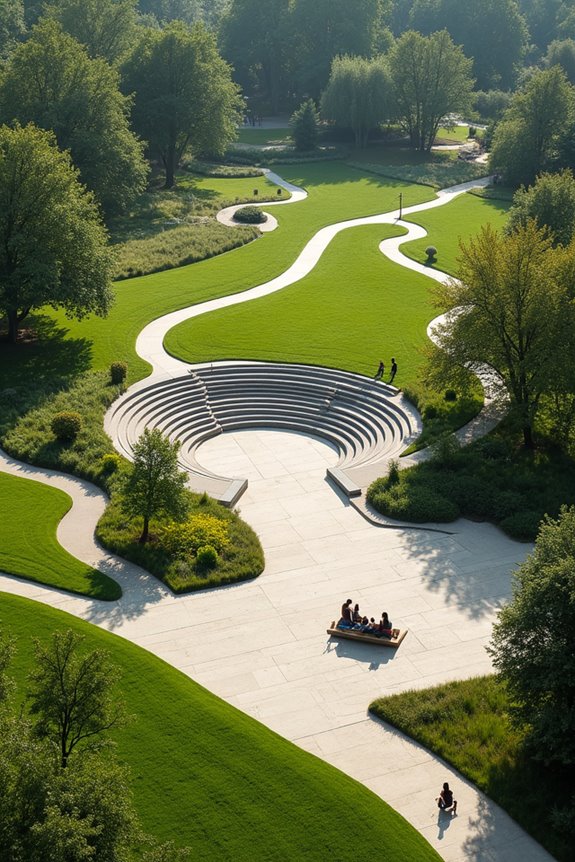
How do you know if landscape architecture is actually the right move for you?
Ask yourself these questions honestly:
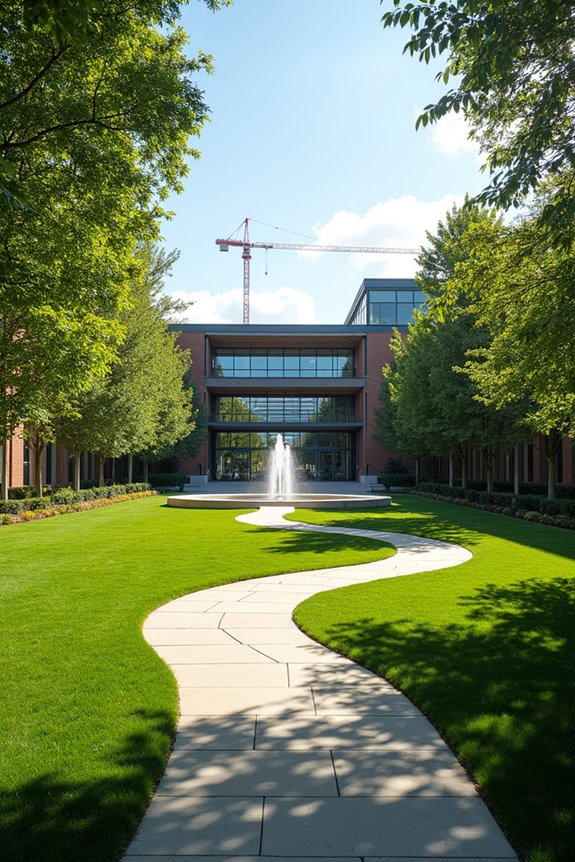
Do you care about shaping public spaces? If designing parks, plazas, and community gathering spots energizes you, that’s a strong signal.
Can you think across multiple disciplines? You’ll blend design, ecology, and engineering constantly—it’s not just drawing pretty pictures.
Do you tolerate long project timelines? From concept to finished public space takes years, sometimes decades.
Are you comfortable with field work? Jobsites get muddy. Construction happens rain or shine.
Do you want steady, meaningful work? With 3% projected growth and median pay around $79,660, you’re looking at stable demand without explosive opportunity.
These questions separate genuine interest from casual appeal.
Core Skills Every Landscape Architect Needs
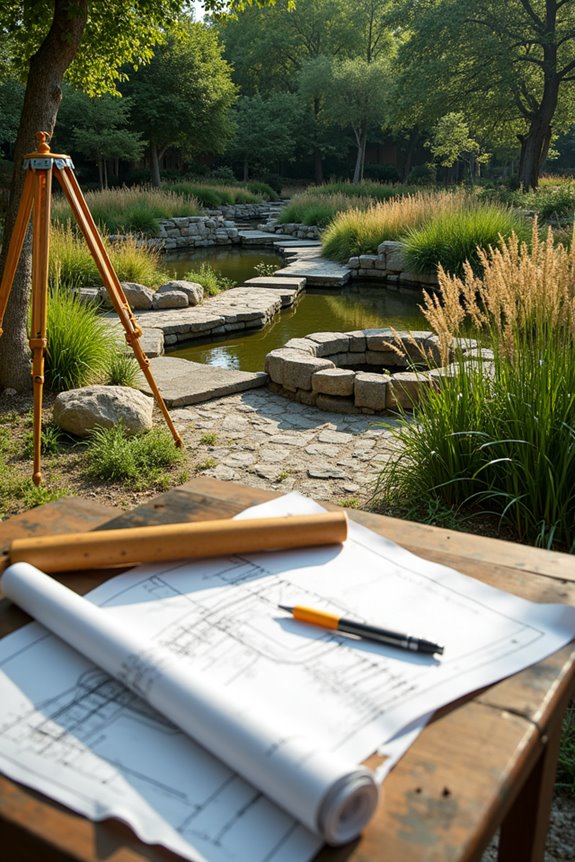
You’ll need to master several core competencies:
- Design thinking and problem-solving – analyzing site constraints, client needs, and environmental factors to create workable solutions
- CAD/CADD and GIS software – translating ideas into precise digital plans that engineers and contractors can build from
- Communication skills – explaining your vision through drawings, presentations, and written reports to clients, architects, and teams
- Site knowledge – understanding plants, soils, materials, and construction methods so designs function long-term
These aren’t optional extras. They’re what separates ambitious sketches from built projects. You’re not just creating drawings; you’re solving spatial problems with lasting impact.
How Landscape Architecture Stacks Up Against Architecture, Engineering, and Planning
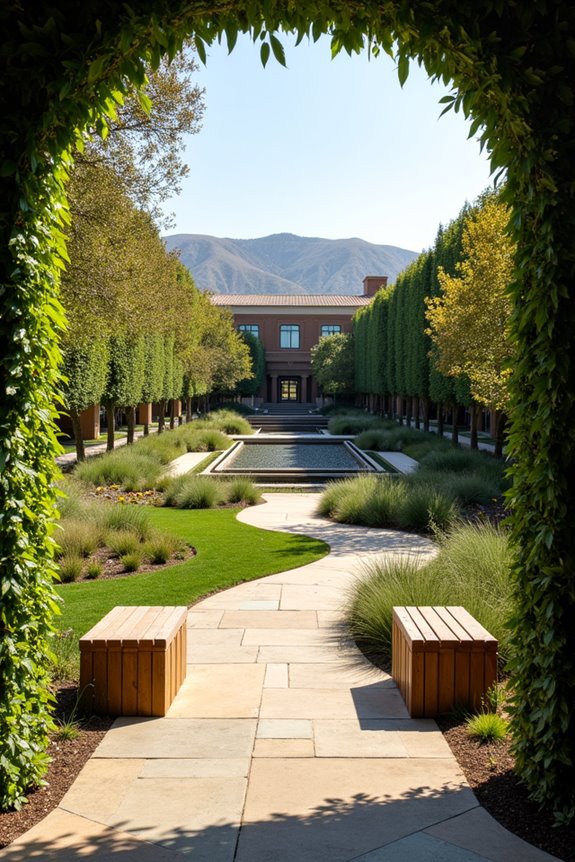
When you’re weighing landscape design against architecture, engineering, and planning, I’ll be straight with you—the salary gap isn’t as dramatic as you might think, with landscape architects earning around $79,660 nationally compared to architects at $96,690 and civil engineers at $99,590. You’ll also need to commit to similar educational requirements (a professional degree plus licensing exams in all states), but here’s where it gets interesting: landscape architecture opens doors to different types of work that emphasize ecology and community spaces rather than just buildings or infrastructure. Understanding these trade-offs—slightly lower pay offset by more diverse career paths and meaningful environmental impact—helps you figure out if this field actually fits your priorities better than its cousin professions.
Salary and Compensation Comparison
The money part of any career matters, and landscape architecture’s median salary of $79,660 (as of May 2024) sits in an interesting middle ground—it’s notably lower than what architects pull in at $96,690 or civil engineers at $99,590, yet it typically beats out many other occupations and even edges past urban planners at $83,720.
Here’s what the compensation comparison actually looks like:
- Entry-level positions in residential landscape architecture start around $65,000–$67,000
- Top earners reach $132,250, showing real growth potential
- Construction managers earn $106,980, pulling ahead by a fair margin
- Lowest 10% earn under $51,990; highest 10% significantly exceed median figures
Your landscape architecture salary depends heavily on experience, location, and specialization. The field offers solid middle-class income without requiring the extra years architects or engineers typically invest.
Education Requirements and Licensure
Landing a solid middle-class income in urban design is one thing, but getting there requires jumping through some hoops that most other careers don’t demand.
You’ll need an accredited BLA, BSLA, or MLA degree—that’s 4–5 years for undergraduates or 3 years if you’ve got another bachelor’s already. Core coursework covers design, construction, ecology, and soil science. Then comes licensure, which every state requires.
After graduation, you’ll complete supervised internship hours, then pass a professional exam. The process is structured and comprehensive. Unlike some fields, landscape architecture demands this rigor because your designs affect public safety and environmental health.
You’ll work alongside architects and engineers, so you need CAD and GIS skills down pat. The education requirements and licensure process are thorough—which actually means you’re entering a respected profession.
Alternative Career Paths Within the Field
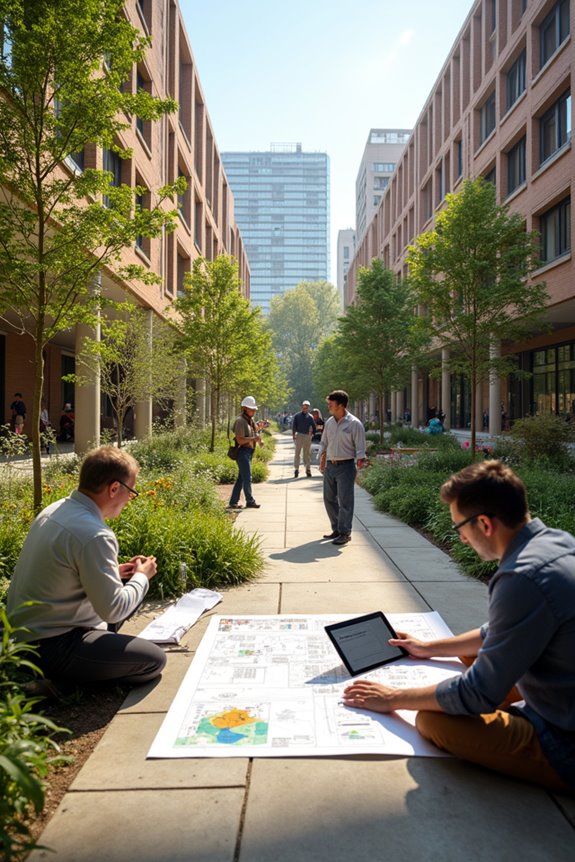
Alternative Career Paths Within the Field
- Nonprofit and research roles focusing on ecological restoration and community engagement
- Sustainability consulting advising businesses on green infrastructure and climate resilience
- Academia and product design teaching others or developing landscaping innovations
- Government planning and policy work using 3D modeling to shape public spaces
These paths utilize your design skills differently. You’re still solving spatial problems, but you’re working toward environmental goals or influencing larger systems. The regulatory knowledge you’ve built—like CEQR and NPDES permits—has genuine value here. Volunteering and targeted certificates support smooth transitions into these fields.
When Jobs Dry Up: Understanding Economic Cycles

Why does scenery design hiring feel like a roller coaster? The landscape architecture field experiences real volatility tied to construction projects and real estate development. When the economy softens, those projects disappear first.
Landscape architecture hiring volatility mirrors construction cycles—when economies soften, development projects vanish first.
You’ll face a 3–10% growth projection depending on where you live, meaning downturns hit differently across regions. Entry-level positions tighten during recessions, sometimes forcing grads to wait 1–2 years for openings.
What you can control:
- Build skills in GIS and CAD—these transfer across industries
- Consider policy, sustainability consulting, or academia roles during slower periods
- Stay flexible about geography; some regions weather downturns better
The field rewards adaptability. Knowing economic cycles exist helps you plan rather than panic.
Professional Organizations, Job Boards, and How to Start Your Journey
Once you’ve accepted that economic cycles will shape your career timeline, you’ll want to build a concrete plan—and that starts with knowing where to look and who to connect with.
Getting Connected
You’ll find your people and opportunities through these key resources:
- Professional organizations like ASLA offer networking events, mentorship, and licensure guidance you’ll need
- Job boards showcase real openings in public agencies, private firms, and interdisciplinary teams
- State employment data from sources like CareerOneStop help you compare wages by region
- Firm listings reveal demand across parks, campuses, streets, and waterfront projects
Your Path Forward
Licensure requires an accredited degree (BLA/BSLA or MLA), supervised experience, and passing an exam. Start by joining professional organizations—they’ll connect you with mentors who’ve navigated this path. Then explore job boards regularly. You’re not just hunting positions; you’re building relationships within your future industry.