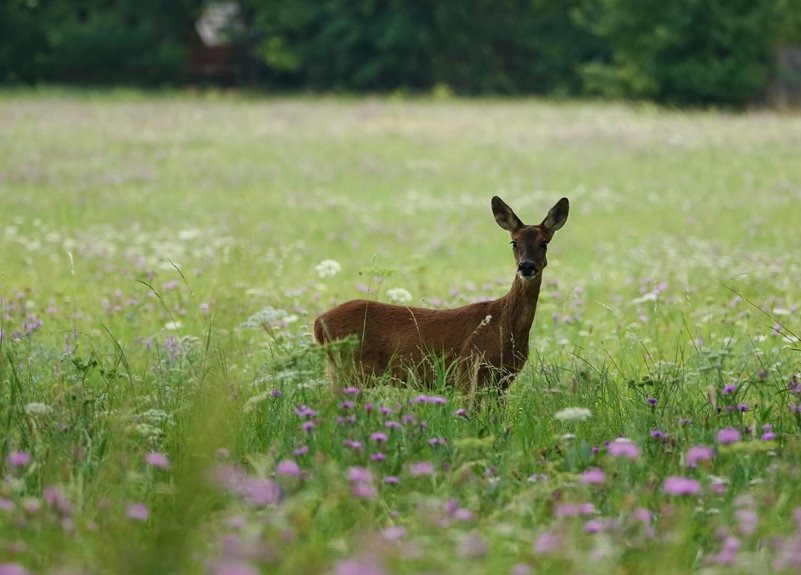
If you’re tired of replanting after deer raids, fragrant plants work well. Yarrow, bee balm, and anise hyssop deter browsers through scented foliage—not just flowers.
Ornamental onions and Russian sage offer silvery or purple blooms deer skip entirely.
Add forsythia for early spring color and lilacs for reblooms through summer.
Shade-loving lily of the valley handles deep cover, while heliotrope fills gaps seasonally in frost-free zones.
Each plant handles different conditions—full sun, partial shade, or poor soil—making them low-maintenance. The specifics on hardiness zones and sizing will help you pick the right fit.
Yarrow: Fragrant Foliage Deer Consistently Avoid
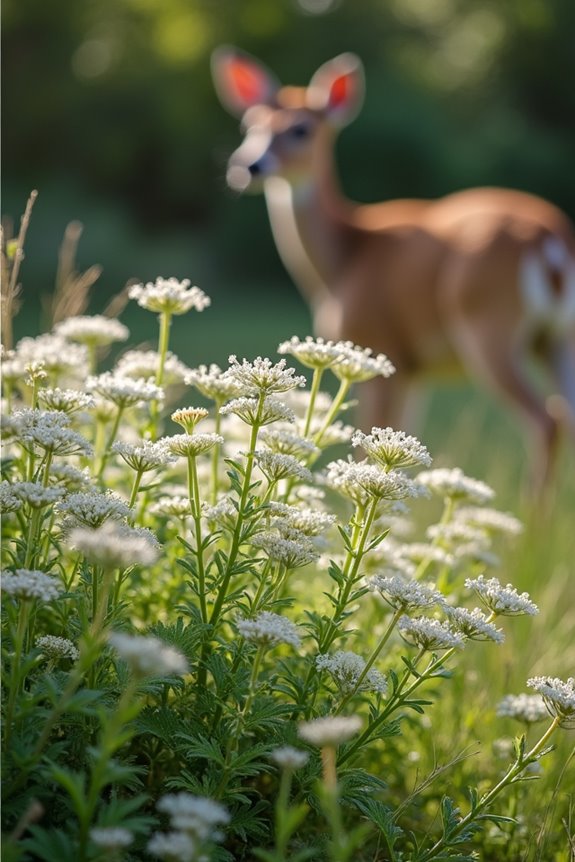
Why do deer leave yarrow alone when they’ll munch through so many other garden plants? The answer lies in its fragrant foliage. Varieties like Firefly Sunshine Achillea possess a strong herbal scent that deer find unappealing, making them skip right past it.
I’ve found yarrow works as a practical deer-resistance solution because the deterrent comes from the leaves themselves, not just the flowers. The finely textured, aromatic foliage creates a natural barrier that keeps browsing deer at bay.
What makes it beginner-friendly:
- Hardy perennial (zones 3-8)
- Reaches 28 inches tall, 24-28 inches wide
- Requires full sun with minimal maintenance
- Low-fuss plant that tolerates neglect well
Since deer resistance stems from scent rather than looks, you’re getting both protection and visual appeal.
Ornamental Onion: Purple Blooms Rabbits and Deer Skip
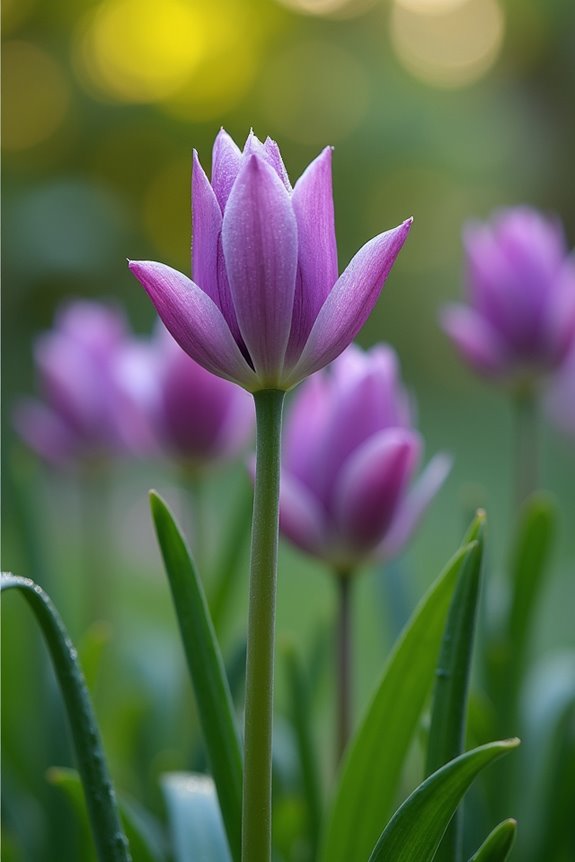
How’d I finally find a plant that deer and rabbits actually leave alone? Serendipity Allium—an ornamental onion with striking purple ball-shaped flowers that wildlife simply won’t eat.
This deer-resistant plant flowers mid to late summer, reaching 15-20 inches tall with dense clusters of blooms that attract bees. It produces more flowers each year as it matures.
| Feature | Details | Zone |
|---|---|---|
| Height | 15-20 inches | 4-8 |
| Width | 10-15 inches | 4-8 |
| Bloom Time | Mid-late summer | 4-8 |
| Light | Full to part sun | 4-8 |
Plant it in full sun to part sun, and you’re set. The ornamental onion’s foliage deters both deer and rabbits, so you’ll actually keep your flowers.
Anise Hyssop: Scented Leaves Deer and Rabbits Avoid
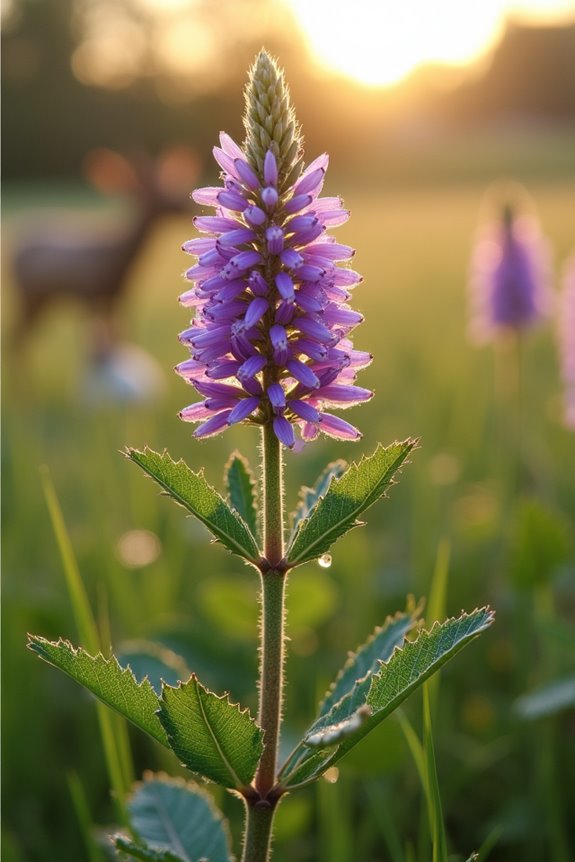
Looking for a plant that actually smells good and keeps deer out of your garden? Anise Hyssop (Agastache sp.) does both—its fragrant leaves naturally repel deer and rabbits, so you’re not constantly battling wildlife damage.
Anise Hyssop’s fragrant leaves naturally repel deer and rabbits, giving you beautiful blooms without the wildlife damage.
This deer-resistant perennial grows well in Zones 5-9 and reaches 26-30 feet tall by 28-30 feet wide, making it a solid choice for sunny spots. The scented leaves release their aromatic oils when brushed or crushed, creating an invisible fence that most wildlife simply avoids.
What makes it work:
- Strong fragrance deters browsing animals
- Reliable performer across most climates
- Low-maintenance once established
Plant Anise Hyssop where you want color without constant replanting. You’ll enjoy beautiful blooms and genuine peace of mind knowing deer will skip right past it.
Bee Balm: Minty Foliage Deer Consistently Pass By
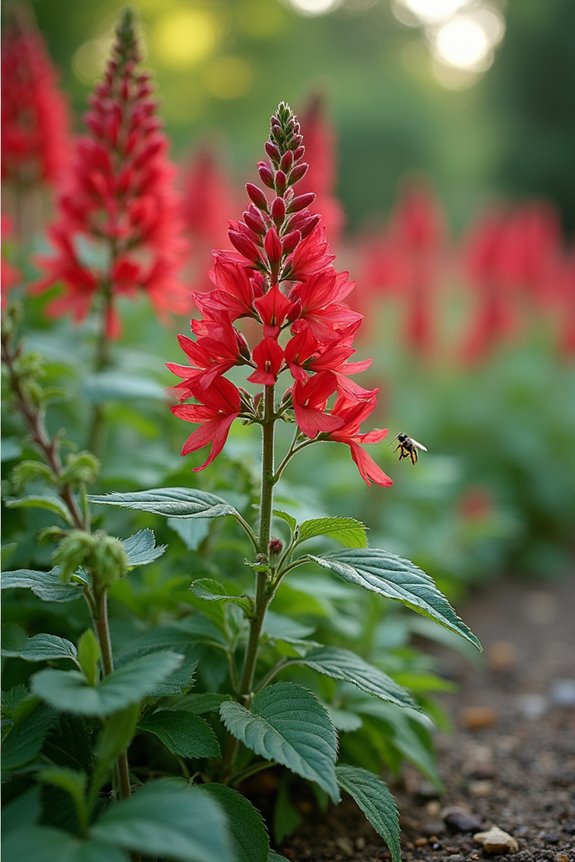
While Anise Hyssop tackles deer with its strong anise-like scent, Bee Balm (Monarda) uses a different aromatic strategy—its minty foliage is so pungent that deer consistently walk past it without browsing. This deer-resistant plant proves reliable for creating garden sections deer simply avoid.
Why Deer Skip Bee Balm
The fragrant foliage releases that distinctive minty smell whenever you brush against it, which deer find unappealing. You’ll grow this perennial in Zones 3-9, reaching 1 to 4 feet tall depending on variety.
Garden Benefits Beyond Deer Protection
Bee balm attracts pollinators—hummingbirds, bees, and butterflies—while resisting powdery mildew. Try varieties like Leading Lady or Pardon My Monarda for reliable mid-summer blooms. Plant in full sun to partial shade for best results.
Lily of the Valley: Shade Solution for Early Spring Color
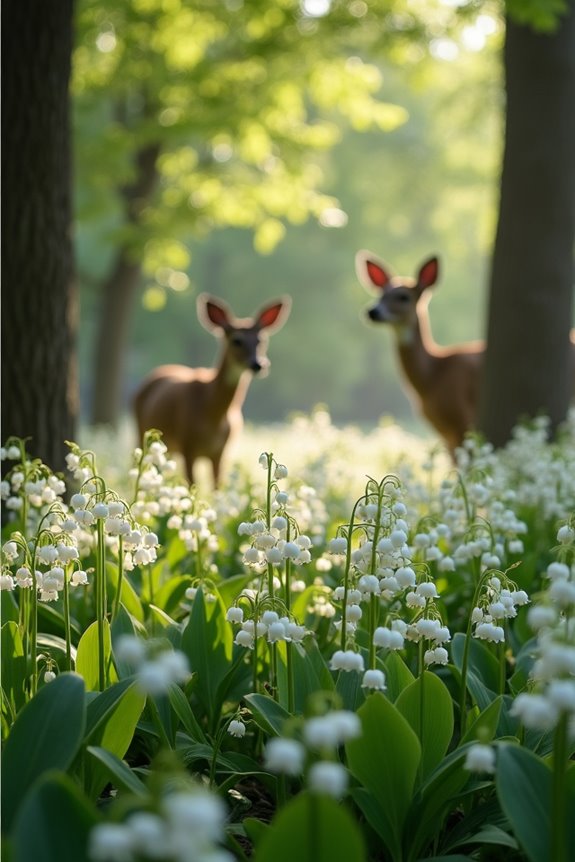
If you’ve got a shady corner that’s been giving you grief, Lily of the Valley shrub (Pieris japonica) solves two problems at once—it blooms early in spring when you’re hungry for color, and it’ll actually perform well in low-light spots where most plants struggle. The plant grows 3-4 feet tall and wide, reaching its full potential in zones 5-8 whether you plant it under tree cover or in partial shade. What I appreciate most is that deer leave it completely alone, so you’re getting early spring interest without the worry of nighttime garden raids.
Early Spring Blooming Schedule
Why do so many gardeners struggle to fill shaded areas with early spring color? I’ve discovered that Pieris japonica, commonly called Lily of the Valley Shrub, solves this problem effectively. This deer-resistant evergreen delivers consistent early spring blooms when you need them most.
| Variety | Height/Width | Bloom Duration |
|---|---|---|
| Interstella | 3-4 feet | 2+ months |
| Standard | 4-6 feet | 2 months |
| Compact | 2-3 feet | 2 months |
The ruby-colored bell-shaped flowers emerge in early spring and persist through mid-spring. Since deer won’t touch this shrub, you’re protecting your investment while gaining reliable color in difficult shade spots. Pieris japonica outperforms most shade plants for sustained early season interest.
Shade Tolerance And Light Requirements
How much shade can Lily of the Valley shrub actually handle? It’s one of the easiest plants for darker garden spots. This deer resistance champion tolerates partial to full shade, making it practical when you’ve got those tricky shaded areas.
Here’s what I’ve noticed: Lily of the Valley doesn’t demand much sunlight to perform. It’ll bloom reliably in early spring regardless of your light requirements situation. The plant produces those delicate bell-shaped flowers even under dense tree cover.
What this means for your garden:
- Tolerates deep shade conditions
- Blooms early before tree canopy fully leafs out
- Maintains lance-shaped foliage through summer as groundcover
- Requires minimal fussing about light exposure
That shade tolerance plus deer resistance makes it practical for most yards.
Butterfly Bush: Pink Blooms Butterflies Love, Deer Don’t
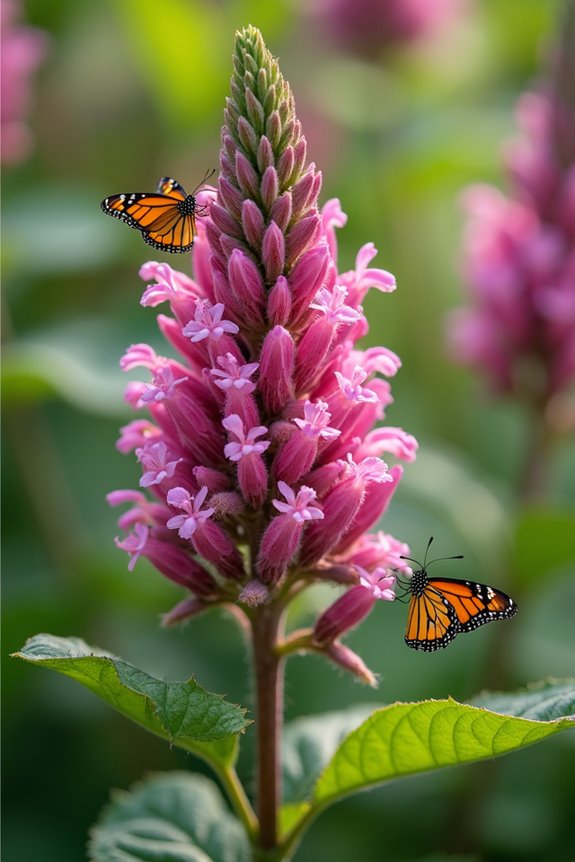
When you’re tired of watching deer demolish your garden beds, butterfly bush (specifically the Miss Molly variety) offers a practical solution—it’s a shrub that performs well while staying off the deer menu.
This deer-resistant flowering shrub delivers deep pink blooms from mid-summer through fall, creating extended color without constant replanting. The butterfly attraction is reliable; the flowers consistently draw pollinators.
Key growing details:
- Hardy in Zones 5-9
- Reaches 4-5 feet tall and wide
- Requires full sun
- Sterile variety won’t self-sow aggressively
The Miss Molly doesn’t demand special care. Plant it in sunny borders or mixed hedges where it’ll anchor your landscape while deer graze elsewhere. That’s the practical advantage here.
Lilac: Spring Scent, Summer Rebloom Deer Skip
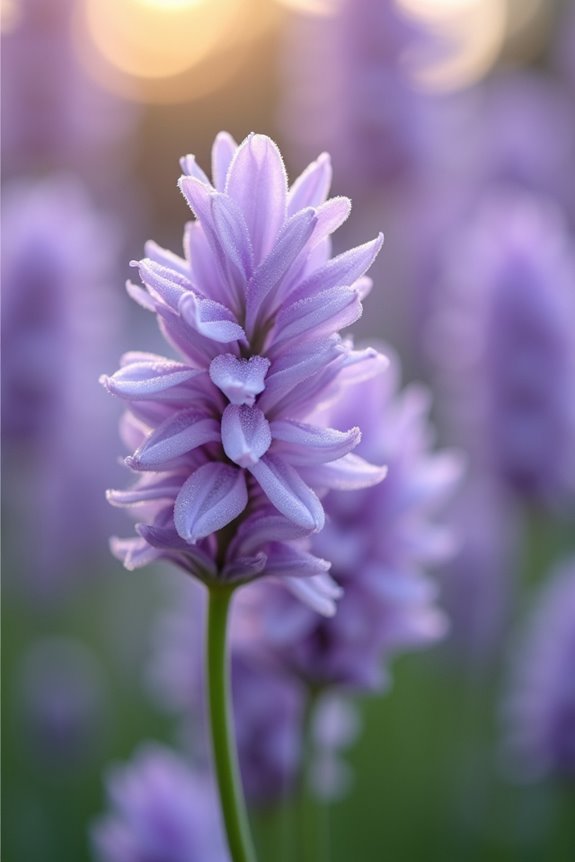
If you’re tired of replanting after deer damage, Reblooming Lilac ‘Bloomerang Dark Purple’ offers a practical solution: fragrant purple flower clusters in spring, followed by a second flush of blooms from mid-summer straight through frost. This deciduous shrub won’t typically get browsed by deer, though you might want to protect young plants during their first season or harsh winters. Growing 4–6 feet tall and wide in full sun across hardiness zones 3–7, you’ll get extended garden color without constantly worrying about hungry visitors.
Bloomerang’s Extended Bloom Season
Why settle for lilacs that bloom once and disappear? Reblooming Bloomerang lilacs deliver color twice—offering extended garden interest. These deer-resistant shrubs produce star-shaped flowers in spring, then flower again from mid-summer through frost.
What You’ll Get:
- Initial spring flush with sweet fragrance
- Summer-to-frost rebloom for extended color
- Typical growth: 4-6 feet tall and wide
- Hardy in zones 3-7
The extended bloom season means you avoid bare branches for half the year. Plant mine in full sun and prune lightly to maintain shape. Use them for hedging, anchoring foundations, or filling mixed borders—Bloomerang lilacs deliver continuous performance long after spring fades.
Fragrant Spring Flower Clusters
Bloomerang lilacs deliver extended blooms, and here’s what makes them practical for spring—fragrant flowers that deer typically avoid.
Lilacs produce star-shaped flower clusters with sweet fragrance from April through May. They’re deer-resistant, so you won’t need to replant annually. These spring flowers reach 4-6 feet tall in zones 3-7, requiring full sun and well-draining soil.
Key benefits:
- Dense flower clusters attract pollinators
- Strong scent covers your entire yard
- Hardy shrubs demand minimal maintenance
Plant in fall or early spring, spacing them 6 feet apart. Water regularly during the first year, then they need little attention. You’ll get classic lilac fragrance without dealing with deer damage.
Deer-Resistant Shrub Characteristics
What makes reblooming lilacs a practical choice for deer-heavy yards? These shrubs naturally deter deer through their distinctive scent, which most browsers find unappealing. A reblooming lilac grows 4-6 feet tall and wide, fitting nicely into medium to large spaces without overwhelming your garden layout.
Key advantages:
- Hardy zones 3-7
- Prefers full sun
- Blooms spring, then again mid-summer through frost
What to know: while these deer-resistant shrubs perform reliably, newly planted specimens benefit from protection during establishment. Harsh winters can stress them, potentially weakening that consistent rebloom you’re after. With proper care and site selection, a reblooming lilac delivers extended fragrance and color while keeping deer pressure manageable—a practical solution for gardeners dealing with browsing pressure.
Forsythia: Early Spring Blooms Deer Won’t Eat
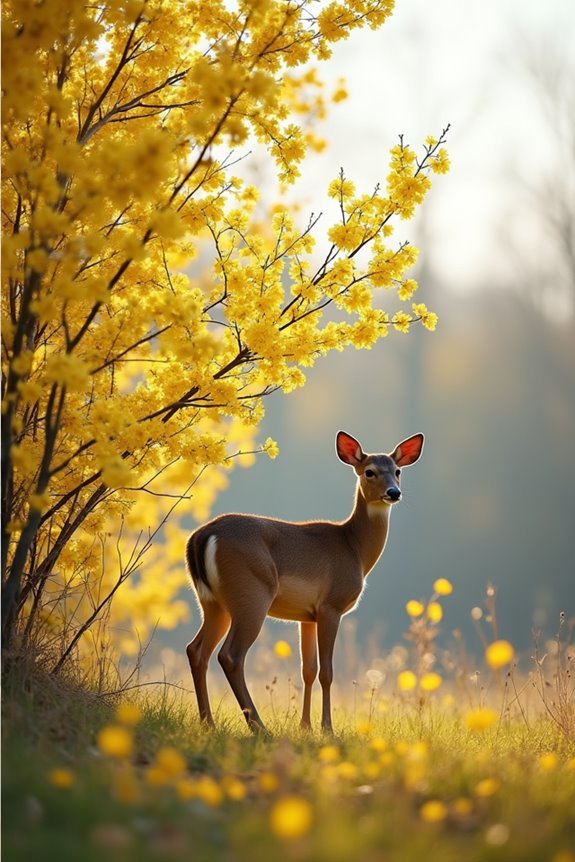
A shrub that delivers on its promises: forsythia shows up early in spring with bright yellow blooms, and deer leave it alone. The Show Off variety proves particularly reliable for this reason.
This deer-resistant deciduous shrub grows in zones 5-8 and reaches about 5-6 feet tall and wide at maturity. Plant it in full sun to part sun for best results. What stands out is its toughness—it doesn’t demand constant pruning or fussy care.
Why forsythia works:
- Produces early spring blooms reliably
- Adapts well to different growing conditions
- Fits naturally into hedges, foundation plantings, and mixed borders
The compact silhouette stays tidy without excessive maintenance, making it practical for most landscapes.
Russian Sage: Silvery Perennial Deer Leave Alone
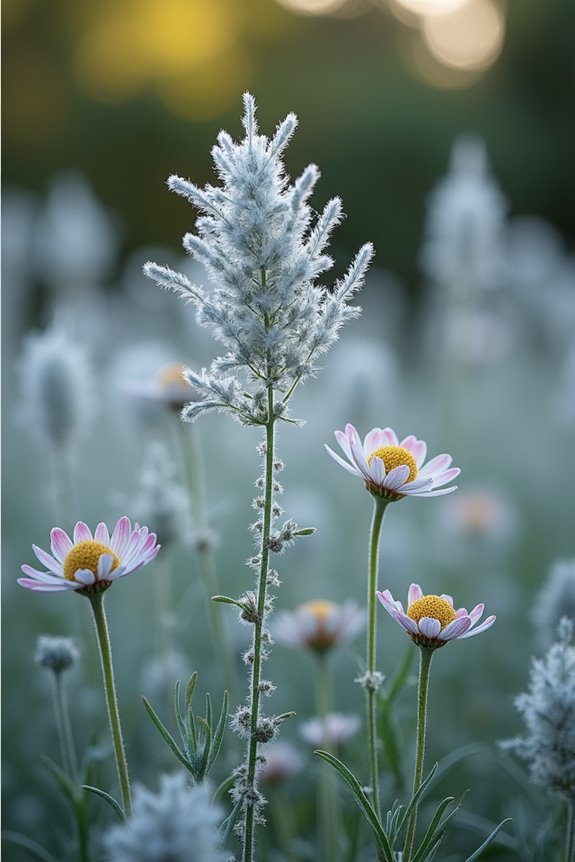
I’ll be honest—Russian Sage caught my attention because it actually stays in the garden year-round without becoming a deer snack, thanks to its finely-cut silvery leaves and coarse texture that deer naturally avoid. You’re looking at a hardy perennial that grows 2 to 4 feet tall, produces tall flower stalks with color plumes lasting into October, and grows well in Zones 5-9 when you give it full sun. The real appeal here is how this drought-tolerant plant gives you extended blooms and vertical contrast without requiring constant fussing or deer-deterrent sprays.
Silvery Foliage Characteristics
Russian Sage stands out in any garden because of its striking silvery leaves that give off an airy, delicate feeling—especially when the sun hits them just right. The fuzzy texture isn’t just visually appealing; it’s what makes deer-resistant plants like this one so effective at keeping browsers away.
What makes this silvery foliage noteworthy:
- Soft, fine-textured leaves that create visual lightness in dense borders
- Aromatic compounds in the fuzzy coating that deter hungry deer
- Silver-gray coloring that brightens shady garden corners naturally
- Year-round visual interest from spring through fall growth
Russian Sage’s silvery foliage serves a dual purpose. It looks beautiful while actively protecting your garden. The texture invites you to touch it, yet deer typically pass right by. That’s practical beauty worth considering.
Blooming Season And Hardiness
When does this silvery perennial actually deliver those purple flowers you’re after? Russian sage blooms from early summer straight through fall, giving you months of color when many other plants are fading. That’s a solid payoff for minimal effort.
Here’s what makes it reliable: it survives in hardiness zones 5–9, meaning it returns each winter in most regions across the country. You won’t be replanting yearly like you would with annuals.
Why it matters for deer-resistant plants:
- Blooming season extends your garden’s visual interest during mid to late summer slumps
- Hardiness means established plants return reliably each year
- The extended flower window gives you more opportunities to enjoy this deer-resistant option
Plant it once, and it’ll work for you season after season.
Heliotrope: Summer Annual to Fill Gaps in Frost-Free Zones
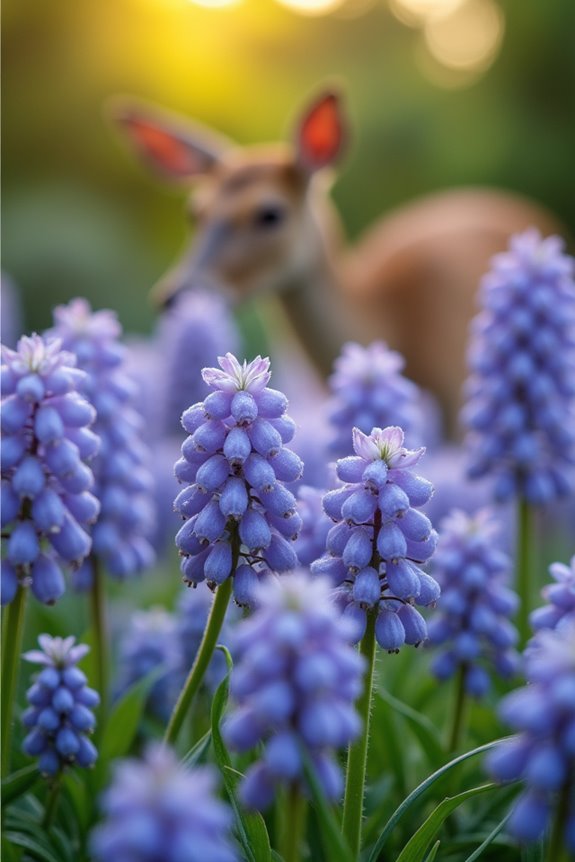
Why settle for bare spots in your garden when heliotrope can fill them with color all summer long? This deer-resistant summer annual grows well where many plants struggle, making it perfect for our community of gardeners seeking reliable solutions.
Here’s what I love about heliotrope:
- Heat tolerance – it actually performs in hot, humid conditions other plants can’t handle
- Flexible growing – forms neat mounds or cascades beautifully over container edges
- Extended blooms – provides consistent color throughout the entire hot season
- Low maintenance – requires just full sun to partial sun and minimal fussing
The Augusta Lavender variety reaches 12 to 24 inches tall and spreads 2 to 3 feet wide. While it won’t survive frost, replanting this summer annual each season gives you reliable deer-resistant coverage when you need it most.