
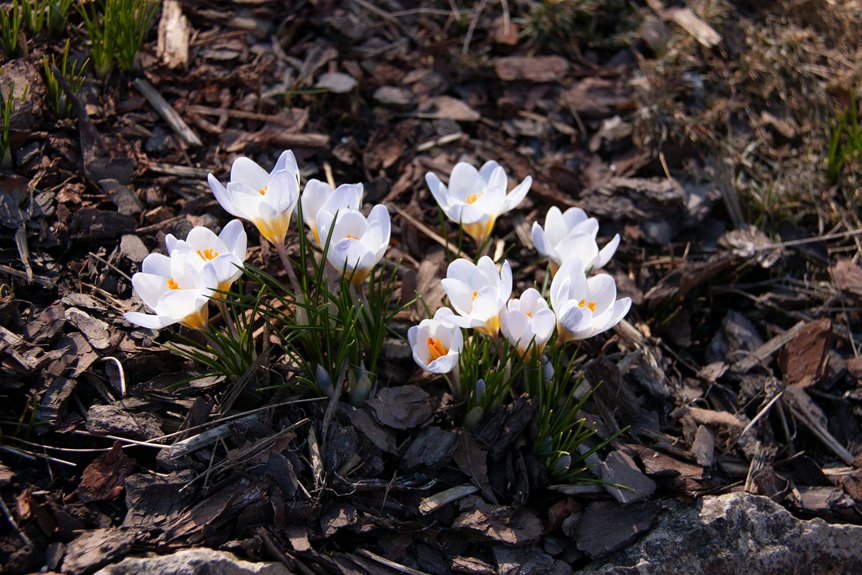
You can absolutely plant flowers in mulch—just keep depth between 2–3 inches to block weeds and lock moisture without suffocating roots. Push mulch aside when planting seeds or transplants, then backfill around them. Leave a mulch-free circle around each stem to prevent rot. Use aged materials like pine straw or shredded hardwood; skip fresh wood chips and dyed mulch. Refresh your bed each spring by topping off decomposed layers. Getting these details right improves your flower beds’ performance.
Can You Actually Plant Flowers Directly in Mulch?
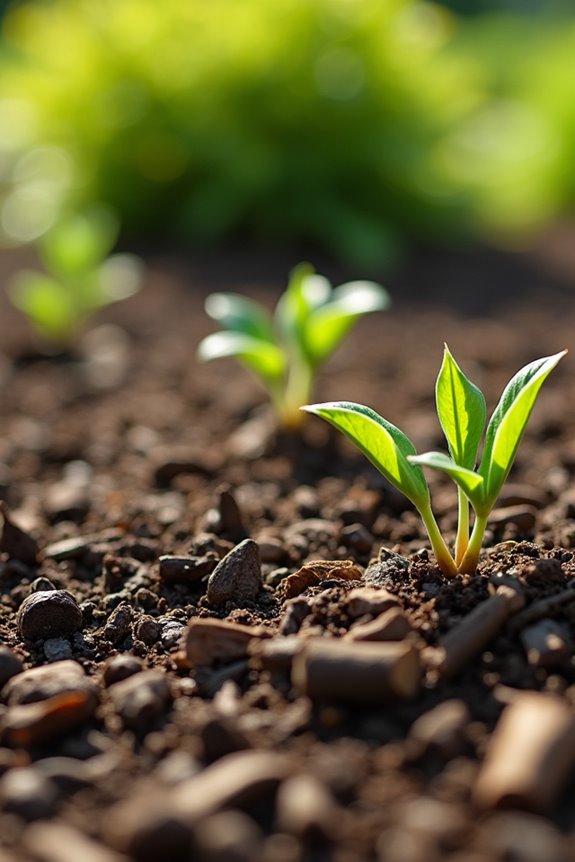
You’ve probably wondered if you can just toss flower seeds or seedlings right into that mulch bed and call it done—and honestly, it’s not quite that simple, though it’s closer than you’d think.
The Mulch Thickness Problem
Here’s the thing: mulch thickness really matters. If you’re dealing with 3 inches or more, you’re basically burying your seeds. They’ll struggle to push through, and smaller seeds won’t germinate at all. Thinner layers—around 1 to 2 inches—work better.
Your Best Approach
Rather than fighting it, I push the mulch aside where I’m planting, set my seedlings in, then gently pull mulch back around them. Leave a small mulch-free circle around the stem to prevent rot. Large transplants can go straight through if you part the mulch and backfill carefully.
It’s less work than you’d expect.
How Mulch Blocks Weeds and Locks in Moisture
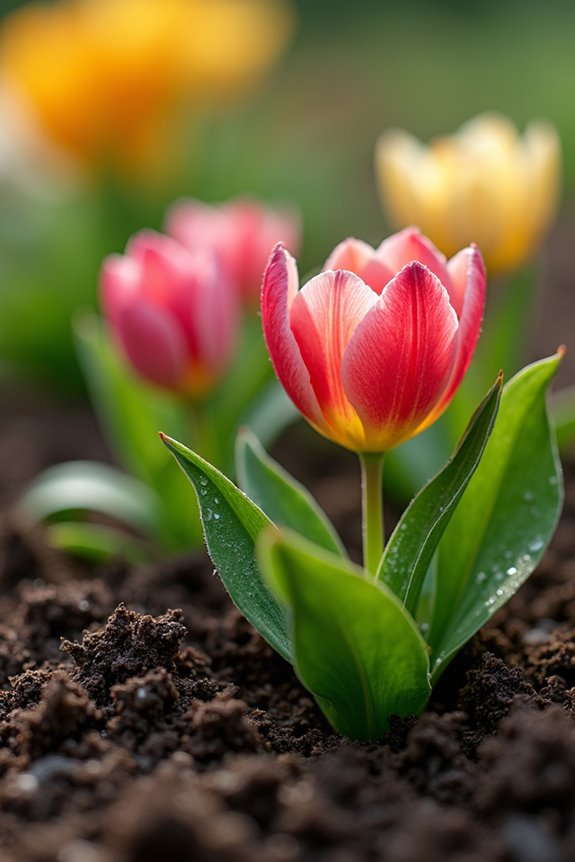
Why does mulch solve so many garden problems at once? A single layer of mulch tackles two major issues: weeds and water loss.
Blocking Weeds
Mulch works like a sunblock for soil. When spread across beds, it prevents weed seeds from germinating beneath the barrier. Sunlight can’t reach them, so they simply don’t sprout.
Retaining Moisture
In hot climates, mulch acts as insulation. It reduces evaporation by keeping soil cooler and moister longer, meaning you water less frequently.
Getting the Depth Right
Two to three inches hits the sweet spot—enough to suppress weeds and lock moisture in without suffocating plant roots or blocking rainfall.
Top 6 Organic Mulches That Promote Flower Health
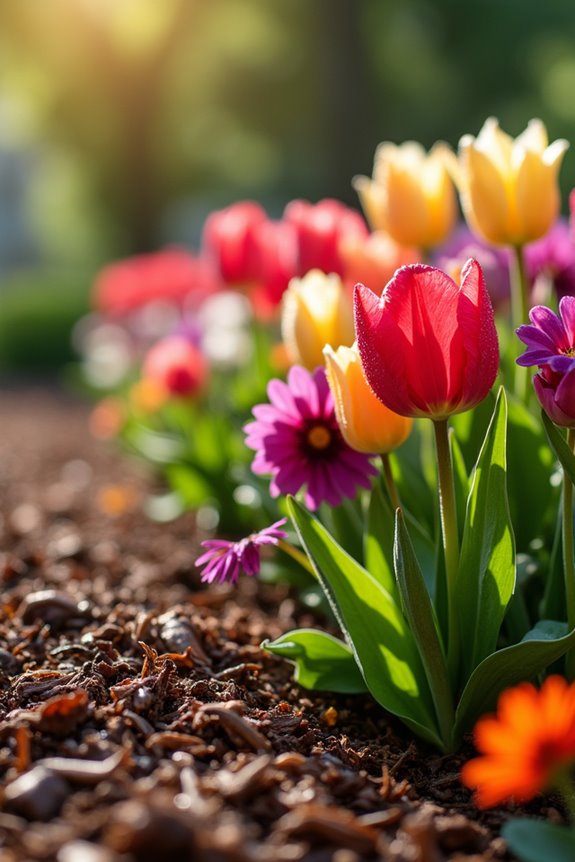
Now that you’ve got the basics down—mulch blocks weeds and keeps soil moist—it’s time to pick the right kind for your flowers.
Organic Options Worth Considering
I’ve found that compost and well-rotted manure work well for gradual nutrient release. Pine straw is lighter, prevents soil compaction, and slightly acidifies as it breaks down—ideal if you’re growing acid-loving plants.
Shredded hardwood mulch holds moisture well and decomposes slowly, giving your flowers consistent conditions. Leaf mold and shredded leaves offer budget-friendly alternatives that enrich soil over time.
Pine bark nuggets last longer and look polished; smaller nuggets suit flower beds nicely.
Cocoa shells and buckwheat hulls round out solid choices.
Apply 2 to 3 inches of mulch, keeping it away from plant crowns to prevent rot. This setup gives your flowers what they need without constant maintenance.
Mulches to Avoid on Flower Beds
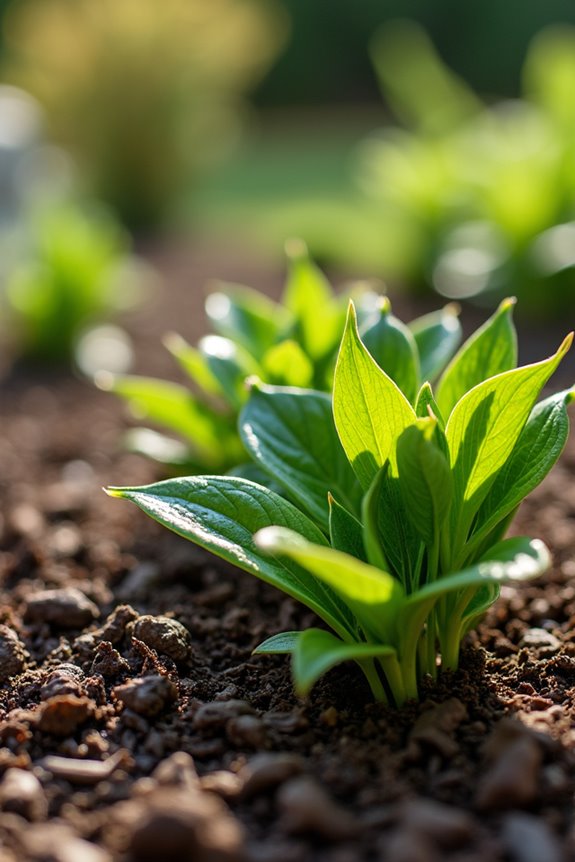
I’ve learned that not all mulches work equally well for flowers, and some can actually harm your beds more than help them. Fresh wood chips deplete nitrogen as they break down, dyed mulch introduces questionable chemicals into your soil, and cypress mulch comes at a steep environmental cost through habitat destruction. Understanding these pitfalls helps me avoid mistakes that would slow flower growth or damage the environment I care about.
Fresh Wood Chips Risks
When you grab fresh wood chips from your local garden center, you’re actually bringing home a nutrient thief in disguise.
The Nitrogen Problem
Fresh wood chips pull nitrogen from your soil as they break down. Your flowers end up starving for this essential nutrient, stunting their growth.
Moisture and Disease Issues
Piling fresh wood chips directly against plant stems creates a moisture-rich environment. This promotes rot and disease that’ll damage your flowers faster than you’d expect.
Additional Concerns
Green wood decomposes slowly with high microbial activity, creating problems longer. Fresh chips also attract slugs and snails, which feast on your flower beds.
Better Approach
Use aged or composted mulch from trusted sources instead. Keep any mulch several inches away from plant crowns. Your flowers will benefit from this change.
Dyed Mulch Concerns
Why do so many gardeners skip right past those colored mulches at the garden center? We’ve learned the hard way that those reds and blacks come with real downsides.
Here’s what I’ve discovered about dyed mulch:
- Chemical concerns – The dyes can leach into soil, potentially introducing synthetic compounds near your plant roots
- Slower decomposition – Unlike natural mulches, dyed versions don’t break down readily, meaning less long-term soil enrichment for your flowers
- pH disruption – These products may alter your soil’s chemical balance, stressing plants that prefer specific conditions
I’ve found that aged, composted natural mulches—think pine straw or shredded hardwood—deliver what dyed mulch can’t: reliable decomposition and genuine soil improvement. Skip the colored stuff. Your flowers will benefit.
Cypress Environmental Impact
While we’re steering clear of artificially dyed mulches, there’s another popular option that deserves a hard pass: cypress mulch.
I’ll be straightforward—cypress mulch contributes to deforestation and habitat loss, which impacts both the environment and soil health. When we choose it, we’re supporting unsustainable harvesting practices that damage ecosystems.
| Concern | Impact |
|---|---|
| Deforestation | Destroys natural habitats |
| Habitat Loss | Threatens wildlife populations |
| Soil Chemistry | Releases tannins affecting plants |
| Degradation Rate | Slower breakdown process |
| Sustainability | Non-renewable sourcing |
Beyond environmental damage, cypress mulch degrades differently than alternatives. It can release tannins and phenolics that alter your soil chemistry—not ideal for ornamentals.
Better choices? Pine bark, shredded hardwood, or pine straw offer superior moisture retention, weed suppression, and lower environmental footprints. Let’s grow our flowers responsibly.
Clearing and Enriching Soil Before You Mulch
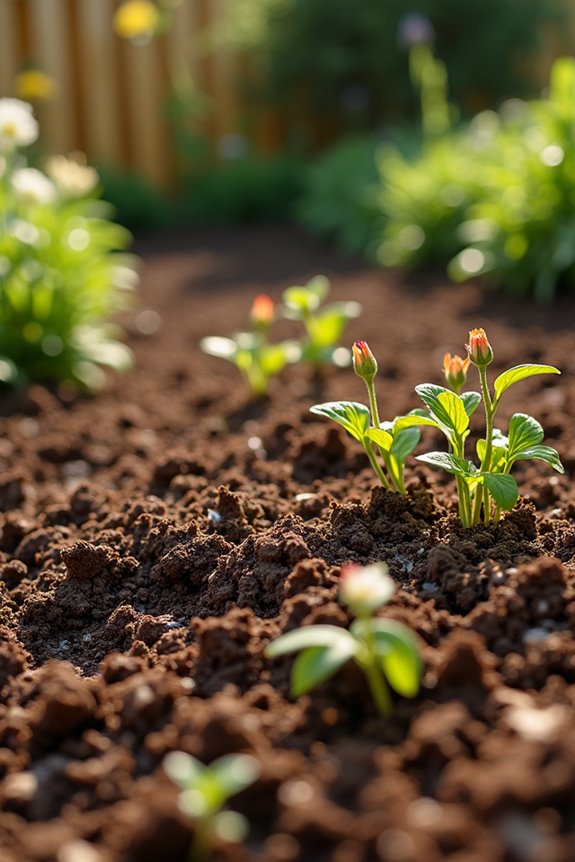
Before you spread a single layer of mulch, you’ll want to prep your soil—and I mean really prep it. I’ve learned this through experience, and it does matter.
Here’s what I do:
- Clear everything out. Remove every weed, blade of grass, and debris. I know it’s tedious, but weeds’ll push through mulch otherwise, and you’ll be frustrated later.
- Work in compost. I add a few inches of quality compost or organic matter. This improves drainage, aerates the soil, and gives your flowers slow-release nutrients they’ll need.
- Let it settle. Give your bed a day or two before mulching.
This prep work ensures your flowers establish themselves properly. Yes, a well-prepared bed requires more maintenance, but you’re setting yourself up for real success.
Getting the Mulch Depth Right (It’s Easier Than You Think)
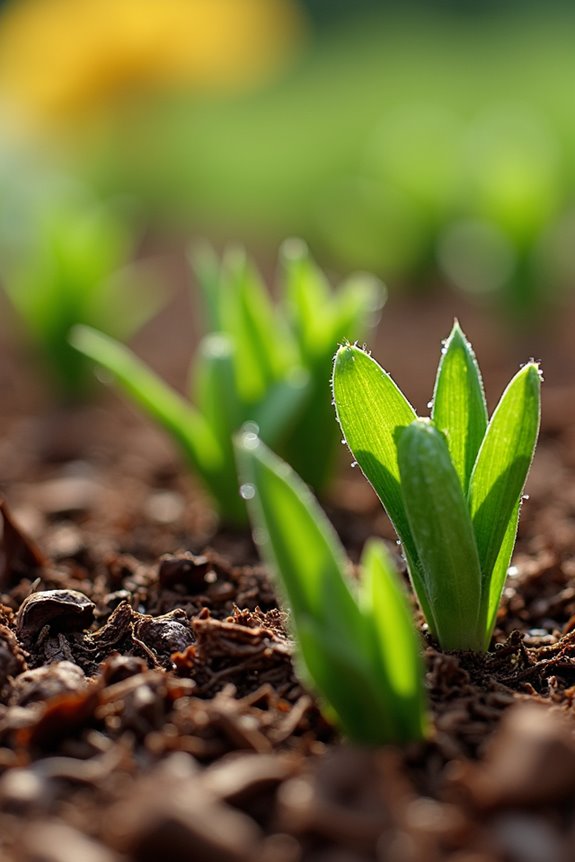
I’ve found that nailing the right mulch depth isn’t complicated—you’re aiming for 2 to 3 inches, which gives you that sweet spot between moisture retention and soil health. Go deeper than 3 inches, and you’re actually working against yourself: the soil suffocates, water can’t infiltrate properly, and you’ve created conditions for rot and disease. Maintaining this depth over time means just updating your mulch periodically and adding a bit more as your plants mature.
The Ideal 2-3 Inch Range
- Aim for 2 to 3 inches – This sweet spot suppresses weeds while letting soil breathe properly
- Avoid going deeper than 3 inches – Too much suffocates your soil and blocks rainwater from reaching roots
- Monitor and adjust – If you notice drainage problems or crowding, pull back some mulch to restore balance
The key is thinking of mulch as a protective blanket, not a burial mound. When you hit that 2-3 inch range, you’re creating the right environment for moisture retention and root health. Check yours seasonally since it naturally breaks down, settling lower over time. This depth becomes your baseline for maintaining flower beds in good condition.
Avoiding Over-Mulching Problems
Now that you’ve nailed the 2-3 inch sweet spot, it’s worth knowing what happens when you go rogue with your mulch pile. Exceeding 3 inches creates real problems I’ve watched unfold in gardens. Thick mulch suffocates soil, blocks rainwater, and compacts over time into moisture-blocking layers. Here’s what I mean:
| Problem | What Happens | Fix |
|---|---|---|
| Over 3 inches | Soil suffocation | Reduce to 2-3 inches |
| Mulch volcanoes | Poor airflow, rot | Keep 2-3 inch circle clear around bases |
| Seed suppression | Seeds can’t germinate | Thin mulch when planting |
My practical tip: Regular maintenance beats crisis management. Top off your mulch seasonally, maintaining that 2-3 inch mulch depth consistently. Build stable garden conditions—not buried soil.
Should You Mulch Before or After Planting?
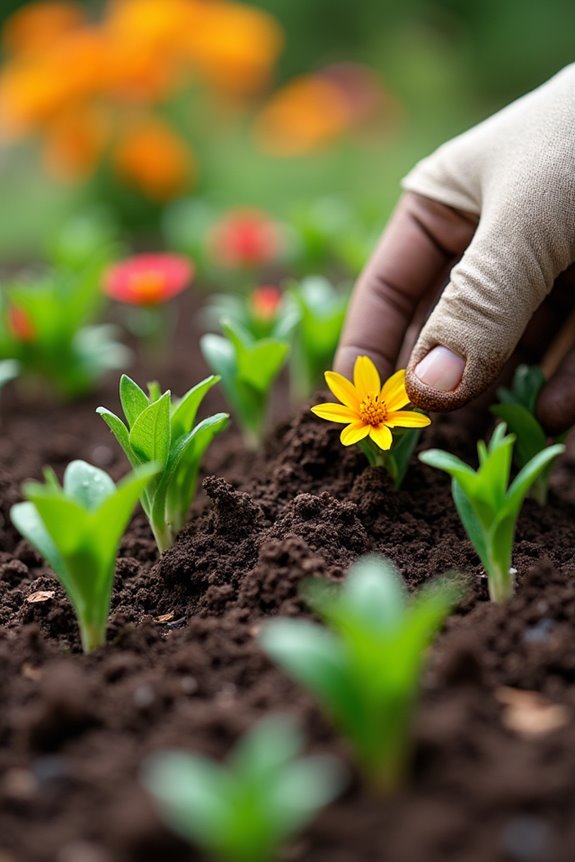
When’s the best time to lay down mulch—before you dig your planting holes or after your plants are settled in? Honestly, you’ve got options, and both work depending on what you’re growing.
- For large plants: Prepare soil first, plant your specimens, then apply mulching materials like wood chips or shredded bark around them
- For small annuals: Spread mulch beforehand, then push it aside when planting—adjusting as seedlings grow
- For flexibility: Mulch before planting and add more later as plants establish themselves
The approach depends on plant size and species. Larger plants need settling room before you mulch, while small annuals handle pre-mulched beds fine. Pick what fits your garden style.
Step-by-Step: Planting Flowers Through Mulch
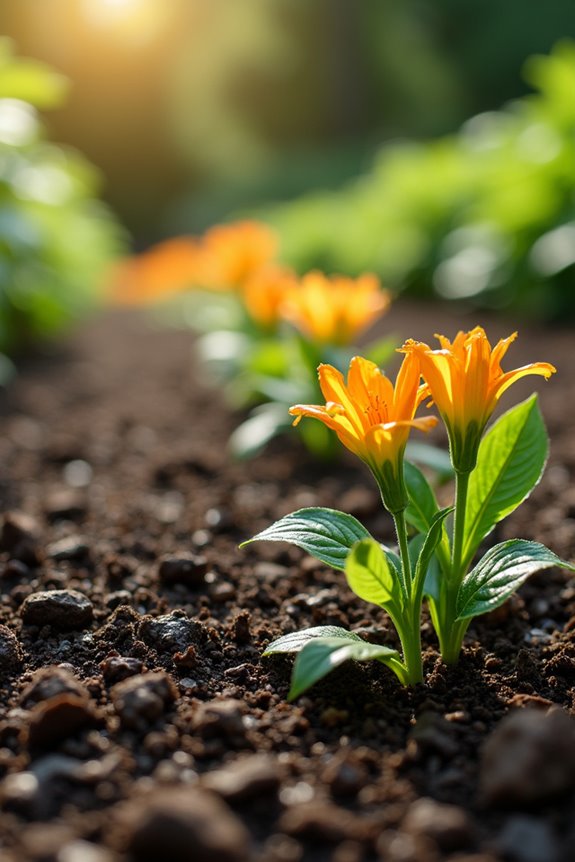
Planting Flowers Through Mulch
Whether you’re working with transplants or seeds, planting through mulch isn’t complicated—you’re just adjusting your technique slightly to account for that protective layer already in place.
Planting through mulch requires only minor technique adjustments to account for the protective layer already in place.
For Transplants
Clear a widening hole through the mulch, pushing it aside as needed. Position your plant so the root ball’s top sits level with surrounding soil. Backfill with soil, water deeply at the base, then return the mulch around your plant.
For Seeds
Thin mulch works best—especially for tiny seeds that need surface contact. You might keep seed surfaces exposed or cover them lightly, depending on seed size.
The Critical Detail
Leave a 2–3 inch mulch-free circle around each stem. This breathing room prevents rot and reduces competition as seedlings emerge.
Common Mulching Mistakes That Damage Flower Beds
How’d you end up with a flower bed that’s more pest hotel than garden? I’ve been there, and it’s usually because we’re making a few common mistakes. Let me share what I’ve learned:
- Piling mulch too thick—anything over 3 inches suffocates soil and blocks water from reaching roots where plants need it most.
- Stacking mulch against stems—this creates a moisture trap that rots your flowers. Leave a 2–3 inch breathing space around each stem.
- Using fresh wood chips—they pull nitrogen from soil, starving your plants during critical growth periods.
I’d also skip mulching over weedy areas. Weeds’ll push right through, defeating the whole purpose. Keep your mulch thickness moderate and your flower beds perform better.
Why You Should Never Pile Mulch Against Your Plants
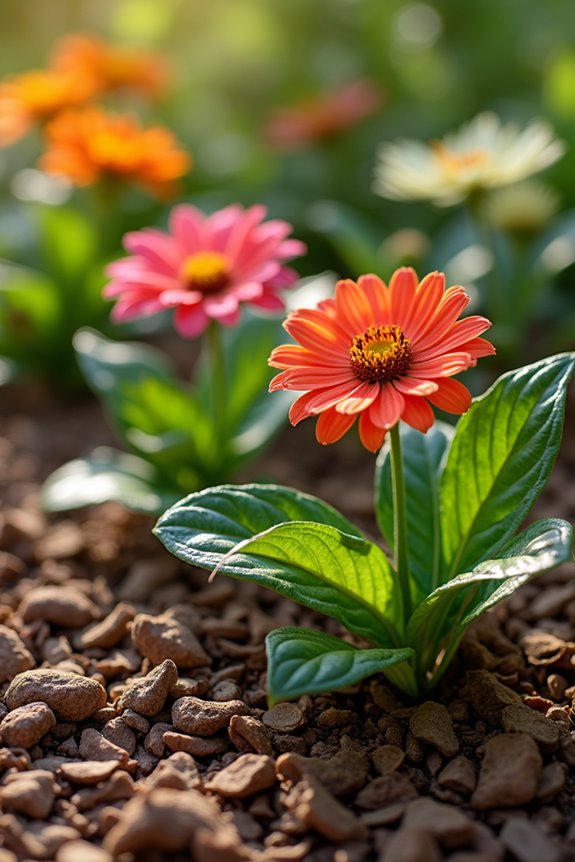
When you pile mulch directly against stems or trunks, you’re creating what’s called a mulch volcano. This mound traps excess moisture right where it shouldn’t be, suffocating your plant’s base. This causes stem rot and invites pests that wouldn’t otherwise bother your beds.
The fix? Keep a 3-4 inch mulch-free circle around each plant’s crown. This gap lets air flow freely, prevents moisture buildup, and protects against root rot. Your plants need room to breathe.
Tailoring Mulch Depth for Your Region and Soil
What’s the right mulch depth? It’s not one-size-fits-all. Your region’s climate and soil type matter more than you’d think.
Here’s what works:
- Standard depth: Aim for 2 to 3 inches—this retains moisture without suffocating roots or blocking rainfall.
- Hot climates: Use lighter, porous mulches like shredded leaves or pine straw. They improve airflow and prevent overheating compared to dense wood chips.
- Seed considerations: Keep mulch depth shallower for small seeds, which struggle through thick layers. Large-seeded plantings need soil contact beneath the mulch.
Very thick mulch (3 inches or more) actually works against you—it suppresses germination and deters shallow-rooted plants. Adjusting mulch depth based on your specific conditions produces better results in your garden.
Renewing Your Ground Cover Each Spring
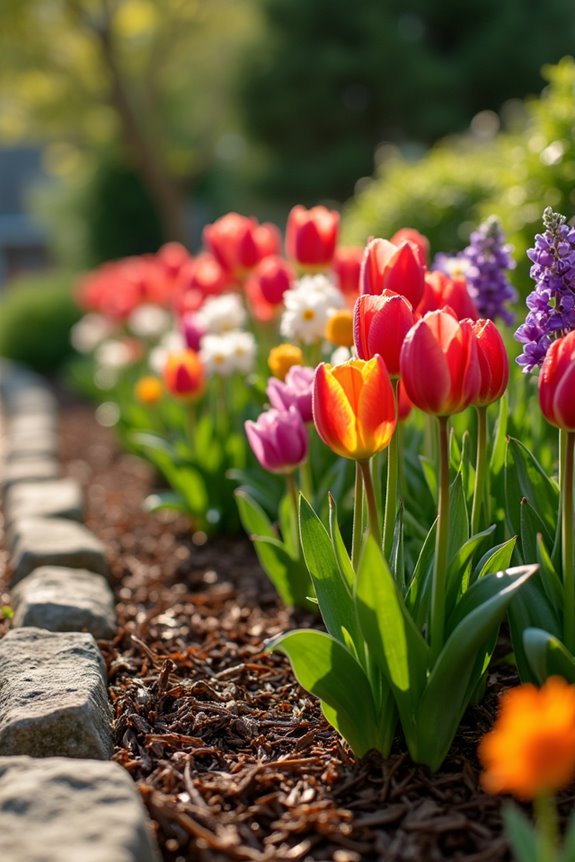
Your mulch isn’t permanent—it breaks down over winter, and that’s actually a good thing. As organic materials like pine straw and shredded hardwood decompose, they enrich your soil naturally.
A spring refresh keeps everything looking intentional while supporting long-term garden health.
What to Do
Top off your mulch bed to maintain that ideal 2–3 inch depth. This restores weed suppression and moisture retention that decomposition has weakened over the season. As you add fresh mulch, remember the golden rule: avoid the “mulch volcano” by keeping material away from plant stems. Leave a small circle around each base for airflow—your flowers will benefit from better air circulation.
Light, ongoing additions throughout the growing season compensate for continued breakdown.
Controlling Persistent Weeds in Planted Beds
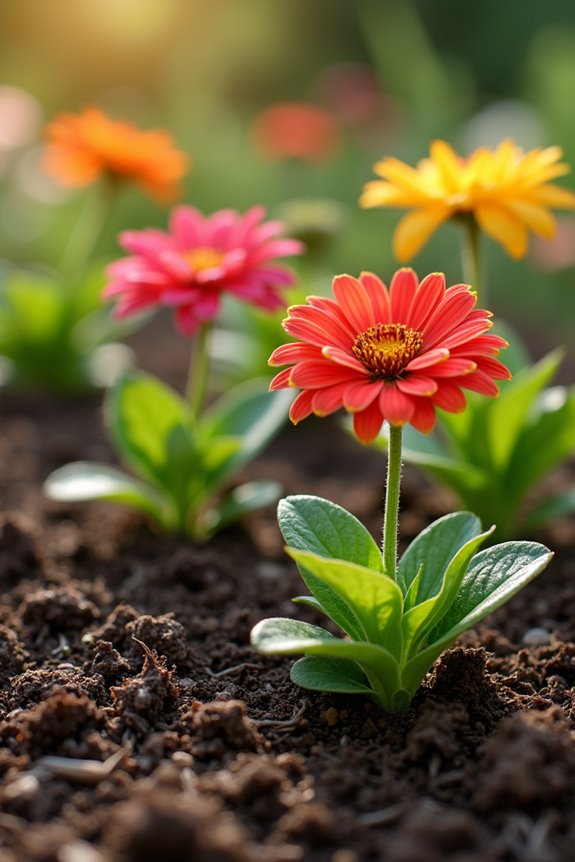
Even with fresh mulch topping off your beds each spring, weeds still find a way to push through—I’ve learned this the hard way. The trick isn’t preventing weeds entirely; it’s managing them strategically.
Here’s what actually works:
- Clear before you mulch – Remove existing weeds and weed seeds from soil before laying down mulch. This head start makes a real difference.
- Maintain proper depth – Keep mulch at 2–3 inches. Too shallow won’t suppress weed seeds; too thick creates pest hotspots and blocks air flow to roots.
- Avoid mulch volcanoes – Don’t pile mulch against plant stems. This common mistake traps moisture and invites problems you don’t want.
Regular maintenance keeps persistent weeds manageable. Top off mulch as it decomposes, and you’ll notice fewer unwanted seedlings competing with your flowers.
How to Apply Fertilizer in Mulched Gardens
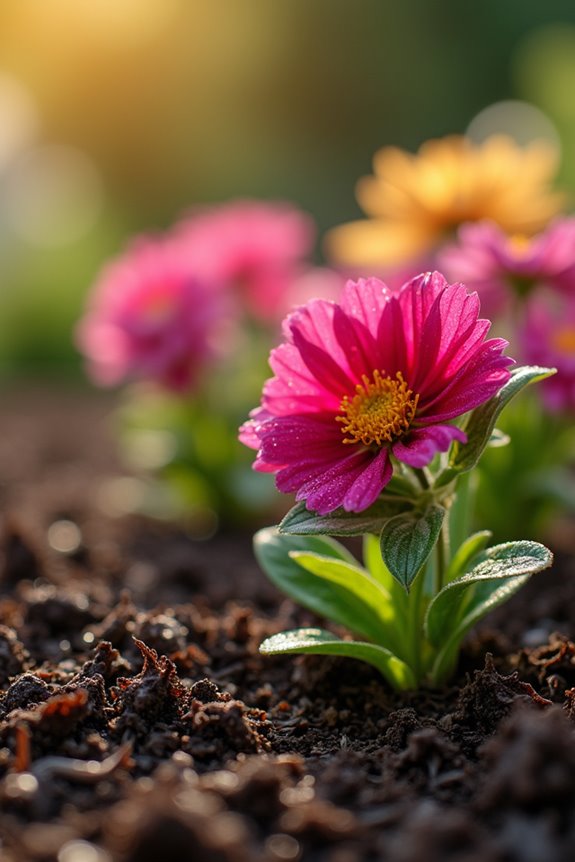
For granular fertilizers, apply them on top of the mulch and let irrigation carry nutrients down. With liquid fertilizers, pull back the mulch to reach soil directly—this provides roots with immediate nutrient access.
Maintain Proper Mulch Depths
Keep mulch depths between 2–3 inches. This depth prevents root suffocation while letting nutrients infiltrate. After applying any fertilizer, water deeply at the base to move nutrients into your root zone.
Tip: For seedlings, use light surface applications to avoid nutrient problems and germination issues.
Can You Mix Old and New Mulch Together?
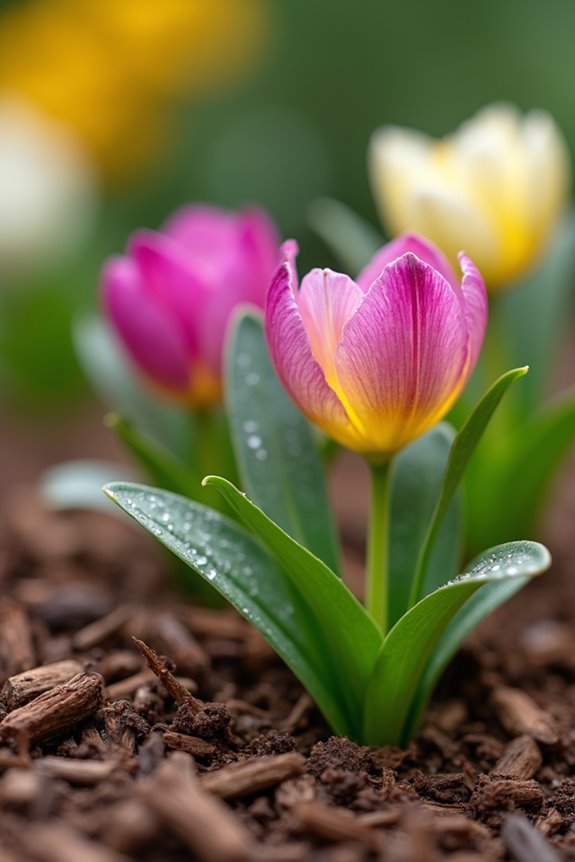
I’ll be honest—mixing old and new mulch sounds like a time-saver, and it often is, but you’ve got to check your old mulch first to make sure you’re not trapping problems underneath. The quality of what’s already there determines whether you can simply layer fresh mulch on top or whether you need to remove the old stuff entirely. Let me walk you through assessing what you’ve got, figuring out the right layering approach, and knowing when it’s time to refresh.
Assessing Old Mulch Quality
When’s the best time to refresh your mulch layer—and when can you just add more on top? Evaluating your existing mulch quality determines whether you’re good to go or need a do-over.
Here’s what I check:
- Thickness and compaction – If your old mulch sits thicker than 2 inches or feels matted down, it’s blocking water and air from reaching roots. Time to rake it out.
- Decomposition stage – Evenly broken-down mulch that’s dark brown? You’re fine topping it with 2–3 inches of new material. Fresh wood chips or green mulch? Replace it entirely since they’ll steal nitrogen.
- Mold and moisture – Smell musty or see white fungal growth? Remove it completely to prevent disease spread.
Layering Techniques For Success
Should you just dump new mulch on top of what’s already there, or does mixing old and new require a strategy? Layering actually works—you’re not starting from scratch each time.
The key is maintaining proper mulch depth without suffocating your soil. Here’s what I do:
| Layer Type | Depth | Purpose | When to Use | Result |
|---|---|---|---|---|
| Aged/composted base | 1–1.5 inches | Prevents nitrogen loss | Always first | Soil quality improves |
| Fresh mulch top | 1–1.5 inches | Appearance refresh | After base | Extended life |
| Combined total | 2–3 inches | Root warmth | Around stems | Balanced moisture |
| If decomposed heavily | Rake aside | Create breathing room | Old mulch present | Better drainage |
| For seeds | Thin layer | Doesn’t block germination | New plantings | Successful sprouting |
I rake aside heavily decomposed mulch before adding fresh material. This prevents dense, matted layers that block water infiltration. The result? Your flowers get warmth and moisture without rot or suffocation.
Refresh Timing And Depth
How do you know when it’s time to add fresh mulch without creating a suffocating layer?
I’ve learned that mixing old and new mulch keeps things balanced. Here’s what works:
- Maintain the 2–3 inch target – Spring’s the perfect time to add 1 inch of fresh mulch over existing material, keeping your mulch depth consistent for weed suppression and moisture retention.
- Assess what’s underneath – If old mulch looks thin or broken down, topping it refreshes the layer. But if it’s thick, matted, or souring, rake it out completely to prevent oxygen issues.
- Keep stems safe – Always maintain a mulch-free circle around plant stems for airflow, even when adding fresh material.
This approach prevents blocking water and air while sustaining flower beds.