Landscape fabric won’t kill weeds—it just buys you time. It blocks sunlight initially, but organic debris (leaves, decomposing mulch) accumulates on top, creating a nutrient-rich layer where seeds germinate anyway. Roots entangle with fibers, and pulling weeds leaves fragments behind that regrow. Within 3–5 years, UV exposure and root penetration degrade the fabric entirely. You’ll face ongoing maintenance costs and recurring weed problems. Thick mulch (2–4 inches) refreshed every 4–5 years works better long-term. There’s more to understand about when fabric makes sense strategically.
Does Landscape Fabric Actually Stop Weeds?
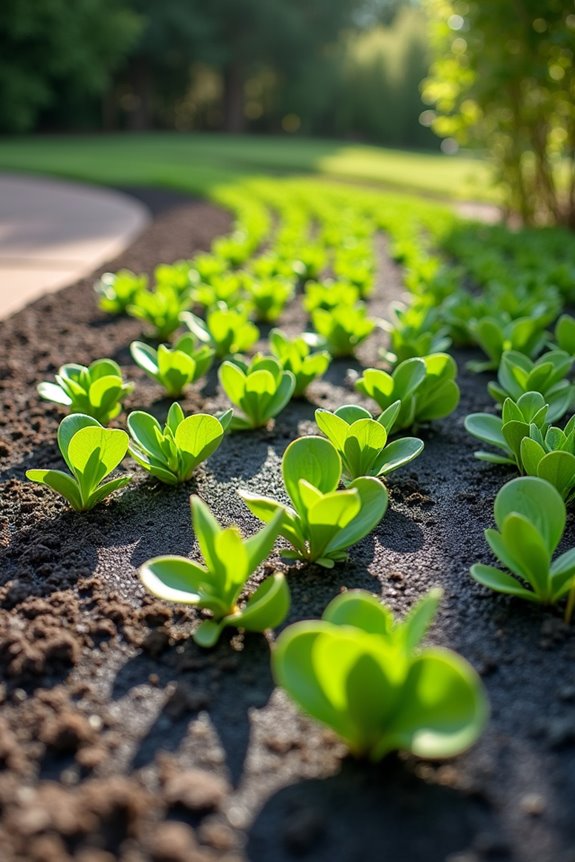
How well does terrain fabric really work? I’ll be honest—it’s more complicated than the packaging suggests. Landscape fabric blocks sunlight initially, which stops some weeds from sprouting. However, I’ve found that weeds are persistent. They establish themselves through seams in the fabric or grow directly on top of it. The real problem emerges over time. Roots and suckers travel underneath, tangling with the material itself. Once that happens, removal becomes genuinely difficult. Additionally, fabric degrades after a few years, and leftover root fragments keep regrowing weeds. Without proper installation—meaning complete coverage with mulch or rock—drainage suffers too. The honest takeaway: landscape fabric provides temporary suppression, not permanent weed elimination. You’ll likely face maintenance challenges later.
Why Do Weeds Still Emerge Through and Around Fabric?
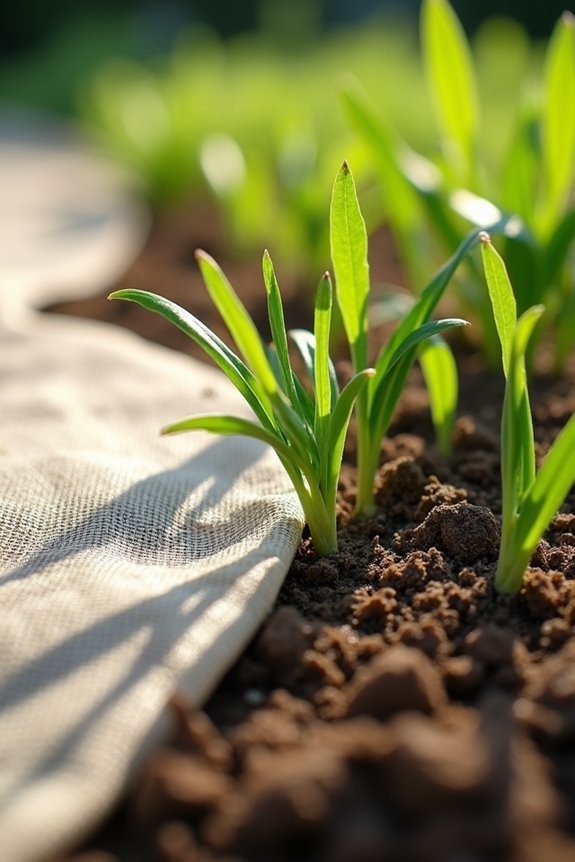
Despite fabric’s promise as a barrier, weeds still push through because organic debris—leaves, dirt, and decomposing material—builds up on top and creates a nutrient-rich layer where seeds germinate right on the surface. Roots don’t play by the rules either; they entangle with the fabric fibers themselves, and when you pull a weed out, you often leave behind root fragments that sprout back. Add to that the fact that seeds blow in and settle in the spaces around fabric edges, and your barrier becomes less of a solution and more of a temporary slowdown.
Organic Accumulation On Top
You’ve probably noticed that landscape fabric doesn’t stay as clean and weed-free as it promises—and there’s a reason why. Over time, organic matter—leaves, grass clippings, and decomposing mulch—accumulates directly on your fabric. This creates a fertile growing medium where weed seeds land and germinate. I’ve watched it happen in my own yard: what starts as a thin layer becomes an inch or more of nutrient-rich debris.
| Timeline | Organic Layer | Weed Growth Risk |
|---|---|---|
| Month 1 | Minimal buildup | Low |
| Month 3 | ½ inch layer | Moderate |
| Month 6 | 1+ inch layer | High |
| Month 9 | Dense debris | Very high |
| Month 12 | Peat-like soil | Severe |
This accumulated organic matter becomes new soil on top of your barrier. Weeds don’t need to penetrate the fabric when they can root directly into this natural layer sitting above it.
Root Entanglement With Fabric
When weeds take root on top of landscape fabric, they don’t simply remain at the surface waiting for removal. Their roots intertwine directly with the fabric itself, creating root entanglement that presents genuine removal challenges.
What occurs:
- Roots grip the fabric as they grow, anchoring themselves into the material
- Pulling weeds leaves fragments behind that regrow persistently
- Tree suckers like aspen travel underneath along root lines toward the surface
- Weakened fabric spots rupture when roots break through
- Complete removal requires lifting the entire fabric section along the root line
Once roots penetrate deep, your fabric’s weed-blocking function degrades significantly. You’ll face ongoing problems despite the barrier’s initial suppression, requiring labor-intensive fixes.
Seed Germination On Surface
Even though we’ve tackled the root entanglement problem, there’s another reason weeds still show up: they’re germinating right on top of your fabric.
Weed seeds blow onto fabric surfaces constantly. When they land on accumulated organic debris—think leaves, grass clippings, or decomposing matter—they find exactly what they need. These seeds germinate in nutrient-rich soil that’s well-drained and sun-exposed. Their roots then weave directly into the fabric itself.
| Problem | Why It Happens | Result |
|---|---|---|
| Seeds land on surface | Wind carries them everywhere | Germination starts quickly |
| Organic debris accumulates | Leaves and mulch pile up | Creates growing medium |
| Roots intertwine with fabric | Plants need anchoring | Removal becomes nearly impossible |
| Fragments remain buried | Breaking weeds leaves pieces | Regrowth occurs repeatedly |
The fabric didn’t kill these weeds—it actually provided the ideal growing environment.
Seeds Germinating on Top of Fabric: The Real Problem
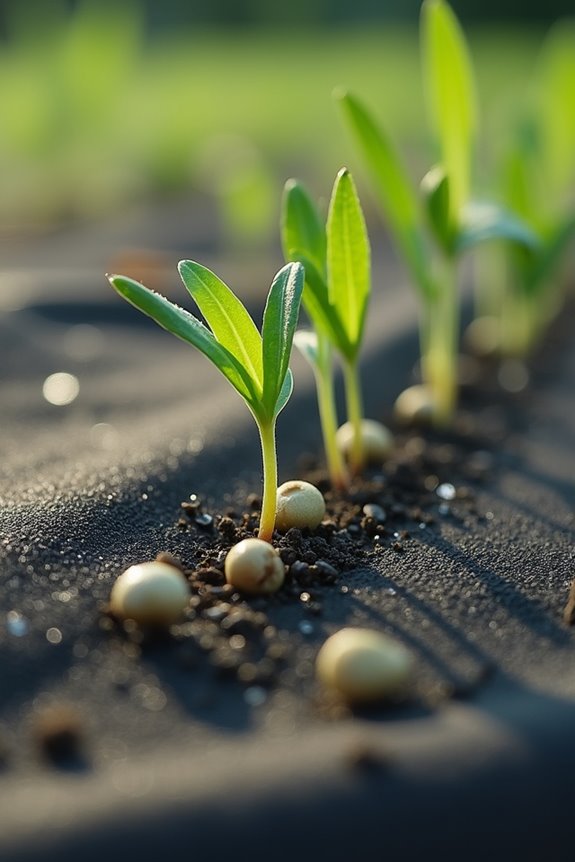
How’d we end up thinking terrain fabric was a complete weed solution? Here’s what actually happens when we lay it down.
The fabric’s exposed surface becomes prime real estate for weed seeds. We’re dealing with a genuine problem:
- Seeds blow onto exposed soil above the fabric
- Germination happens quickly under direct sun
- Roots grow downward into or around fabric seams
- Root penetration degrades the fabric’s weed-control function
- Pulling weeds leaves behind root fragments that respout
Once roots entangle with the fabric, removing them becomes nearly impossible without damaging the material itself. We’re creating a weed anchor system rather than a barrier. The fabric’s original purpose—blocking unwanted growth—gets completely undermined by what’s happening on top.
How Does Fabric Degrade and Fail Over Time?
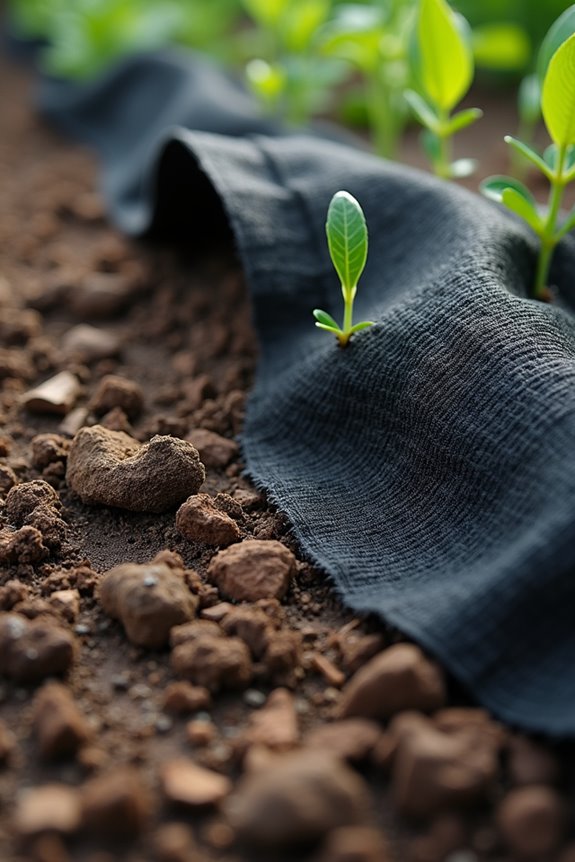
I’ve watched landscape fabric deteriorate faster than most people expect, and it comes down to three main culprits working against you simultaneously. UV exposure from the sun breaks down the fabric’s fibers within just a few years—typically 3 to 5 years depending on your climate—while root penetration and tears from tree roots, shrub growth, and foot traffic create weak spots that spread over time. Meanwhile, organic material accumulation (decomposing leaves, dirt, and plant matter) builds up on top of the fabric, trapping moisture and encouraging microbial activity that further weakens the material from both sides.
UV Exposure And Breakdown
Why does fabric that’s supposed to last years sometimes fail in just a couple of seasons?
UV exposure is the culprit. Sunlight degrades fabric faster than you’d expect, especially in high-UV environments. Here’s what happens:
- Breakdown begins quickly: Direct sun accelerates deterioration, weakening fibers within 2-4 years
- Brittleness develops: Aged fabric becomes fragile, fraying easily during removal
- Seams separate: UV damage creates gaps where weeds eventually penetrate
- Permeability decreases: Reduced drainage compounds weed problems over time
- Fragments persist: Brittle pieces remain buried, causing regrowth issues later
The timeline varies. Shaded areas last longer than exposed spots. Less durable textiles fail faster than premium options. As the fabric weakens, root intrusion and weathering pressure accelerate failure. You’re essentially watching your weed barrier lose its protective qualities season by season.
Root Penetration And Tears
Root Penetration And Tears
Even the sturdiest terrain fabric can’t stop determined plant roots from working their way through. You’ll find that tree suckers and root fragments travel along root lines beneath your fabric, eventually breaking through weak spots or existing tears. Once those openings appear, roots extend straight through the gaps, completely undermining your weed control efforts.
What happens next:
- Partial roots left behind from incomplete weeding continue regrowing under the fabric
- Root penetration along existing networks causes fabric degradation over time
- Tears expand as more roots push through, creating larger problem areas
- Resealing and reinstallation become necessary maintenance tasks
The reality? Even careful pulling leaves fragments behind, complicating future removal. Over time, this persistent root pressure forces you to remove and replace the fabric entirely—a cycle that catches most of us off guard.
Organic Material Accumulation Effects
How quickly does your ground cover fabric actually fail once you’ve installed it? Organic debris—dust, leaves, plant matter—accumulates between rocks and fabric faster than you’d expect, creating a nutrient-rich layer that invites weed seeds to germinate right on top.
Here’s what happens over time:
- Decomposing mulch transforms into fine, powdery peat-like substance
- This powder destabilizes fabric and accelerates erosion
- Organic material builds up in seams and weak spots
- Weed seeds find perfect conditions to sprout
- The fabric becomes its own planting bed
Once that happens, you’re fighting an uphill battle. The fabric that was supposed to suppress weeds now actively encourages them. You’ll need replacement within a few years, not decades.
Pulling Weeds From Fabric Leaves Roots Behind
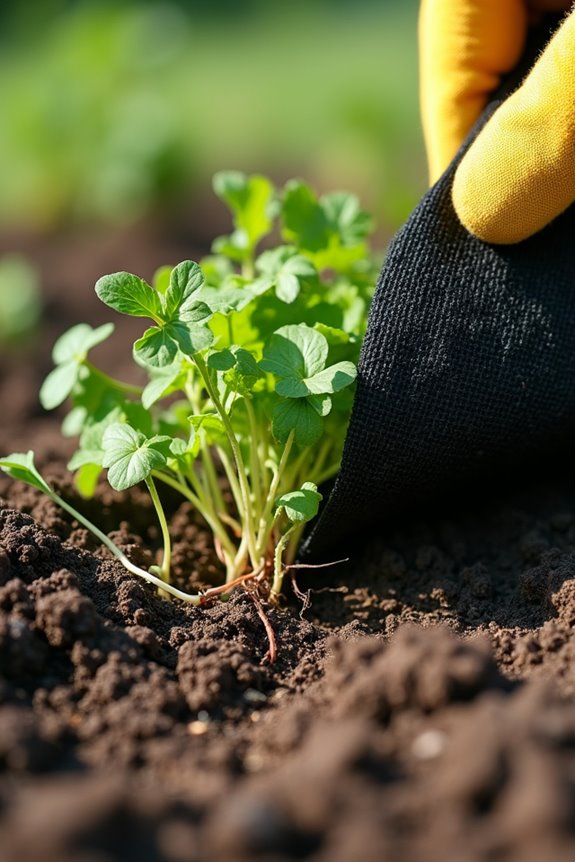
When you pull a weed growing through landscape fabric, you’re often left with only half the problem solved—the visible part comes up, but the roots? They’re staying put. This is where most of us run into trouble.
The Root Fragment Problem
Weed roots get tangled up in the fabric’s weave, making complete removal nearly impossible. You’ll pull hard, the stem snaps, and root fragments remain buried underneath. These leftover pieces don’t quit—they keep growing, fueling persistent weed cycles that frustrate your efforts.
Why This Matters
Those remaining root systems spread beneath the fabric, ready to resurface whenever conditions allow. Tears or degradation in your fabric only accelerate this problem. Complete root extraction requires more effort than most of us invest initially, but it’s necessary work.
Tree Roots and Suckers Break Through Fabric Barriers
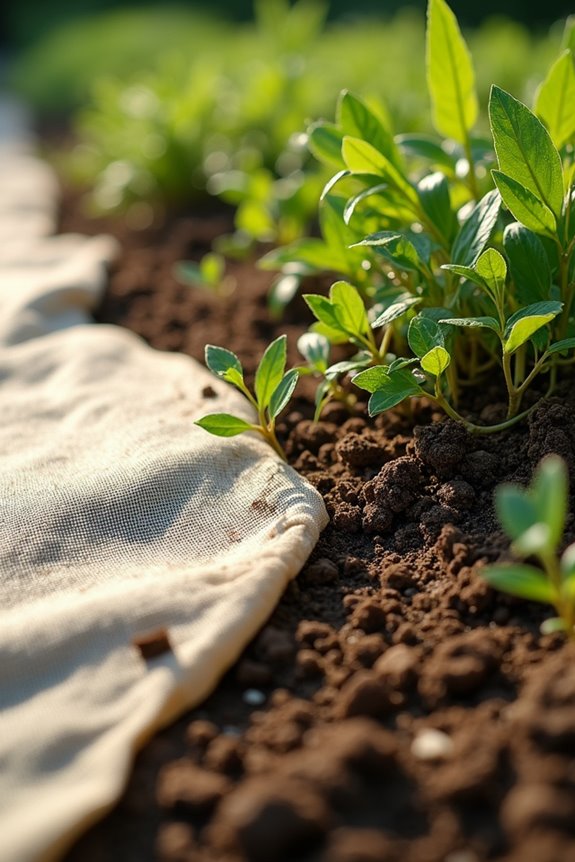
The root intrusion problem we just covered is actually just the appetizer—the real headache comes when tree roots and woody shrub suckers get involved. These aggressive growers treat fabric like it doesn’t exist, traveling underneath and emerging wherever they please. I’ve watched aspens, chokecherries, and lilacs completely bypass barriers meant to stop them.
Here’s what happens with root intrusion:
- Roots travel horizontally along underground pathways beneath the fabric
- Suckers push through weak spots and tears you didn’t know existed
- Weeds growing becomes inevitable once penetration occurs
- You’ll need to lift rocks and fabric along entire root lines to remove them
- Resealing and restabilizing becomes tedious, repetitive work
Once roots breach your fabric, the weed-control function fails. You’re stuck dealing with persistent problems that make you wonder why you bothered initially.
Thick Mulch Without Fabric Works Better
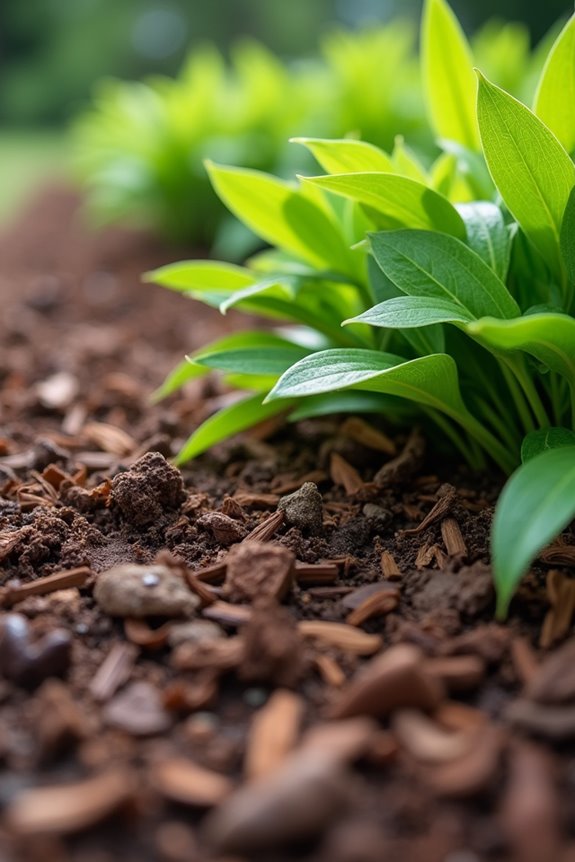
Since fabric barriers keep failing you, I’ve found that thick mulch applied directly to soil—without any fabric underneath—actually works better for stopping weeds.
Why Skip the Fabric?
When you lay 2–4 inches of plant-based mulch straight onto bare soil, it blocks sunlight and prevents weed seeds from germinating. No fabric layer needed. Here’s what happens: the mulch decomposes naturally, adding organic matter and nutrients that feed beneficial soil life. Your soil stays moister too.
Best Mulch Choices
- Bark chips
- Shredded leaves
- Straw
- Chipped wood
- Pine needles
Stay Ahead of Weeds
Pull young weeds regularly—they’re easier to remove when mulch is fresh. Replenish every 4–5 years to maintain that protective 2–4 inch depth. Skip the fabric headache and let the system work for you.
When Is Landscape Fabric Actually Worth Using?
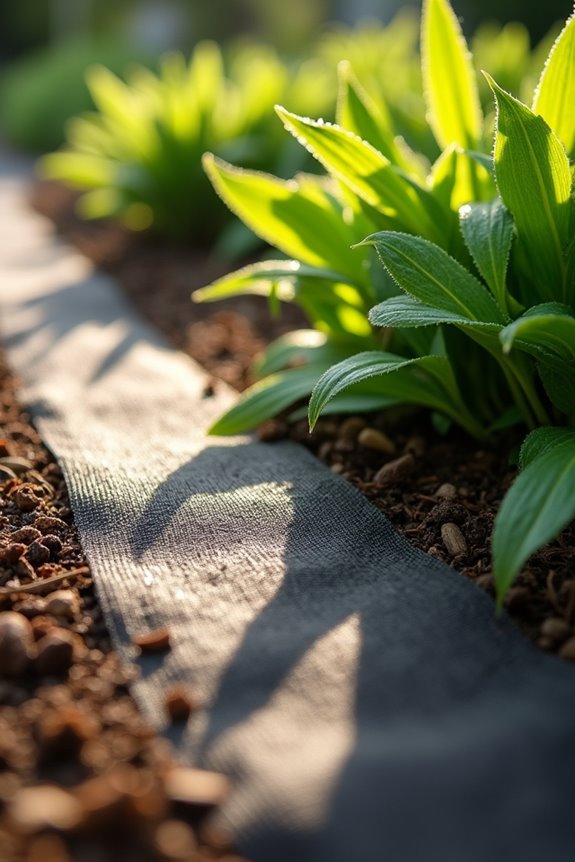
Where does landscape fabric actually earn its place in your garden?
I’ve found that landscape fabric works best in specific situations rather than everywhere. It’s not a universal solution, but it performs well when you’re strategic about deployment.
Best uses for landscape fabric:
- Sunless areas where seeds can’t germinate anyway
- Pathways and driveways needing long-term weed control between pavers
- New installations paired with aggressive ground covers that suppress regrowth
- Seed-free zones like mulched tree rings away from competing vegetation
- Temporary barriers (2–3 years) before removing and replacing
I’d skip it for standard garden beds. You’ll spend less time maintaining 2–4 inches of organic mulch alone. The fabric eventually fails from root intrusion and seam gaps anyway. Save your effort for situations where it actually prevents weeds from establishing rather than fighting them underneath.
The Real Cost of Fabric Maintenance vs. Mulch
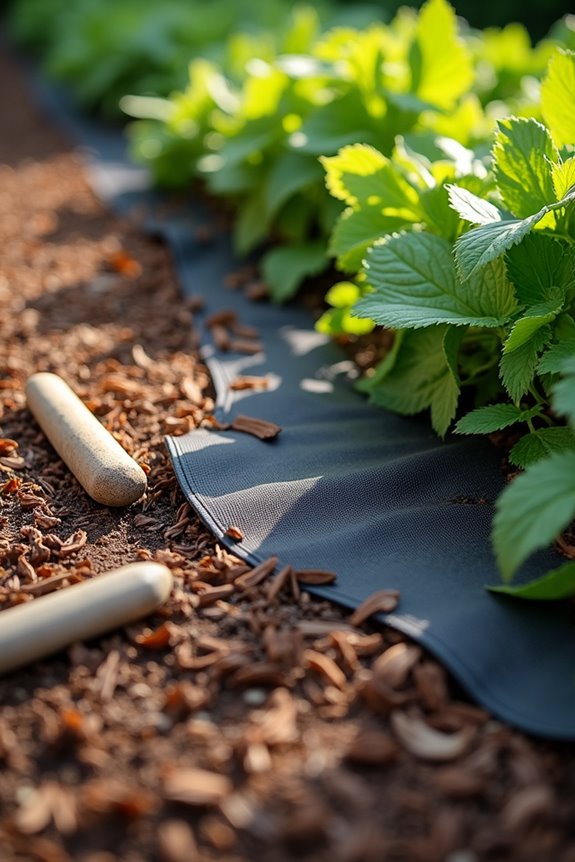
How much are you actually saving by laying ground cover fabric? I’d argue you’re not—you’re just delaying expenses.
Hidden Maintenance Costs
Landscape fabric requires constant upkeep. You’ll spend money on:
- Edge repairs when fabric separates
- Replacement cycles every 5–10 years
- Ongoing weed removal as roots penetrate through
Compare this to mulch applied at 2–4 inches and refreshed every 4–5 years. Individual weeds pull out cleanly with their roots intact.
The Long-Term Picture
When fabric fails—and it will—you’re ripping it out, regrading soil, and resealing rocks. That remediation cycle eliminates any initial low-maintenance appeal. Mulch improves soil function and microbial activity simultaneously, while fabric disrupts drainage and soil structure, driving maintenance costs higher over time.
The real savings? Choosing mulch from the start.