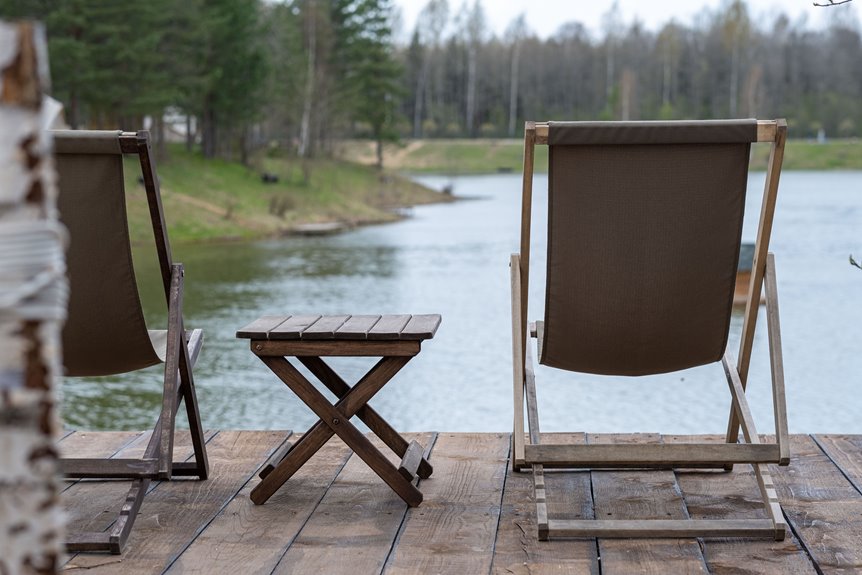
Yes, patio furniture can get wet, but what happens next depends on your cushion’s materials. Quality outdoor cushions with polystyrene bean fills and solution-dyed fabrics resist moisture better than traditional foam. Mold can activate within 24–48 hours in wet cushions, so quick-drying matters. Propping cushions on their sides, using sun exposure, and ensuring air circulation prevent odor and degradation. The right fill and fabric choice makes rain a manageable issue you’ll handle with ease.
Can Outdoor Cushions Actually Handle Rain and Moisture?
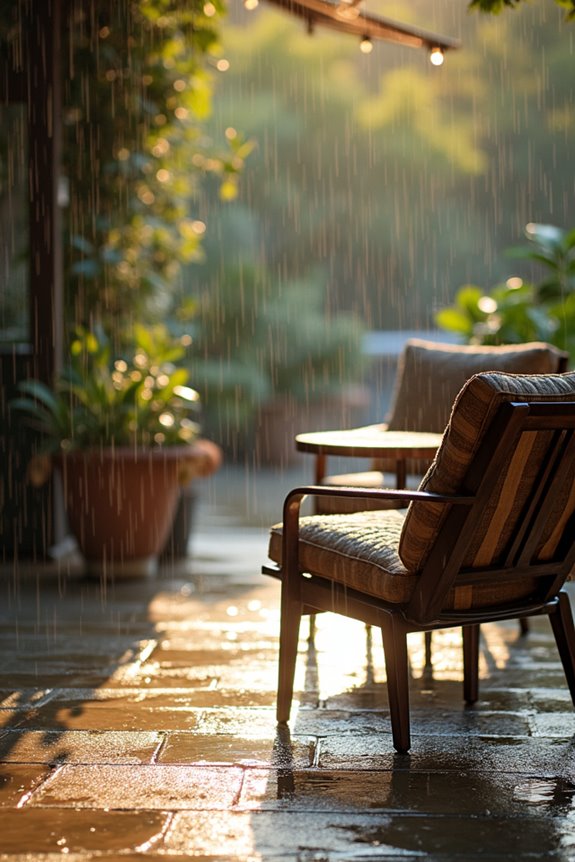
- Choose moisture resistance through premium polystyrene bean fillings
- Prop cushions on their sides for proper air drying
- Use sun and open air exposure
- Deploy outdoor cushion covers during prolonged rain
The key is preventing water from sitting in your cushions. Quick-drying fabrics combined with strategic drying methods keep dampness at bay, protecting your investment long-term.
Why Wet Outdoor Cushions Develop Mold
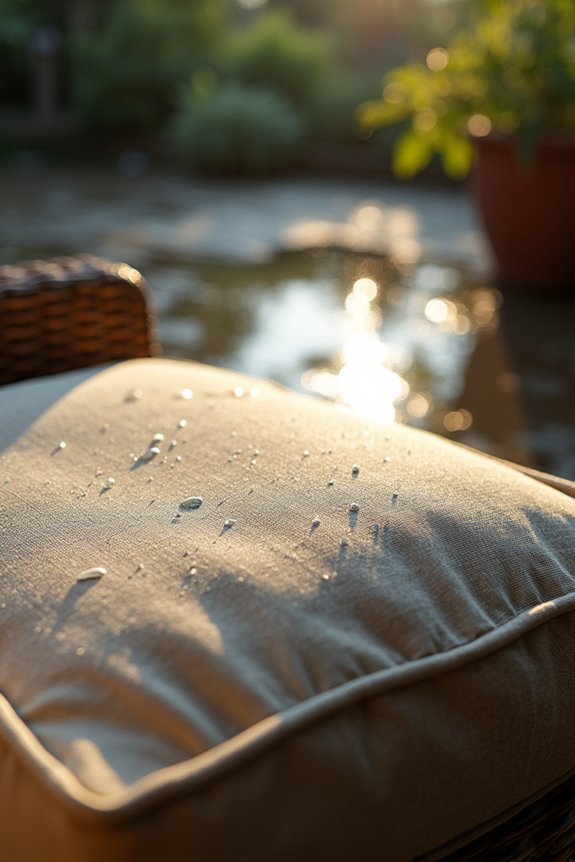
Why do outdoor cushions sitting in your backyard seem to develop that musty smell almost overnight? The answer lies in how quickly mold spreads in damp environments. When water penetrates your cushions, bacteria and mold can colonize within 24–48 hours under favorable conditions.
| Factor | Timeline | Prevention |
|---|---|---|
| Moisture penetration | Immediate | Water-resistant fabrics |
| Mold activation | 24–48 hours | Quick drying |
| Odor development | 2–3 days | Proper ventilation |
| Fabric degradation | 1–2 weeks | Regular cleaning |
| Deep layer dampness | Ongoing | Airflow circulation |
The key issue: even water-resistant cushions need thorough drying and ventilation. Trapped water between layers and inside tufts creates perfect conditions for mold growth. Without proper drying and airflow, you’re creating a breeding ground. That musty smell signals the problem’s already underway—prevention beats remediation every time.
Why Quick-Drying Fillings Prevent Mold Growth
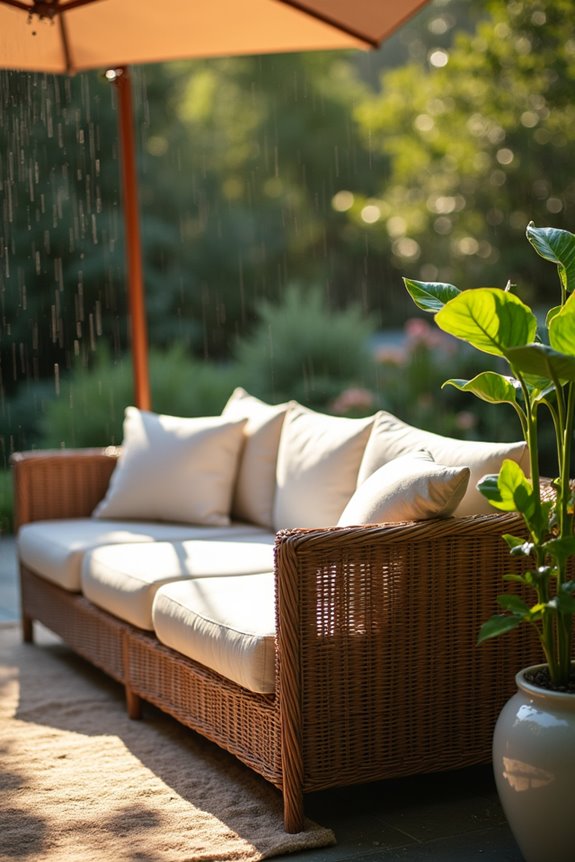
The real breakthrough for wet cushions isn’t just keeping water out—it’s choosing fillings that won’t trap moisture once water gets in. Quick-drying fillings like premium polystyrene beans and open-cell foam are effective options.
Here’s why they work:
Non-absorbent materials don’t soak up water like traditional fillings do. When rain hits your cushions, water runs off or evaporates quickly rather than staying trapped inside, preventing the damp conditions where mold growth occurs.
Better air circulation matters too. Bean-filled cushions promote airflow throughout, accelerating moisture evaporation and inhibiting mold before it develops. Combined with quick-drying fabrics, these fillings keep your cushions resilient even after soaking.
Step-by-Step Guide to Drying and Cleaning Wet Patio Cushions
What’s your first move when you find your cushions soaked after a downpour?
Remove and Position
I start by pulling off wet outdoor cushions and standing them on their narrow edge. This positioning lets water drain naturally while air circulates around them.
Clean Thoroughly
Next, I scrub damp cushions with mild detergent and lukewarm water, then rinse completely. I press out excess water gently—never wring—to avoid damage.
Dry Strategically
I place cushions in direct sunlight whenever possible and use a fan to speed evaporation. Air drying completely prevents mold and mildew growth that develops in moisture.
Handle Problem Areas
For persistent mold, I test an outdoor fabric cleaner on a small spot first. I ensure complete drying before reusing anything.
Storing Outdoor Cushions: Off-Season Care for Year-Round Durability
Once you’ve dried and cleaned your cushions, you’re halfway to protecting them from damage—now comes the storage part that keeps them in good shape for next season. Getting off-season storage right means your outdoor cushions survive to see another year.
| Storage Method | Best For | Moisture Prevention | Ventilation |
|---|---|---|---|
| Indoor garage/deck box | Any climate | Excellent | Good |
| Vacuum-sealed bags | Long-term storage | Superior | Limited |
| Outdoor covers | Humid regions | Good | Moderate |
| Tilted/propped position | All locations | Excellent | Excellent |
Key Storage Steps:
- Store cushions indoors in dry spaces when possible
- Ensure they’re completely dry before packing
- Use protective covers for outdoor placement
- Maintain airflow to prevent mold growth
- Rinse coastal cushions regularly to remove salt deposits
This approach keeps moisture and mildew at bay.
Waterproofing Outdoor Furniture: Wood, Wicker, and Metal Solutions
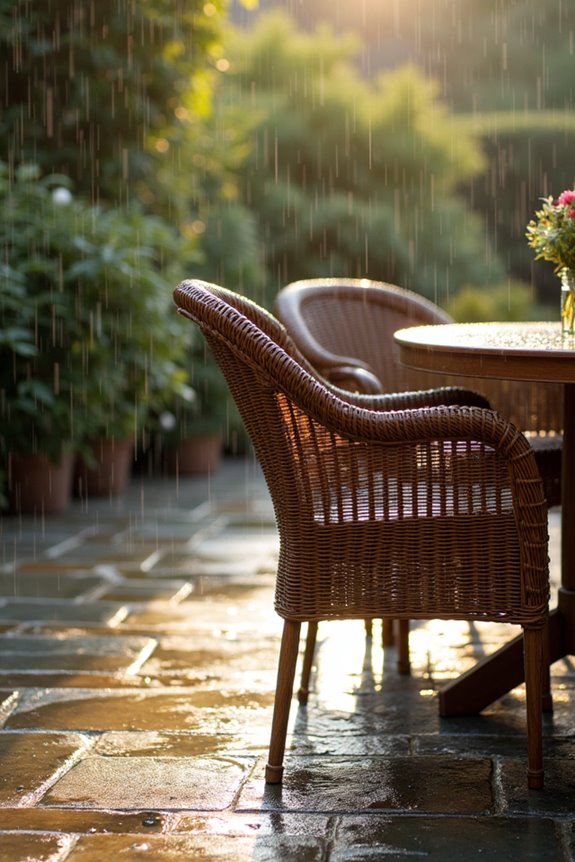
How do you keep outdoor furniture from slowly rotting away when it’s constantly exposed to rain, sprinklers, and morning dew? The right waterproofing approach depends on your materials.
Wood furniture needs sealants and protective coatings that prevent water absorption. Apply these yearly and store pieces during off-season months to minimize moisture damage.
Wicker choices matter—synthetic resin weave outperforms natural wicker’s weather resistance. The synthetic option handles water exposure better, though covers provide extra protection.
Metal furniture varies: aluminum resists rust naturally, while iron and steel require protective coatings. Store steel pieces indoors seasonally.
For cushions and covers, choose solution-dyed acrylic fabrics that dry quickly. Add waterproof covers and maintain airflow to prevent mold buildup and extend the life of your outdoor pieces.
Foam vs. Beans: Which Cushion Fills Dry Fastest
If you’ve ever pulled wet cushions off your patio chairs and wondered why some dry by evening while others stay damp for days, the filling material’s doing most of the work.
I’ve learned that non-absorbent fillings like polystyrene beans outperform traditional foams markedly. Here’s what matters:
- Polystyrene beans dry rapidly because they don’t soak up water like sponges
- Quick-drying foam options shed moisture faster than standard polyurethane varieties
- Moisture evaporation happens quicker with bean-filled cushions due to superior air circulation
- Mold prevention improves when cushions aren’t staying soggy for days
Traditional polyurethane foams absorb water readily and become heavy and musty. Bean fillings and compressed polyester alternatives support faster re-use after wetting, keeping your cushions fresher and protecting them from the dampness that breeds mold. You’ll notice the difference next season.
Weatherproof Cushions: Finding Low-Maintenance Options That Stay Outside
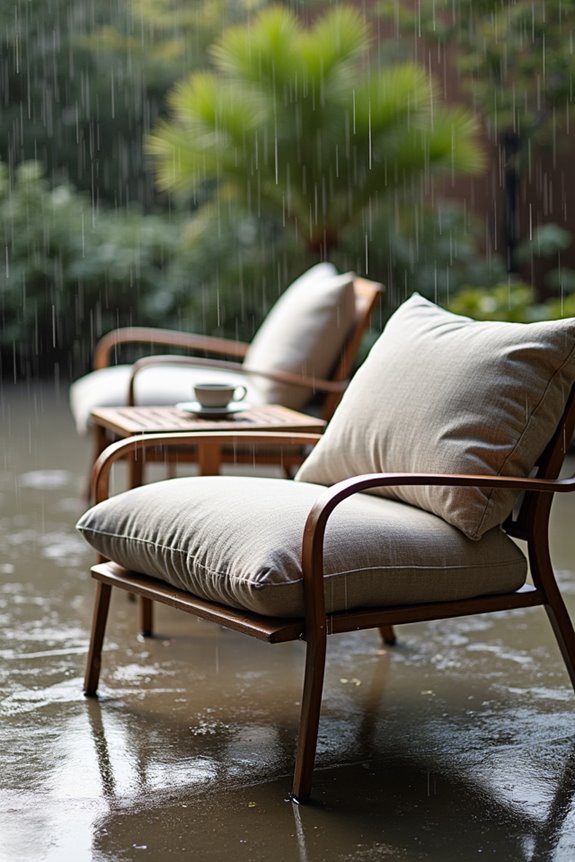
If you’re tired of hauling cushions inside every time it rains, you can find outdoor cushions that actually stay outside without falling apart. The key lies in two essential features—quick-drying fabrics like solution-dyed acrylic or olefin that shed water instead of soaking it up, paired with non-absorbent fill materials such as polystyrene beans or specialized foams that let air flow through them. Together, these features mean your cushions dry fast enough to resist mold, so you’re not constantly maintaining them between weather events.
Quick-Drying Fabric Technology
Modern manufacturers engineer cushions specifically to resist moisture and dry rapidly:
- Solution-dyed fabrics (like Sunbrella) shed water instead of absorbing it
- Open-cell foam fillings allow air to circulate through the cushion interior
- Breathable materials prevent trapped moisture that breeds mold
- Non-absorbent polystyrene beans replace traditional fillings that hold water
When rain hits these water resistant cushions, droplets bead up and roll right off. I prop mine on their edges after wet weather to encourage drainage. This combination of smart fabric choices and breathable construction keeps my cushions fresh outside year-round, eliminating that soggy, musty problem I used to face.
Non-Absorbent Fill Materials
Why do some outdoor cushions stay damp for days while others dry in hours? The answer lies in what’s inside them.
Non-absorbent fillings deliver superior performance. Premium polystyrene beans and open-cell foam don’t soak up water like traditional cotton or down do. Instead, they shed moisture quickly, allowing water to evaporate naturally.
What works best:
- Polystyrene bean fills support air circulation, speeding evaporation
- Open-cell foam promotes fast drying between rainstorms
- Compressed polyester offers excellent moisture resistance
When you pair these non-absorbent cushion fillings with solution-dyed acrylic fabrics, you get a cushion built for outdoor use. No mildew, no musty smells, no multi-day drying cycles. These materials keep your outdoor space functional and ready, regardless of weather conditions.