
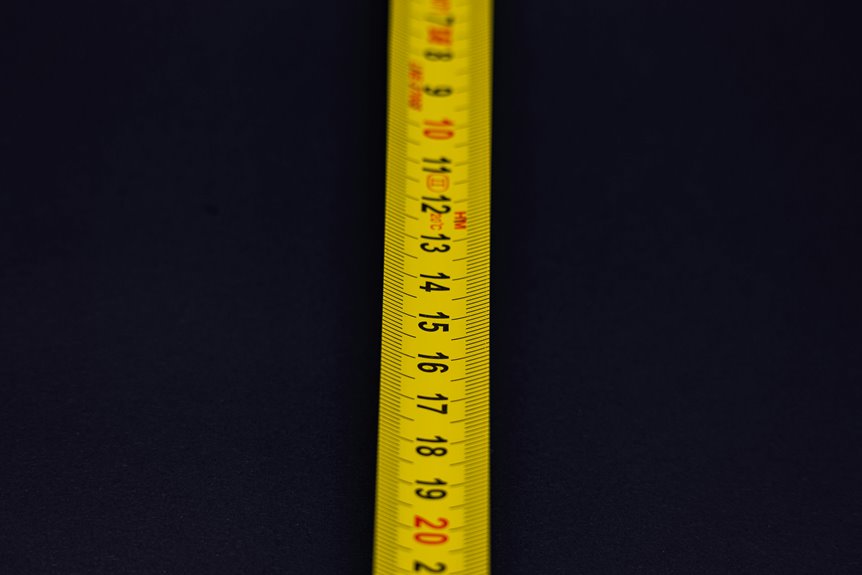
One foot equals 0.3333 yards—that’s one-third of a yard. Here’s why: one yard is defined as exactly three feet, so you divide feet by three to get yards. It’s the inverse of multiplying yards by three to get feet. You’ll use this conversion constantly in construction, real estate, and sports contexts where measurements need consistency. The math is straightforward, though I’ll show you why people accidentally multiply instead, plus concrete examples that make it stick.
One Foot Equals 0.3333 Yards: The Simple Answer
One Foot Equals 0.3333 Yards: The Simple Answer
Ever wondered why converting feet to yards feels backwards? Here’s the straightforward answer: one foot equals 0.3333 yards. That repeating decimal comes from a simple relationship—since one yard contains exactly three feet, we divide one by three to get our conversion.
Think of it this way: if you’re measuring something and need to switch from feet to yards, you’re essentially asking “what fraction of a yard is this foot?” The answer’s always one-third.
Key points:
- 1 foot = 1/3 yard
- 1 yard = 3 feet
- The conversion works both directions
This conversion matters whether you’re working with imperial or US customary measurements. Once you understand that three feet make one yard, the math clicks into place naturally.
Why One Yard Equals Three Feet
The answer’s straightforward: one yard was officially defined as exactly three feet. Back in 1959, international standards locked this in permanently. The yard measures 0.9144 meters, while each foot equals 0.3048 meters. Multiply that foot measurement by three, and you get your yard—the math checks out perfectly every time.
This 3-to-1 ratio makes conversion between yards and feet simple. You’re essentially working with a clean, divisible relationship rather than some awkward fraction. When you’re measuring anything—a room, fabric, or a garden space—this straightforward feet-to-yards system lets you calculate quickly without reaching for a calculator.
The Conversion Formula: Divide Feet by Three
The Basic Math
Here’s how it works: take any feet measurement and divide it by three. You’ll get your yards answer. Let’s say you’re measuring a garden plot that’s 15 feet long. Divide 15 by 3, and you’ve got 5 yards.
Why This Works
This conversion formula exists because one yard contains exactly three feet. So mathematically, one foot equals 1/3 yard (or 0.333…).
Practical Application
Need to convert 9 feet? Divide by three—that’s 3 yards. Got 30 feet? That’s 10 yards. The formula stays consistent every time, making your conversions reliable and straightforward.
Real-World Examples: Common Feet-to-Yards Conversions
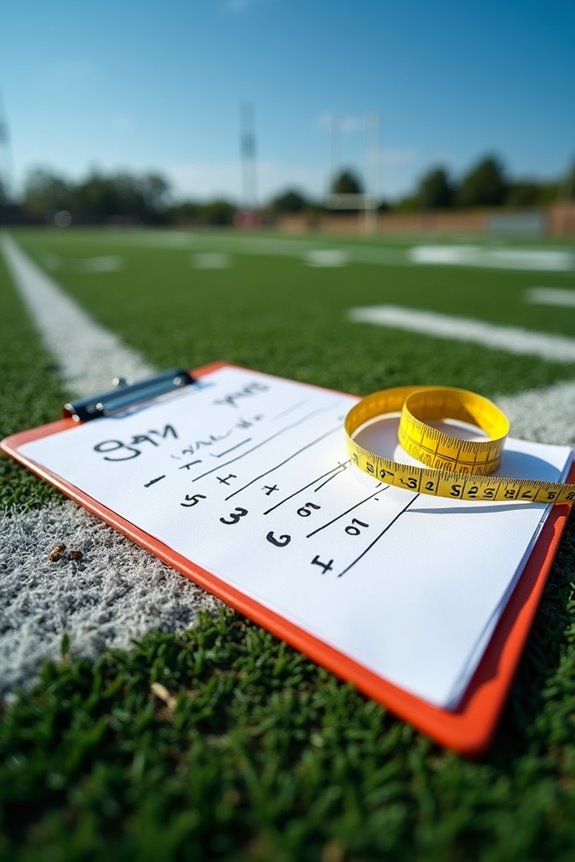
How often do you actually need this conversion in everyday life? I’d say more than you’d think.
When I’m measuring my yard for landscaping, I’ll find myself converting constantly. If a garden bed spans 9 feet, I divide by 3 to get 3 yards—useful for ordering mulch or fencing. Sports fields use this conversion regularly; a football field’s 120 yards includes end zones, which breaks down to 360 feet.
Quick reference conversions I use:
- 6 feet = 2 yards
- 15 feet = 5 yards
- 30 feet = 10 yards
Road construction crews rely on this feet-to-yards conversion daily. Once you practice this conversion a few times, dividing feet by three becomes second nature, and suddenly you’re speaking the same measurement language everyone else is.
Why People Multiply Instead of Divide (And How to Avoid It)
I’ll be honest—I used to multiply when converting feet to yards, and I got it backwards every time. The problem is that we’re hardwired to think “bigger unit, multiply,” since converting feet to yards actually involves fewer yards than feet (3 feet becomes 1 yard). You’ve got to flip that instinct and divide instead: take your feet, divide by 3, and you’ll get the correct number of yards.
Common Multiplication Mistakes
The main trap:
- Multiplying feet by 3 instead of dividing
- Results in an answer nine times too big
- Makes a 6-foot measurement suddenly 18 yards (obviously wrong)
The fix:
Remember that 1 yard equals 3 feet. So we reverse it: divide your feet by 3 to get yards. Six feet divided by 3 equals 2 yards—that checks out.
The real issue? We forget which direction we’re converting. Keep it simple: yards = feet ÷ 3. That’s it.
Division Method Explained
Want to know why so many of us mess this up? We’re taught to multiply in most conversions, so our brains default to that habit. But feet-to-yards conversion actually requires division, not multiplication.
Here’s what makes this conversion different:
- The division rule: yards = feet ÷ 3 (divide your feet measurement by three)
- Why it works: since one yard contains three feet, you’re splitting feet into yard-sized groups
- The quick check: 5 feet ÷ 3 = 1.67 yards, confirming our math
I’ll level with you: the exact ratio is 1 foot = 0.333333… yards. That repeating decimal confuses people into multiplying instead. Skip the decimal entirely. Just divide by three. Your conversion stays accurate, and you’ll avoid that nagging doubt about whether you’re doing it right.
Converting Feet Correctly
Why do so many of us reach for multiplication when we’re converting feet to yards? I think it’s because we’re used to multiplying when we convert smaller units to larger ones, like inches to feet. But the fact is: yards are bigger than feet, so we actually divide instead.
The fundamental relationship is simple: 1 yard equals 3 feet. To convert feet to yards correctly, you divide by 3, not multiply. Let me show you:
The Right Way:
- 5 feet ÷ 3 = 1.67 yards
- 9 feet ÷ 3 = 3 yards
- 12 feet ÷ 3 = 4 yards
When you’re converting to a larger unit, division is the correct approach. This conversion method keeps your measurements accurate and reliable.
Where You’ll Use This Conversion (Sports, Construction, Real Estate)
You’ll run into foot-to-yard conversions more often than you’d think—whether you’re measuring a football field that’s 100 yards long, helping a contractor figure out how much material covers a 30-foot wall (that’s 10 yards), or reviewing real estate listings where lot sizes matter in both units. Construction crews especially need this conversion down because they’re ordering materials by the foot but calculating square footage in yards, which affects both cost and accuracy. Once you get comfortable dividing feet by 3, you’ll spot these measurements everywhere, from sports sidelines to building blueprints.
Sports Field Measurements
When I’m mapping out a sports field or checking construction plans, I’ve found that converting between feet and yards makes everything clearer. Most field markings use yards because they’re easier to work with than feet measurements. Here’s what I’ve noticed on actual fields:
- Cricket pitches span exactly 22 yards between wickets, which converts to 66 feet
- Football fields display yard markers every 10 yards (30 feet) for quick reference
- Boundary lines like a 60-foot perimeter become 20 yards, simplifying mental math during layout
I use the simple rule: divide feet by 3 to get yards. When I’m standing on a field with my measuring tape, this conversion keeps everything consistent between my plans and the actual markings. It’s the practical standard across sports construction worldwide.
Construction Project Planning
How often do I find myself converting between feet and yards on actual job sites? More than I’d like to admit, honestly. When I’m planning a construction project, I need to divide my measured feet by 3 to get yards for project specifications. It’s straightforward once you remember that one yard equals three feet.
Here’s what I do: If my blueprint shows 0.5 ft of clearance, I know that’s approximately 0.167 yards. For larger measurements, I’ll convert 9 feet by dividing by 3, giving me exactly 3 yards of material needed.
Quick Reference:
- Divide feet by 3 = yards
- Multiply yards by 3 = feet
This conversion keeps my construction planning accurate and prevents costly material mistakes on the job.
Real Estate Property Dimensions
Beyond the job site, real estate professionals rely on the same feet-to-yards conversion constantly when describing property lines, lot sizes, and building setbacks. When you’re evaluating a residential lot, you’ll encounter measurements in feet that need translation to yards for comparison shopping across properties.
Here’s where the conversion becomes practical:
- Lot dimensions: A 120-foot-deep property divides neatly into 40 yards, making it easier to visualize space
- Setback requirements: Municipal codes often specify yards from property lines, so converting your home’s 15-foot distance means you’re working with 5 yards
- Fence planning: A 60-foot perimeter equals 20 yards, helping you estimate materials and costs accurately
Dividing feet by 3 transforms confusing measurements into manageable yard figures. This conversion method streamlines conversations between buyers, sellers, and contractors—everyone speaks the same language when dimensions are clear and consistent.
How Feet and Yards Are Officially Defined
Ever wonder why we can’t just pick our own measurements? Well, back in 1959, some pretty smart people decided we needed one standard way to measure things worldwide.
Here’s the deal: A foot is exactly 0.3048 meters. A yard is exactly 0.9144 meters. By definition, one yard equals three feet—which means one foot equals one-third of a yard, or about 0.333 yards.
These aren’t random numbers we made up. They’re locked in internationally, so whether you’re measuring your space in California or London, everyone’s using the same standard. The foot and yard work together in the US customary system, with feet handling smaller distances and yards covering longer ones. Pretty practical once you see how they connect.
Quick Conversion Chart: Feet to Yards at a Glance
- Divide feet by 3 to get yards—so 9 feet becomes 3 yards
- Multiply yards by 3 to get feet—so 2 yards becomes 6 feet
- Remember the repeating decimals—1 foot equals 0.333333 yards (those 3s just keep going)
The conversion works perfectly because a yard is literally defined as 3 feet. No rounding errors, no approximations. You’re working with exact relationships here. Keep this simple rule handy, and you’ll nail any feet-to-yards conversion that comes your way.
Converting Yards Back to Feet: The Reverse Formula
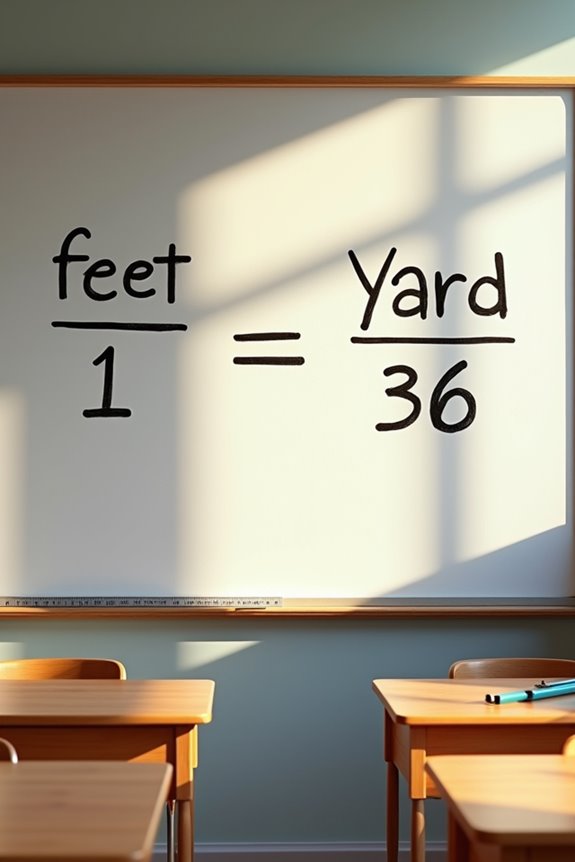
What if you’ve got a measurement in yards but need it in feet instead? I’ll walk you through it—it’s straightforward once you’ve got the conversion down.
The Simple Multiplication
Here’s what I use: feet = yards × 3
Since one yard equals three feet, you’re just multiplying your yard measurement by three. That’s all there is to it.
Since one yard equals three feet, simply multiply your yard measurement by three to get feet.
Real Examples
- 2 yards × 3 = 6 feet
- 0.5 yards × 3 = 1.5 feet
- 5 yards × 3 = 15 feet
Why This Works
The relationship between yards and feet is exact and linear. No rounding needed with this conversion. Whether you’re measuring fabric, fence lengths, or room dimensions, multiplying yards by three consistently gets you your feet measurement.