

Five flowers pose serious risks to cats: lilies cause rapid kidney failure within hours, tulips and daffodils contain toxic bulbs triggering vomiting and heart problems, and chrysanthemums and azaleas can damage your cat’s system if nibbled. Watch for drooling, vomiting, tremors, or weakness—these warrant immediate veterinary care. Remove these plants entirely or keep them completely separated from your pet.
The specifics of each flower’s dangers and what symptoms demand emergency action are detailed below.
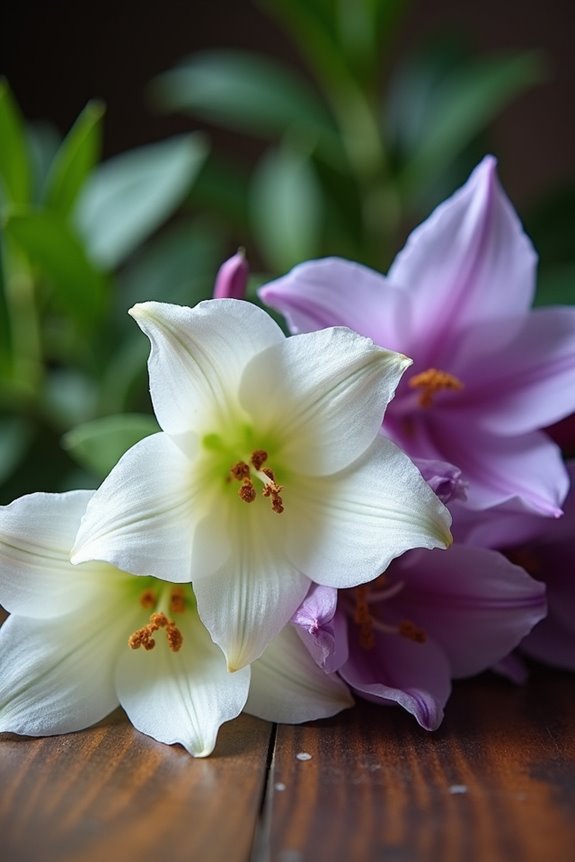
Lilies: The Most Toxic Flower for Cats

If ingestion occurs, this becomes a veterinary emergency. Kidney failure progresses rapidly without immediate treatment. Avoid lilies entirely, or select safer alternatives like sunflowers instead.
Spring Bulbs: Toxic Tulips and Daffodils
Have you noticed how tulips and daffodils appear everywhere in spring? I’ve learned through experience that these spring bulbs pose serious risks to cats.
| Plant | Toxic Compound | Dangerous Part | Primary Symptom |
|---|---|---|---|
| Tulips | Tulipalin A & B | Bulb (most toxic) | Vomiting |
| Daffodils | Alkaloids | Bulb crystals | Cardiac arrhythmias |
| Tulips | Tulipalin A & B | All parts | Depression |
| Daffodils | Alkaloids | All parts | Respiratory depression |
Why These Matter
Ingestion of tulips triggers vomiting and diarrhea. Daffodils present greater danger—alkaloids can cause cardiac arrhythmias and respiratory depression. Even water from cut flowers contains toxins.
What I Do
I keep both spring bulbs completely away from my cat’s areas. If ingestion occurs, I contact a veterinarian immediately. Symptoms appear quickly, and these situations require professional help.
Household Favorites: Toxic Chrysanthemums and Azaleas
The ingestion risk is real in mixed pet households. We should position these plants carefully or remove them entirely. If your cat nibbles these flowers, don’t wait—seek veterinary consultation immediately. Symptoms can progress rapidly, and prompt professional help matters for your feline’s safety.
Poisoning Symptoms: What to Watch For
- Salivation and drooling that seems excessive or unusual
- Vomiting or diarrhea appearing within hours or even days after exposure
- Tremors or seizures indicating nervous system involvement
- Weakness and depression, including decreased appetite
- Respiratory difficulties or irregular heartbeats (arrhythmias) suggesting cardiotoxicity
The tricky part? Some toxins, especially from bulbs like tulips, show delayed symptoms. Remove the source immediately and avoid inducing vomiting unless your vet instructs otherwise. Bring a plant sample or clear description to your appointment—it helps with diagnosis. When in doubt, seek veterinary evaluation rather than waiting.
Emergency First Aid for Toxic Ingestion
Emergency First Aid for Toxic Ingestion
Once you’ve spotted poisoning symptoms, your next moves are important—knowing what to do in those first few minutes can change the outcome for your cat.
Immediate Actions:
- Call your veterinarian or animal poison control center right now. Don’t wait for symptoms to worsen—veterinary guidance during a cat emergency is necessary.
- Collect a sample of the plant material, petals, leaves, and vase water if possible. This sample collection helps identify the specific plant toxicity.
- Remove your cat from the toxic ingestion source immediately.
What NOT to do:
Never induce vomiting unless a professional advises it. Some toxins like gallinaceous lycorine require specific treatments that vomiting could complicate.
Watch for urgent care signs: rapid breathing, tremors, collapse, or seizures alongside gastrointestinal upset require immediate emergency care.